Zercher Squat
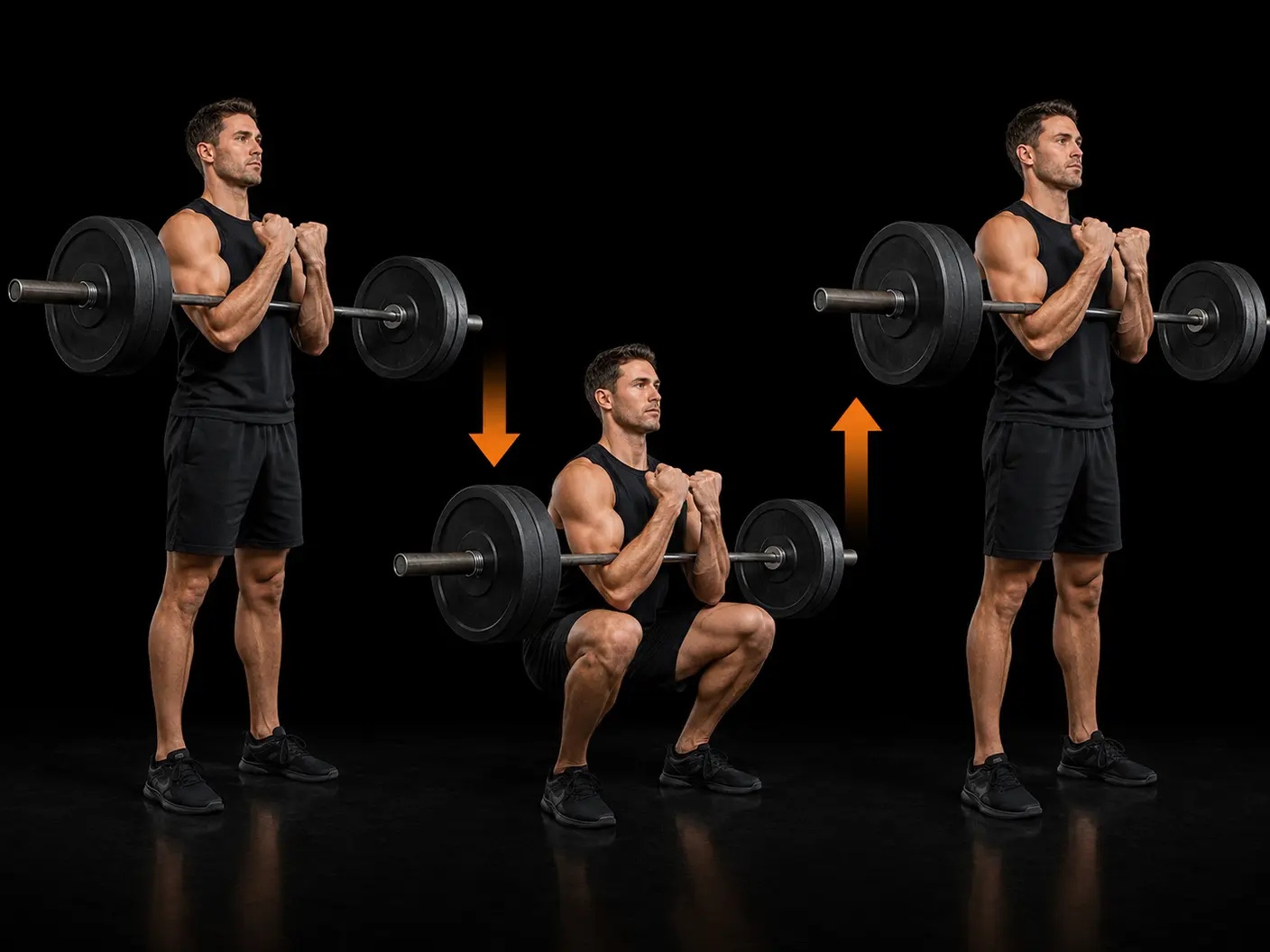
The Zercher squat is a barbell compound movement in which the load is held in the crooks of the elbows rather than on the back or in the hands, producing a front-loaded position that demands a consistently upright torso throughout the lift. It trains the full squat pattern with a pronounced demand on the quadriceps, glutes, and the upper back and core structures needed to keep the chest tall under load. The movement suits advanced lifters looking to develop positional strength, anterior core stiffness, and carry-over to athletic performance.
How to do it
Set the bar in the crooks of the elbows, hands clasped in front of the chest. Brace hard — the front-loaded position demands an upright torso. Feet shoulder-width, toes slightly out. Descend under control; elbows fit inside the knees. Hit full depth, then drive up keeping the chest tall and elbows tight.
Coaching cues
- Tall torso
- Elbows tight
- Chest up
- Press the floor
Why train it
- The front-loaded bar position forces an upright torso, reinforcing the postural mechanics that transfer directly to sport and other strength movements.
- It places significant demand on the quadriceps and glutes simultaneously, making it an efficient choice for lower-body strength development within a single compound pattern.
- The requirement to stabilise the bar through the upper back, biceps, and erectors means it trains a broad chain of musculature in one movement, reducing the need for additional accessory work.
- Its self-limiting nature — the position becomes uncomfortable quickly if bracing breaks down — makes it a useful diagnostic tool for identifying weaknesses in core stiffness and thoracic extension.
Common mistakes
- Letting the elbows drop forward — keep them lifted and tight throughout the descent and drive to prevent the bar rolling down the forearms and the torso pitching forward.
- Allowing the chest to collapse at the bottom — brace hard before initiating the descent and cue chest up continuously, as the front-loaded weight will amplify any loss of upper-back tension.
- Taking too narrow a stance for the elbow position — set the feet shoulder-width with toes slightly turned out so the elbows can track inside the knees without forcing the hips to restrict depth.
- Rising onto the toes during the ascent — press the floor away evenly through the whole foot to maintain a stable base and avoid shifting the load forward as you drive up.
Primary: Quadriceps, Gluteus Maximus.
Secondary: Rhomboids, Biceps Brachii, Rectus Abdominis, Erector Spinae.
Equipment
Good for
Easier variation
Goblet squat — same front-loaded pattern without elbow discomfort.
Similar movements
Frequently asked
- What muscles does the Zercher squat work?
- The primary muscles trained are the quadriceps and glutes. The upper back, biceps, core, and erectors work as secondary musculature to stabilise the bar position and maintain an upright torso throughout the lift.
- How many sets and reps should I do for the Zercher squat?
- For strength development, three to five sets of three to six reps with heavier loading is a common structure. For general fitness or positional work, three to four sets of six to eight reps at a moderate load allows enough volume to reinforce the movement pattern without excessive fatigue in the elbow crooks.
- Is the Zercher squat suitable for beginners?
- It is classified as an advanced movement and is not recommended as an introduction to squatting. A solid foundation in the back squat and front squat, along with well-developed core bracing, will make learning the Zercher position considerably safer and more productive.
- What are good alternatives to the Zercher squat?
- The front squat trains a similarly upright torso with less demand on elbow comfort and is a logical progression point. The goblet squat is a more accessible option that also reinforces a tall chest and deep hip position, particularly for those building towards barbell squat variations.
- Does the Zercher squat hurt the arms?
- Some discomfort in the elbow crooks is normal, particularly early in the learning process, and tends to diminish as you become accustomed to the position. Using a barbell pad or a folded towel can reduce initial discomfort, though if you experience sharp or persistent pain rather than positional pressure, check with a qualified professional before continuing.
Want this movement in a plan built for you?
Adaptiv programmes the right exercises for your goal, equipment and experience — then adapts them as you train.
Build my programme