Zercher Carry
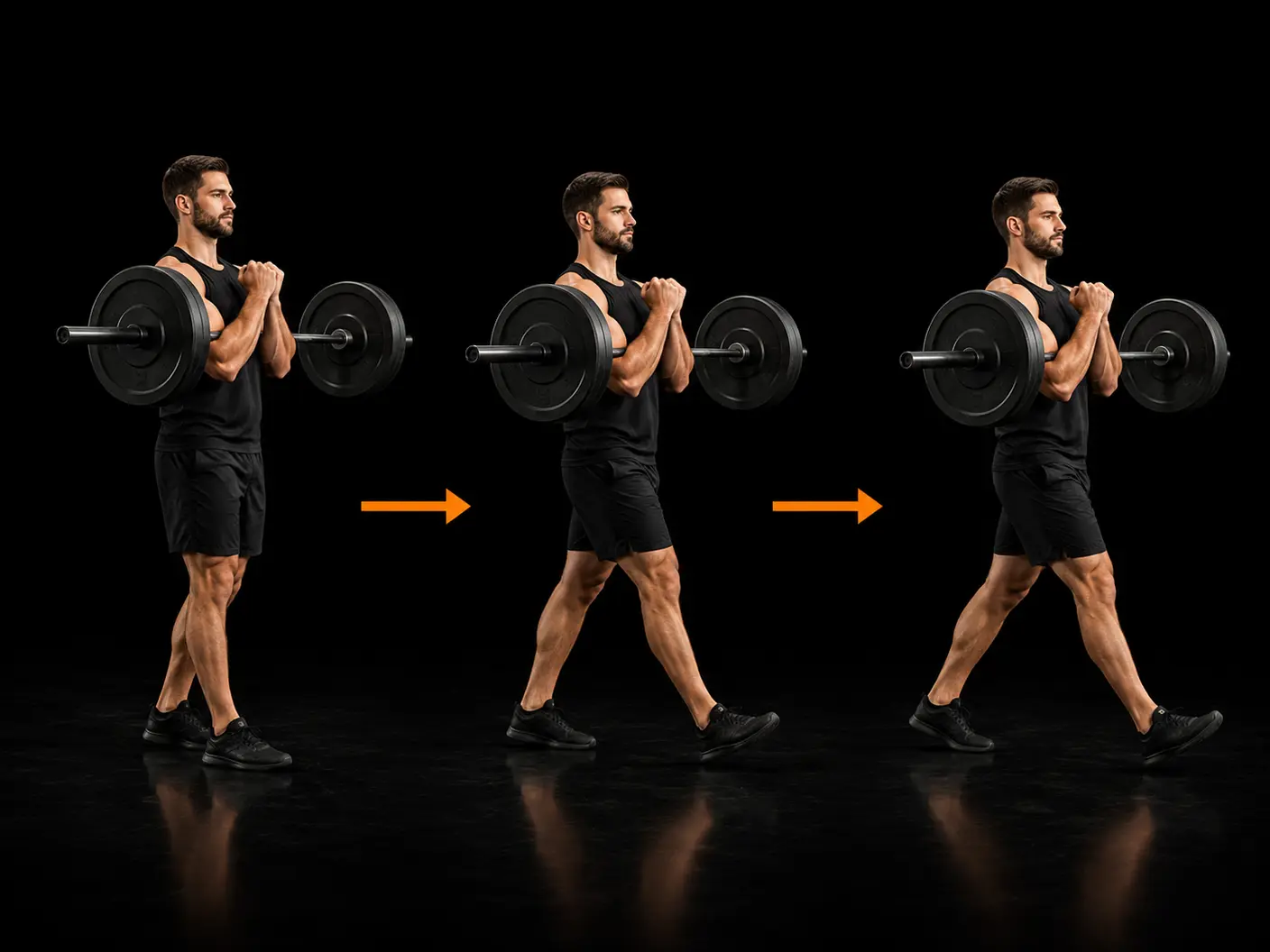
The Zercher carry is a loaded locomotion exercise in which a barbell is cradled in the crooks of the elbows and carried for distance, placing the load directly in front of the body's centreline. This forward-loaded position creates unusually high demand across the upper back, biceps, and core simultaneously, distinguishing it from more conventional carry variations. It suits intermediate lifters looking to build functional strength, improve postural resilience under load, or add variety to an athletic performance programme.
How to do it
Rack a barbell at hip height. Cradle the bar in the crooks of the elbows, hands clasped in front. Unrack and step back. Stand tall. Walk forward with the bar in the Zercher hold — this is uniquely demanding on the upper back, biceps, and core due to the forward-loaded position. Set the bar back in the rack carefully.
Coaching cues
- Bar in the elbow crooks
- Tall torso
- Brace hard
- Short controlled steps
Why train it
- The forward-loaded position forces the upper back to work continuously against the tendency to round, building genuine postural strength over time.
- Cradling the bar in the elbow crooks generates sustained bicep tension throughout the carry, providing a meaningful stimulus without the need for isolation work.
- The displaced centre of mass places high demand on the core to resist forward flexion, reinforcing a braced, stable trunk under dynamic conditions.
- As a compound carry, it trains the glutes and legs in a loaded gait pattern, making it a practical choice for athletes who need to express strength while moving.
Common mistakes
- Allowing the torso to lean forward — maintain a tall, upright position throughout the carry and resist the load pulling you into flexion.
- Letting the elbows drop — keep them lifted and the bar firmly seated in the crooks to preserve position and protect the wrists.
- Taking long, uncontrolled strides — use short, deliberate steps to keep the load stable and maintain full-body tension for the duration of the carry.
- Failing to brace before unracking — take a full breath, create intra-abdominal pressure, and establish your position at the rack before you step back and begin walking.
Primary: Biceps Brachii, Rhomboids, Rectus Abdominis.
Secondary: Gluteus Maximus, Forearm Flexors.
Equipment
Good for
Easier variation
Sandbag bear hug carry — padded load, same forward-loaded pattern.
Similar movements
Frequently asked
- What muscles does the Zercher carry work?
- The primary muscles are the biceps, upper back, and core. The glutes, legs, and forearms contribute as secondary movers, making it a genuinely full-body compound exercise.
- How many sets and reps should I do for the Zercher carry?
- Because this is a carry, it is typically programmed by distance or time rather than repetitions. Two to four sets of 20–40 metres works well for most intermediate lifters, with rest periods long enough to restore full tension before the next set.
- Is the Zercher carry suitable for building strength or is it more of a conditioning exercise?
- It serves both goals depending on how it is programmed. Heavier loads over shorter distances favour strength development, while moderate loads over longer distances have a conditioning effect — making it a flexible tool in a general fitness or athletic performance programme.
- What are good alternatives if I find the Zercher carry too uncomfortable on the elbows?
- Wrapping a barbell pad or a folded towel around the bar reduces pressure on the elbow crooks without significantly altering the mechanics. If discomfort persists regardless, a front-rack carry or a bear-hug sandbag carry trains a similar forward-loaded pattern with less direct contact stress.
- How does the Zercher carry differ from a standard farmer's carry?
- In a farmer's carry the load hangs at the sides, primarily challenging grip and lateral trunk stability. The Zercher carry positions the load in front of the body, shifting the demand to the upper back, biceps, and anterior core — making it a complementary rather than interchangeable variation.
Want this movement in a plan built for you?
Adaptiv programmes the right exercises for your goal, equipment and experience — then adapts them as you train.
Build my programme