Z-Press
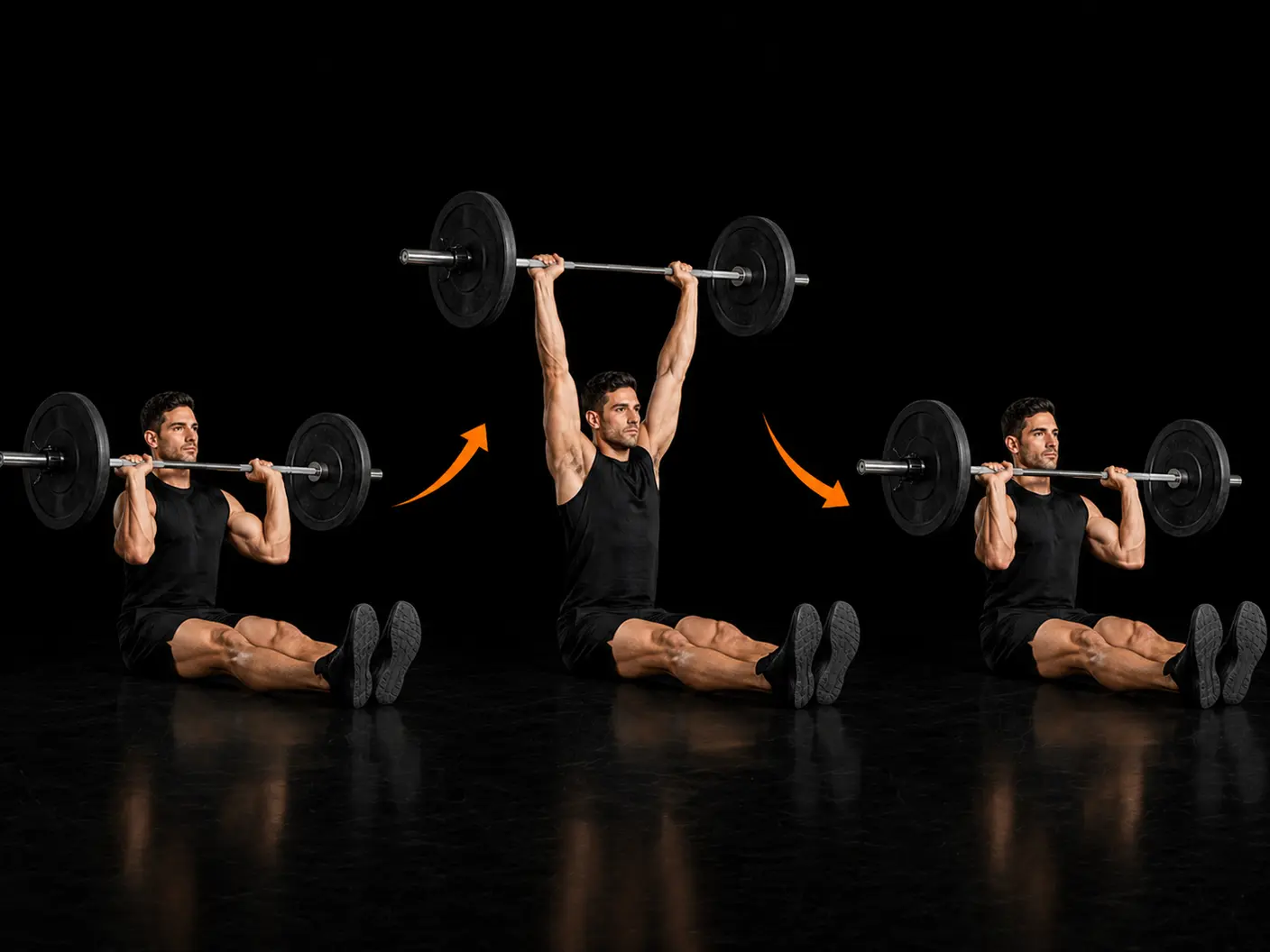
The Z-Press is a seated overhead pressing variation performed on the floor with legs extended straight in front of you. By removing the bench and the ability to brace through the lower body, it demands genuine shoulder strength, a vertical torso, and active core engagement throughout every rep. It suits intermediate to advanced lifters looking to build honest pressing strength and expose weaknesses that a standing or seated bench press would otherwise allow you to hide.
How to do it
Sit on the floor with legs extended straight in front, feet flexed. Hold a bar or dumbbells at the shoulders. Press overhead with a tall torso — no lean back, no momentum. Lower under control. The floor removes the ability to cheat.
Coaching cues
- Legs locked out
- Tall spine
- Strict press
- No lean back
Why train it
- Pressing from the floor with legs extended eliminates lower-body drive and back lean, forcing the anterior and medial deltoids to do the work without mechanical assistance.
- The position demands continuous core and upper-back engagement simply to maintain a tall spine, making it an efficient way to develop pressing strength alongside trunk stability.
- Because momentum and cheating are structurally impossible in this position, it transfers directly to cleaner overhead pressing mechanics in the standing press and other vertical-push movements.
- Using either a barbell or dumbbells makes it adaptable to the equipment available, and the dumbbell variation introduces a useful unilateral challenge to shoulder and trunk control.
Common mistakes
- Leaning back as the load increases — keep the spine tall and treat any backward drift as a signal to reduce the weight rather than compensate with position.
- Allowing the lower back to round or the pelvis to tuck under — sit tall before you press and actively engage the core throughout the set to maintain a neutral spine.
- Using a grip or rack height that means the bar is not at shoulder level at the start — set up so the bar is clean at the shoulders before you begin, never pressing from an awkward initial position.
- Rushing the descent — lower the bar or dumbbells under control back to the shoulder position on each rep, treating the eccentric as part of the stimulus rather than dead time between reps.
Primary: Anterior Deltoid, Lateral Deltoid, Triceps Brachii.
Secondary: Rectus Abdominis, Rhomboids.
Equipment
Good for
Easier variation
Seated press with back support — removes core demand.
Similar movements
Frequently asked
- What muscles does the Z-Press work?
- The primary muscles trained are the anterior deltoid, medial deltoid, and triceps. The core and upper back work as secondary stabilisers throughout, since maintaining a tall torso against the load places continuous demand on them.
- How many sets and reps should I do for the Z-Press?
- For strength, three to five sets of three to five reps with heavier loading works well. For hypertrophy, three to four sets of eight to twelve reps at a moderate load is a more appropriate range. Because the position is technically demanding, err on the side of fewer reps with better form rather than pushing volume at the expense of posture.
- Is the Z-Press suitable for beginners?
- It is classified as an advanced movement, so it is best introduced once a lifter has established solid overhead pressing mechanics and reasonable core and hip-flexor flexibility. Beginners would typically build those foundations through a standard seated or standing overhead press first.
- What are good alternatives to the Z-Press?
- The seated dumbbell overhead press on a bench is a less demanding alternative that still targets the same primary muscles. The standing strict press is another option that shares the no-momentum requirement while allowing a more accessible position for those who lack the hip flexibility the Z-Press demands.
- Why does the Z-Press feel harder than my regular overhead press even with lighter weight?
- The floor position removes any contribution from leg drive, momentum, or a back lean, all of which can quietly assist your regular press without you noticing. The Z-Press isolates the shoulders and triceps more completely, so a reduction in working weight compared to your standing or seated press is entirely normal and expected.
Want this movement in a plan built for you?
Adaptiv programmes the right exercises for your goal, equipment and experience — then adapts them as you train.
Build my programme