Seated Dumbbell Shoulder Press
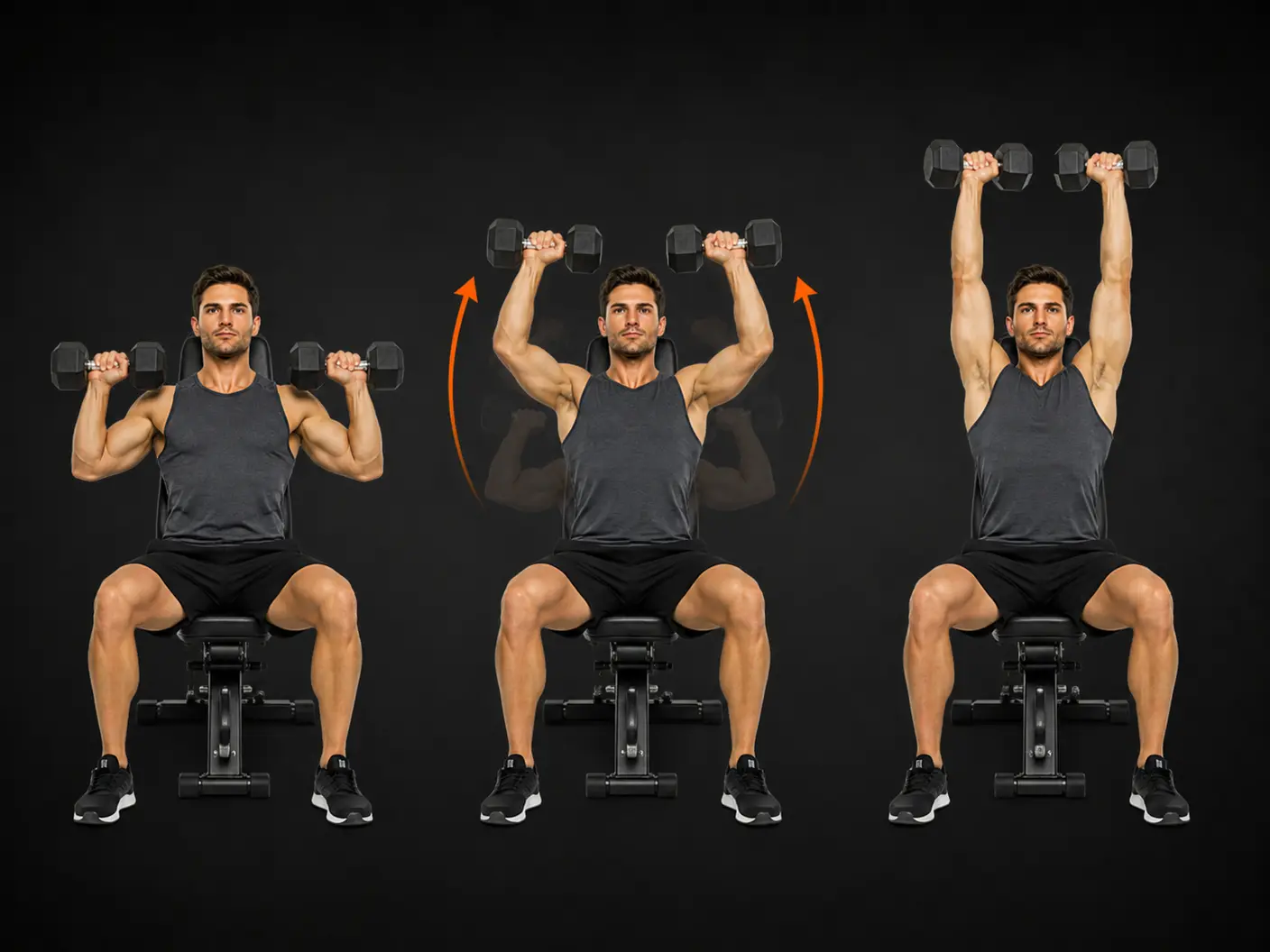
The seated dumbbell shoulder press is a compound vertical push movement performed with back support, allowing you to drive load overhead through both the anterior and medial deltoids with independent arm action on each side. Because the dumbbells move freely, each shoulder must stabilise and press through its own range, making the exercise well suited to identifying and addressing left-to-right strength imbalances. It sits at an intermediate difficulty level and fits naturally into hypertrophy and strength programmes alike.
How to do it
Sit on a bench with back support set upright. Bring the dumbbells to the shoulders, palms facing forward, elbows in front of the bar. Press up and slightly inward; dumbbells meet at the top without clanking. Lower to a full stretch at the shoulders.
Coaching cues
- Back flat to the pad
- Press and meet
- Deep stretch
- Elbows forward not flared
Why train it
- Independent dumbbell loading means each side works through its own path, reducing the tendency for a stronger arm to compensate during the press.
- The seated, back-supported position removes lower-body drive and minimises spinal loading, directing effort squarely into the deltoids and triceps.
- Lowering to a full stretch at the shoulder creates a greater range of motion than many barbell variations, which supports muscular development of the anterior and medial deltoids over time.
- The movement trains the upper pec and triceps as meaningful secondary contributors, making it an efficient compound lift within a push-focused session.
Common mistakes
- Flaring the elbows out to the sides — keep them angled slightly forward so the shoulder joint is in a stronger, more natural pressing position throughout the movement.
- Letting the back arch away from the pad — maintain flat contact between your spine and the bench to ensure the deltoids are doing the work rather than momentum from the lower back.
- Clanking the dumbbells together at the top — the cues call for them to meet, not collide; control the inward path so you preserve tension and protect the wrists at lockout.
- Cutting the range of motion short on the descent — lower the dumbbells until you feel a genuine stretch at the shoulder rather than stopping halfway, as a full range of motion is what distinguishes this exercise from a partial rep.
Primary: Anterior Deltoid, Lateral Deltoid.
Secondary: Triceps Brachii, Pectoralis Major.
Equipment
Good for
Easier variation
Machine shoulder press — removes the stabilisation demand.
Similar movements
Frequently asked
- What muscles does the seated dumbbell shoulder press work?
- The primary muscles are the anterior and medial deltoids, which drive the overhead press. The triceps and upper pec contribute as secondary movers throughout the movement.
- How many sets and reps should I do for hypertrophy?
- For hypertrophy, three to four sets of eight to twelve repetitions with a controlled tempo works well for most intermediate lifters. Ensure the final few reps of each set are genuinely challenging while still allowing you to maintain flat contact with the pad and a full range of motion.
- What is the difference between seated and standing dumbbell shoulder press?
- The seated, back-supported version removes the need to brace against lower-body instability and reduces the opportunity to use leg drive or lumbar extension to help the press, which keeps the emphasis on the deltoids. The standing variation demands greater whole-body stabilisation but introduces more variables that can mask shoulder weakness.
- Is the seated dumbbell shoulder press suitable for beginners?
- It is classified as an intermediate movement, so beginners would benefit from first building familiarity with the pressing pattern using lighter loads or a machine overhead press before progressing here. The independent dumbbell action and the requirement to control each arm through a full range of motion demands a baseline level of shoulder stability and proprioception.
- What are good alternatives if I do not have a bench with back support?
- If an adjustable bench with an upright back pad is unavailable, a seated dumbbell press on a flat bench requires considerably more core and spinal stabilisation and changes the mechanics meaningfully. A standing dumbbell shoulder press or a machine shoulder press would be more appropriate alternatives depending on the equipment available and the goal of the session.
Want this movement in a plan built for you?
Adaptiv programmes the right exercises for your goal, equipment and experience — then adapts them as you train.
Build my programme