Machine Shoulder Press
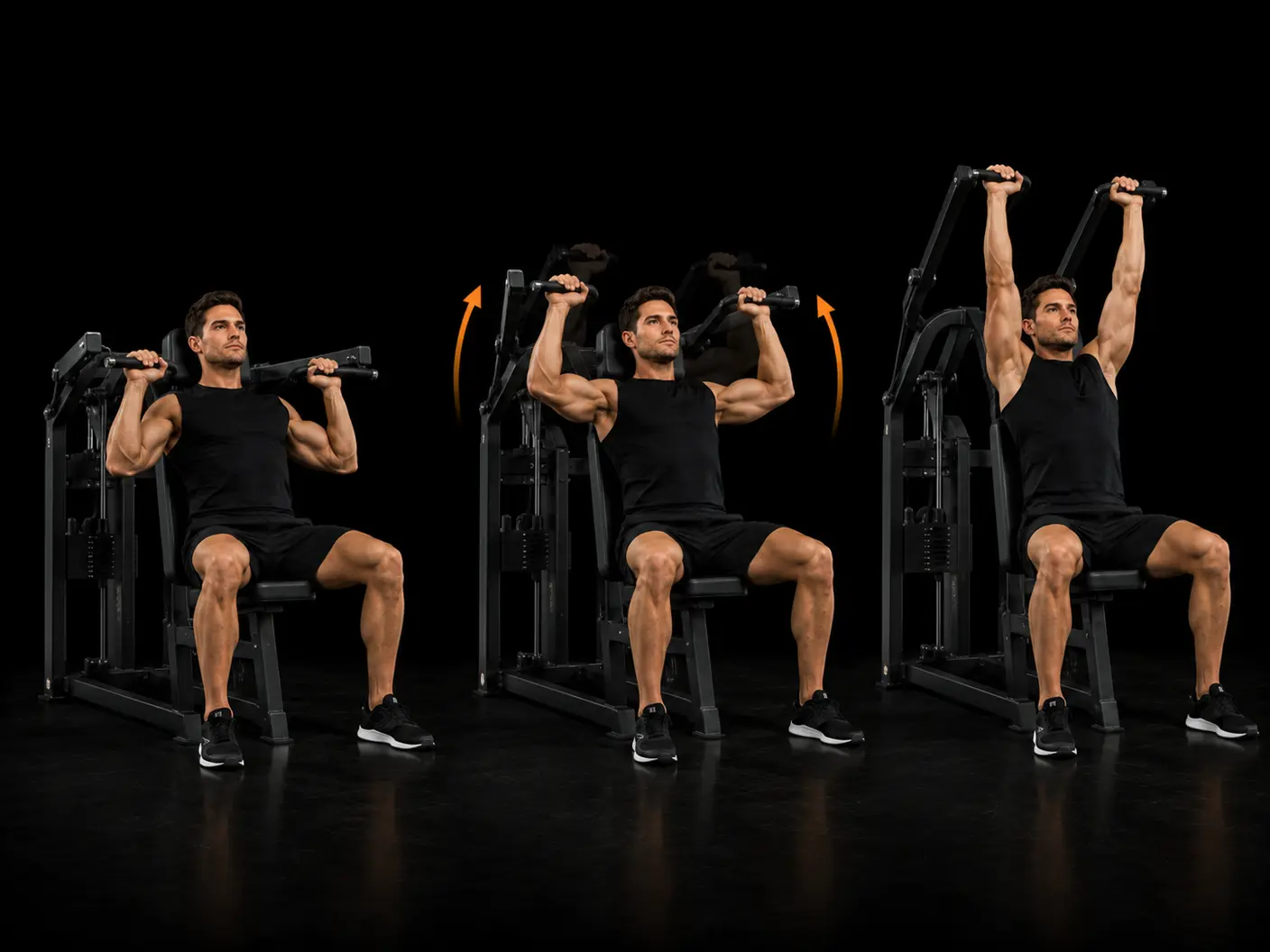
The machine shoulder press is a guided vertical push exercise that develops the anterior and medial deltoids alongside the triceps and upper pec. Because the movement path is fixed, it removes the stability demands of free weights, allowing the lifter to focus effort directly on the target muscles. It suits beginners learning the pressing pattern, those returning from a layoff, or experienced lifters looking to isolate shoulder volume with reduced joint stress.
How to do it
Adjust the seat so the handles align with the shoulders. Sit tall with the back against the pad. Grip the handles. Press up until arms are nearly straight; do not slam lockout. Lower under control to a deep stretch at the shoulders.
Coaching cues
- Handles at shoulder height
- Press straight up
- Do not lockout hard
- Stretch at the bottom
Why train it
- The fixed movement path makes load management straightforward, enabling consistent progressive overload without the technique variability that can affect free-weight pressing.
- Targeting both the anterior and medial deltoids in a single compound movement makes it an efficient choice for building overall shoulder width and thickness.
- The guided range of motion allows you to train close to failure with a lower supervision requirement, making it practical for solo training sessions.
- Performing a controlled stretch at the bottom of each rep places the deltoids under load in a lengthened position, which is associated with greater hypertrophic stimulus.
Common mistakes
- Setting the seat too low or too high — adjust the seat so the handles align precisely with shoulder height before adding any load, as a misaligned start position shifts stress away from the deltoids.
- Slamming into lockout at the top — stop just short of full elbow extension on each rep to maintain tension on the working muscles and reduce unnecessary joint impact.
- Rushing the descent — lower the handles under control to achieve a genuine stretch at the shoulder, rather than letting the weight stack drop and losing the eccentric portion of the rep.
- Allowing the lower back to arch away from the pad — sit tall with the back in full contact with the support throughout the set, as excessive arch can redirect load and compromise positioning.
Primary: Anterior Deltoid, Lateral Deltoid.
Secondary: Triceps Brachii, Pectoralis Major.
Equipment
Good for
Easier variation
Seated DB press — same pattern with free weights.
Similar movements
Frequently asked
- What muscles does the machine shoulder press work?
- The primary muscles trained are the anterior deltoid and medial deltoid. The triceps and upper pec contribute as secondary movers throughout the press.
- How many sets and reps should I do for hypertrophy?
- For muscle growth, three to four sets of eight to fifteen reps with two to three minutes rest between sets is a well-supported range. Select a load that makes the final two reps of each set genuinely challenging while allowing full control of the movement.
- Is the machine shoulder press suitable for beginners?
- Yes, it is classified as a foundational movement precisely because the guided path reduces coordination demands. Beginners can develop familiarity with the vertical push pattern and build initial shoulder strength before progressing to free-weight variations.
- How does the machine shoulder press compare to a dumbbell shoulder press?
- The machine version constrains the movement path, which reduces stabiliser recruitment but allows more direct loading of the deltoids with less technical fatigue. Dumbbells require greater shoulder and core stabilisation, making them a useful progression once the pressing pattern is established.
- Should I use the machine shoulder press if I have shoulder discomfort?
- If you are experiencing shoulder discomfort, consult a qualified professional before continuing to load the joint. In general, ensuring the seat height is correctly set and avoiding a hard lockout at the top are the two adjustments most likely to reduce unnecessary stress on the shoulder during this exercise.
Want this movement in a plan built for you?
Adaptiv programmes the right exercises for your goal, equipment and experience — then adapts them as you train.
Build my programme