Wide Push-Up
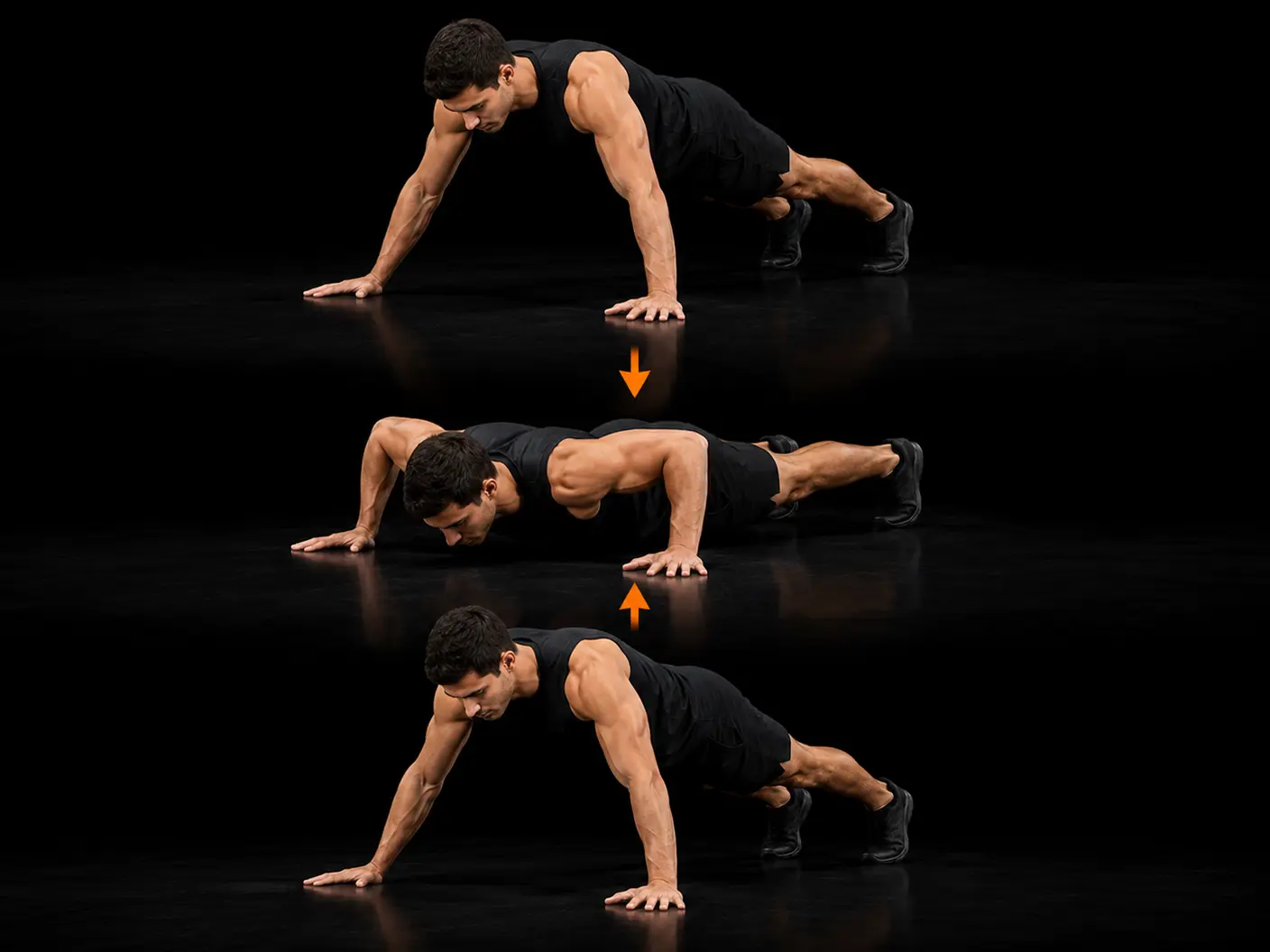
The wide push-up is a bodyweight horizontal pushing movement that shifts hand placement to roughly 1.5–2× shoulder width, increasing the range of motion demand on the sternal head of the pectorals compared with a standard push-up. The wider base causes the elbows to flare to approximately 60–70° from the torso, placing greater mechanical stress across the chest. It suits intermediate trainees looking to develop pectoral hypertrophy or improve pressing volume without loading a barbell.
How to do it
Assume a push-up position with hands placed 1.5–2× shoulder-width apart. Lower the chest toward the floor with elbows flaring wider than a standard push-up (60–70° from the torso). Press back to full elbow extension. Keep the body in a straight line from heel to head throughout.
Coaching cues
- Wide hands
- Chest leads the descent
- Press with the chest
- Body straight
Why train it
- The wider hand position increases stretch and time under tension through the sternal head of the pectorals, making it an effective stimulus for chest hypertrophy.
- As a bodyweight movement it requires no equipment, allowing consistent pressing volume to be accumulated at home, travelling, or as a finisher within a gym session.
- The compound nature of the exercise means the anterior deltoids and triceps contribute as synergists, training multiple upper-body muscles simultaneously.
- Maintaining a rigid line from heel to head throughout each repetition develops isometric core stability as a secondary training effect.
Common mistakes
- Allowing the hips to sag toward the floor — brace the core and glutes before each set to keep the body in a straight line from heel to head.
- Letting the elbows drift inward during the descent — consciously allow them to flare to 60–70° from the torso so the chest, rather than the triceps, bears the primary load.
- Dropping the head forward so the chin leads the movement — keep the neck neutral and cue the chest to lead the descent.
- Cutting the range of motion short by stopping the descent before the chest approaches the floor — lower under control until the chest is close to, or lightly touches, the surface to realise the full benefit of the wider hand position.
Primary: Pectoralis Major.
Secondary: Anterior Deltoid, Triceps Brachii, Rectus Abdominis.
Equipment
Good for
Easier variation
Standard push-up — return to shoulder-width hand position.
Similar movements
Frequently asked
- What muscles does the wide push-up work?
- The primary muscle trained is the sternal head of the pectorals. The anterior deltoids, triceps, and core musculature work as secondary contributors to stabilise and complete each repetition.
- How many sets and reps should I do for the wide push-up?
- For hypertrophy, 3–4 sets of 8–15 repetitions with controlled tempo and two minutes of rest between sets is a practical starting point. If the goal is general fitness or muscular endurance, higher rep ranges of 15–20 with shorter rest periods are appropriate.
- What is the difference between a wide push-up and a standard push-up?
- A standard push-up places the hands roughly shoulder-width apart with the elbows tracking closer to the torso, distributing load more evenly between the chest and triceps. The wide push-up moves the hands further out and increases elbow flare, shifting emphasis toward the sternal pectorals at the expense of some triceps involvement.
- Is the wide push-up suitable for building chest size?
- Yes, provided sufficient volume and progressive overload are applied. The increased stretch on the pectorals at the bottom of each repetition creates a meaningful hypertrophic stimulus, and it can be used as a primary or accessory movement within a chest-focused programme.
- What are good alternatives to the wide push-up?
- Movements that train the same horizontal push pattern with emphasis on the pectorals include the dumbbell bench press, barbell bench press, and dumbbell fly, all of which allow load to be adjusted more precisely. If you require a bodyweight alternative with a similar elbow-flare mechanic, a standard push-up with deliberate attention to chest-led descent is the closest option.
Want this movement in a plan built for you?
Adaptiv programmes the right exercises for your goal, equipment and experience — then adapts them as you train.
Build my programme