Wide-Grip Seated Cable Row
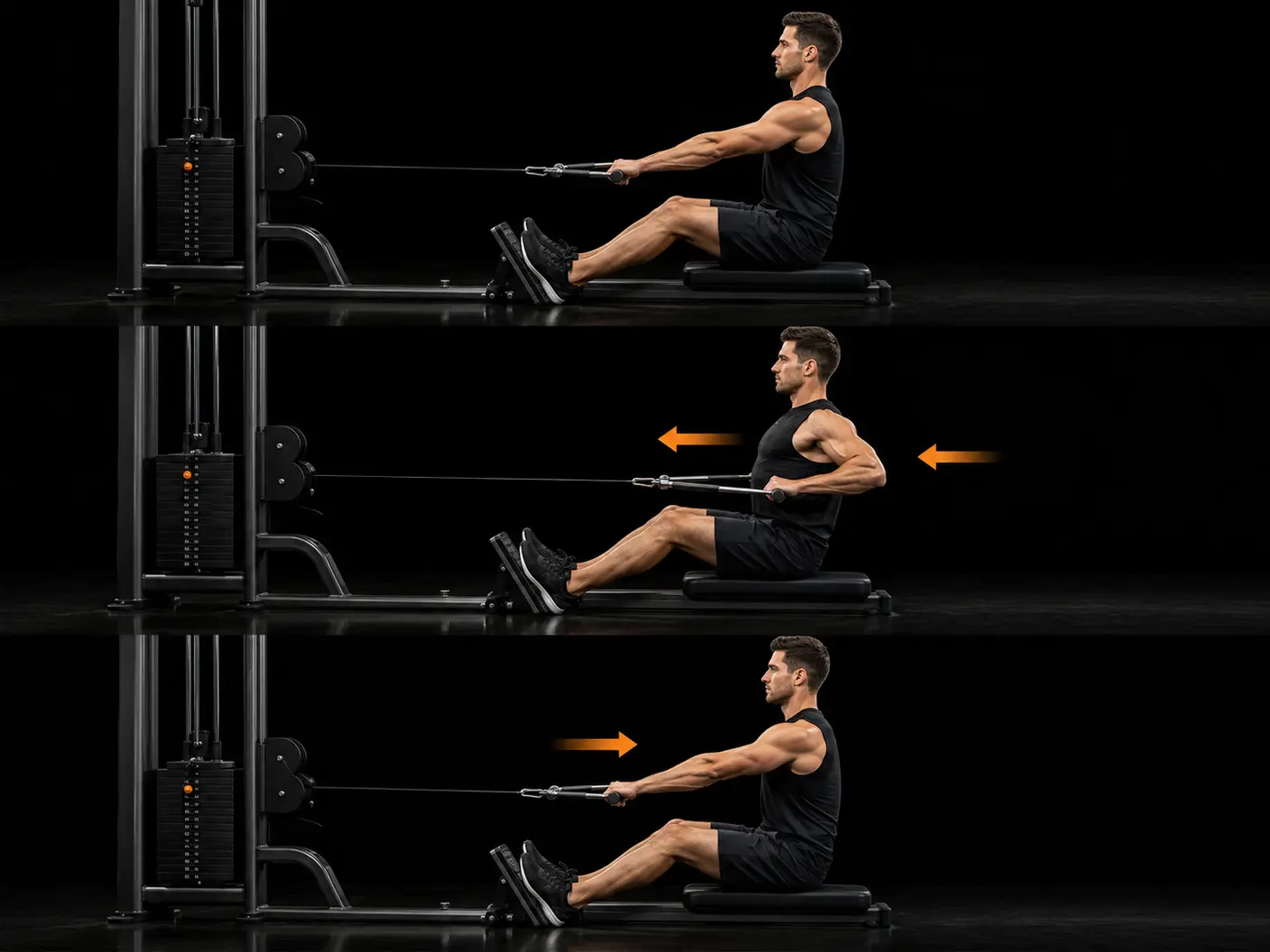
The wide-grip seated cable row is a horizontal pulling exercise performed on a cable row machine using a wide, pronated grip. By drawing the bar to the collarbone with elbows flared, the movement shifts emphasis away from the lats and onto the upper back — specifically the middle trapezius, rhomboids, and rear deltoids. It suits anyone from beginners building postural foundation to intermediate lifters targeting upper-back hypertrophy.
How to do it
Sit with feet braced. Grip a wide bar or lat bar, pronated, wider than shoulder-width. Sit tall. Pull the bar to the upper chest / collarbone area, elbows flaring wide. Pause; squeeze the rear delts and upper back. Return under control.
Coaching cues
- Pull high to the collarbone
- Elbows flare wide
- Squeeze the upper back
- Controlled return
Why train it
- The wide, pronated grip and high pull angle place direct mechanical tension on the middle trapezius and rhomboids, making this an efficient choice for developing upper-back thickness.
- The rear deltoids are trained through a meaningful range of motion, supporting balanced shoulder development alongside pressing work.
- The cable provides constant tension throughout the entire pull and return, keeping the target muscles under load even during the eccentric phase.
- Bracing the feet and sitting tall during the movement reinforces postural awareness and scapular control, which carries over to other upper-body lifts.
Common mistakes
- Pulling to the abdomen rather than the collarbone — keep the bar path high and aim for the upper chest to maintain the correct muscle emphasis.
- Letting the elbows drop towards the sides — flare them wide and keep them above the wrist line to ensure the rear deltoids and upper back drive the movement.
- Using momentum by rocking the torso back — sit tall and initiate each rep from the upper back, not a body swing.
- Rushing the return — allow the cable to draw your arms forward under control so the muscles work through the full eccentric range rather than going slack.
Primary: Trapezius, Posterior Deltoid, Rhomboids.
Secondary: Latissimus Dorsi, Biceps Brachii.
Equipment
Good for
Easier variation
Cable face pull — similar rear-delt focus at lower load.
Similar movements
Frequently asked
- What muscles does the wide-grip seated cable row work?
- The primary muscles are the middle trapezius, rhomboids, and rear deltoids. The latissimus dorsi and biceps contribute as secondary movers, though the wide grip and high pull angle reduce lat involvement compared to a close or neutral-grip row.
- How many sets and reps should I do for muscle growth?
- For hypertrophy, three to four sets of eight to fifteen reps work well, with enough load that the last two reps of each set are genuinely challenging. Rest ninety seconds to two minutes between sets to allow sufficient recovery without losing the training stimulus.
- How does the wide-grip row differ from a close-grip or neutral-grip cable row?
- A close or neutral grip tends to bring the elbows closer to the body and increases lat recruitment. The wide, pronated grip shifts the emphasis higher into the upper back — the trapezius, rhomboids, and rear deltoids — making it a distinct variation rather than a direct substitute.
- What are good alternatives if I do not have access to a cable row machine?
- A wide-grip bent-over barbell row or a wide-grip dumbbell row can replicate a similar pulling pattern. A resistance band face pull also targets the rear deltoids and upper trapezius if cable equipment is unavailable.
- Is this exercise suitable for beginners?
- Yes — it is classified as a foundational movement and the seated, braced position makes it relatively straightforward to learn. Beginners should focus on sitting tall, pulling to the correct height, and controlling the return before adding significant load.
Want this movement in a plan built for you?
Adaptiv programmes the right exercises for your goal, equipment and experience — then adapts them as you train.
Build my programme