Cable Face Pull
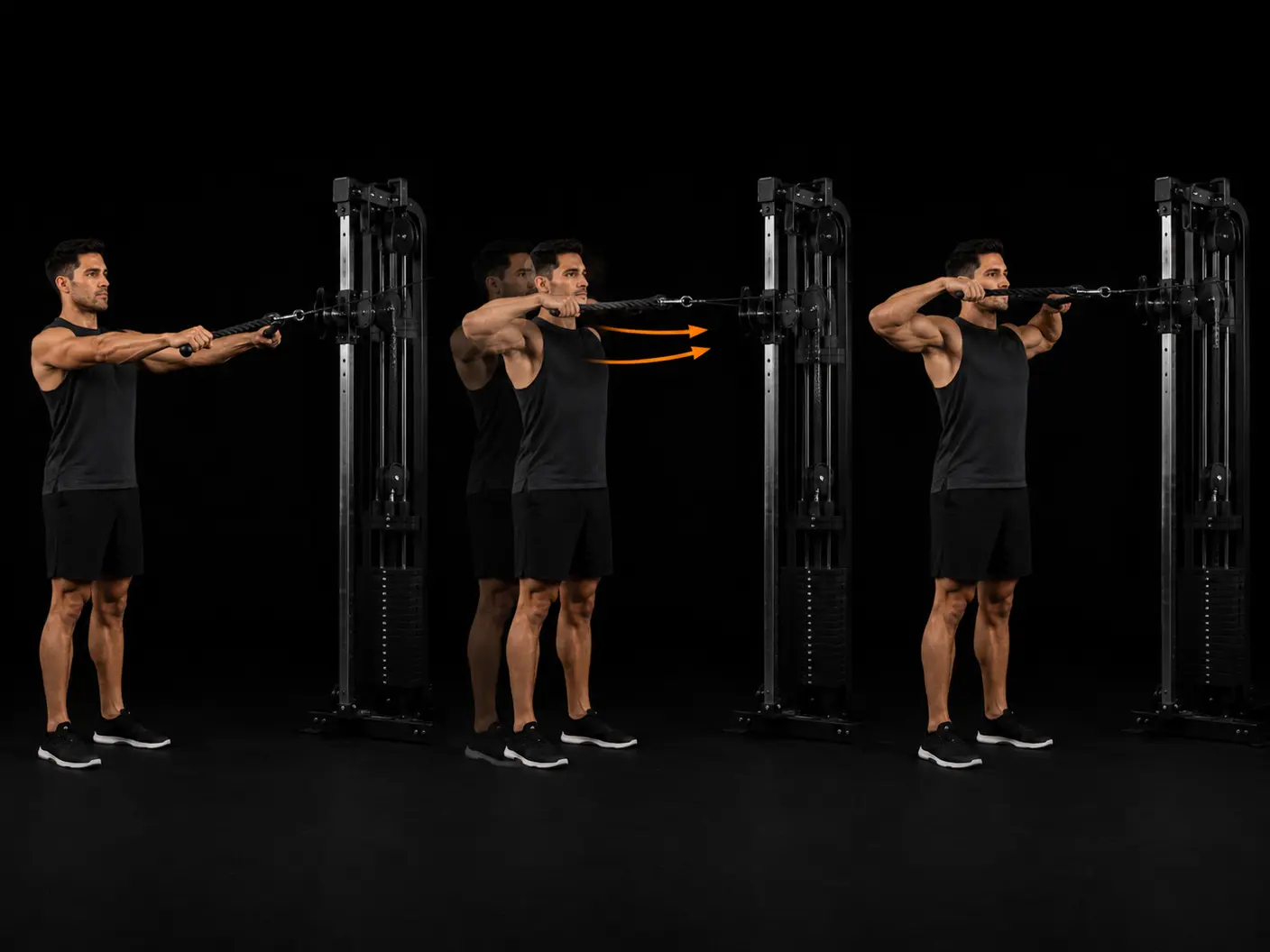
The cable face pull is a horizontal pulling movement performed with a rope attachment at upper-chest or head height, targeting the rear deltoids, mid and lower trapezius, and rhomboids. It trains the often-neglected posterior shoulder and upper back musculature through a combination of horizontal pulling and shoulder external rotation. The movement suits a wide range of trainees, from beginners building postural foundations to athletes reinforcing shoulder health within a balanced programme.
How to do it
Set a rope at upper-chest or head height. Grip with palms facing each other. Step back; split stance. Pull the rope toward the face, driving the elbows wide and up; externally rotate so hands end by the ears. Pause, squeeze. Control the return.
Coaching cues
- Elbows wide and up
- Hands by the ears
- Pause at peak
- Controlled return
Why train it
- Directly develops the rear deltoids, rhomboids, and middle and lower trapezius — muscles frequently underdeveloped in those who prioritise pressing movements.
- The external rotation component at end range reinforces shoulder mechanics that carry over to overhead lifting, throwing, and racquet sports.
- As a cable-based movement, tension remains consistent throughout the full range of motion, making it effective for both hypertrophy and muscular endurance goals.
- Its low technical barrier and adjustable load make it a practical choice for general fitness trainees and experienced lifters alike.
Common mistakes
- Pulling toward the chin rather than the face — set the rope at upper-chest or head height and drive the hands to ear level to keep the elbows wide and the rear deltoids engaged throughout.
- Letting the elbows drop below shoulder height — cue the elbows up and out so the upper arms remain roughly parallel to the floor at the end position.
- Using too much load and losing external rotation — reduce the weight until the hands can finish clearly by the ears with a genuine pause and squeeze at peak contraction.
- Allowing the torso to sway or lean back under load — adopt a split stance and brace the trunk so the movement is isolated to the shoulder girdle.
Primary: Posterior Deltoid, Trapezius, Rhomboids.
Secondary: Rotator Cuff.
Equipment
Good for
Easier variation
Banded pull-apart — same rear-delt target at lower intensity.
Similar movements
Frequently asked
- What muscles does the cable face pull work?
- The primary muscles trained are the rear deltoids, middle and lower trapezius, and rhomboids. The external rotators of the shoulder act as secondary contributors, particularly during the outward rotation of the hands toward the ears.
- How many sets and reps should I do for cable face pulls?
- For hypertrophy and general fitness, 3–4 sets of 12–20 reps works well given the movement's suitability for moderate to higher rep ranges. Keep the load conservative enough to maintain full external rotation and a controlled return on every repetition.
- Where should I put face pulls in my programme?
- Face pulls are well suited to the accessory block of an upper-body or push session, or as part of a shoulder health circuit. Pairing them after heavy pressing work helps balance the workload across the anterior and posterior shoulder.
- Can beginners do cable face pulls?
- Yes — the movement is classified as foundational difficulty and the cable provides constant, manageable tension that is straightforward to adjust. Focus on establishing the elbow-high position and the external rotation finish before adding load.
- What are good alternatives if I do not have access to a cable machine?
- Band pull-aparts and seated dumbbell rear lateral raises target overlapping musculature when a cable machine is unavailable, though neither replicates the precise pulling angle and sustained tension of the rope face pull.
Want this movement in a plan built for you?
Adaptiv programmes the right exercises for your goal, equipment and experience — then adapts them as you train.
Build my programme