Reverse Fly (Cable or Dumbbell)
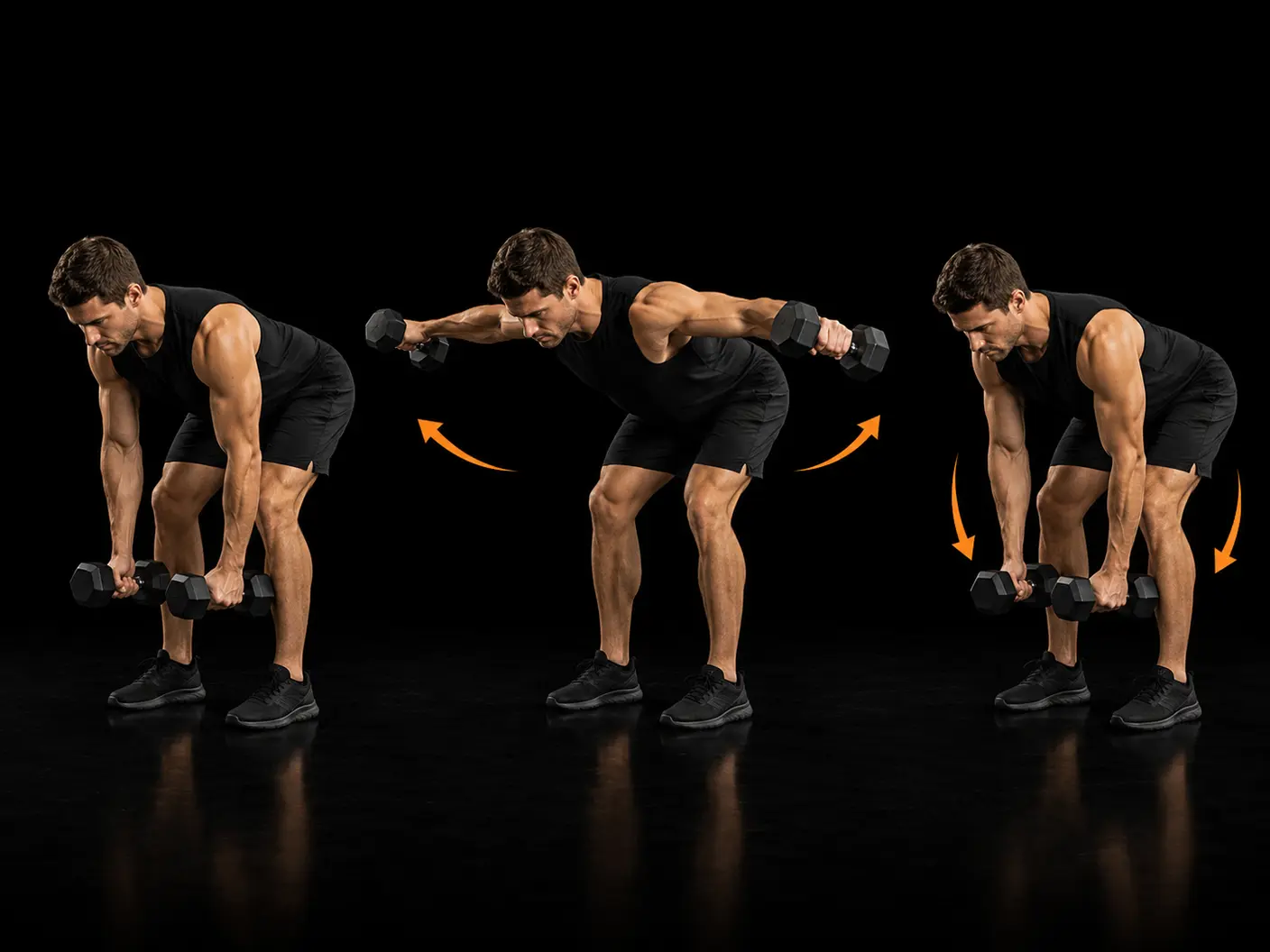
The reverse fly is an isolation exercise targeting the posterior deltoid, performed either bent-over with dumbbells or standing at a cable station. It trains the horizontal abduction pattern, developing the rear portion of the shoulder alongside the middle trapezius and rhomboids. It suits lifters at any level looking to balance shoulder development or improve upper-back posture.
How to do it
Bent-over with a flat back (DB version) or standing (cable). Slight elbow bend. Raise the arms out to the sides in a wide arc until the weights are at shoulder height. Pause; squeeze the rear delts. Lower under control.
Coaching cues
- Slight elbow bend
- Lead with the elbows
- Wide arc
- Squeeze at peak
Why train it
- Directly loads the posterior deltoid, a muscle that is frequently underdeveloped relative to the front and side of the shoulder in most training programmes.
- Engages the middle trapezius and rhomboids as synergists, supporting scapular retraction and contributing to a stronger, more stable upper back.
- The cable variation provides continuous tension throughout the arc, while the dumbbell version offers a practical, equipment-light alternative — giving coaches flexibility when programming.
- As a foundational isolation movement, it complements compound pressing work and helps restore balance between the pushing and pulling demands placed on the shoulder girdle.
Common mistakes
- Using too much weight and swinging the torso — reduce the load and brace the core so the rear delts, not momentum, drive the movement.
- Locking the elbows fully straight — maintain a slight, fixed bend throughout the arc to keep tension on the posterior deltoid and reduce stress on the joint.
- Letting the arms drift forward at the top rather than reaching a true shoulder-height arc — focus on leading with the elbows wide and back, finishing with the arms in line with the shoulders.
- Failing to control the lowering phase — resist the weight on the way down at the same tempo used on the way up to maximise time under tension.
Primary: Posterior Deltoid.
Secondary: Trapezius, Rhomboids.
Equipment
Good for
Easier variation
Reverse pec deck — machine version with fixed path.
Similar movements
Frequently asked
- What muscles does the reverse fly work?
- The primary muscle is the posterior deltoid. The middle trapezius and rhomboids work as secondary muscles, assisting with scapular retraction at the top of the movement.
- How many sets and reps should I do for the reverse fly?
- For hypertrophy, 3–4 sets of 12–20 reps works well, using a load that makes the final few reps genuinely challenging without compromising form. The rear delt responds well to higher rep ranges and a controlled tempo.
- Is the cable or dumbbell version better?
- Neither is categorically superior — they each have practical advantages. The cable version maintains tension at the bottom of the arc where dumbbells go slack, while the dumbbell version requires no machine and can be performed anywhere. Rotating between them over different training blocks is a reasonable approach.
- Where should the reverse fly sit in a session?
- Programme it after compound pulling movements such as rows or pull-ups, where the larger muscle groups have already been trained. Placing it at the end of an upper-body session as a finishing isolation exercise is a common and effective approach.
- Can the reverse fly help with shoulder imbalances?
- It is frequently used to address underdevelopment of the rear deltoid relative to the anterior deltoid — a common pattern in those who prioritise pressing work. If you have a specific shoulder concern or history of injury, consult a qualified professional before adding this movement.
Want this movement in a plan built for you?
Adaptiv programmes the right exercises for your goal, equipment and experience — then adapts them as you train.
Build my programme