Upright Row (Wide Grip)
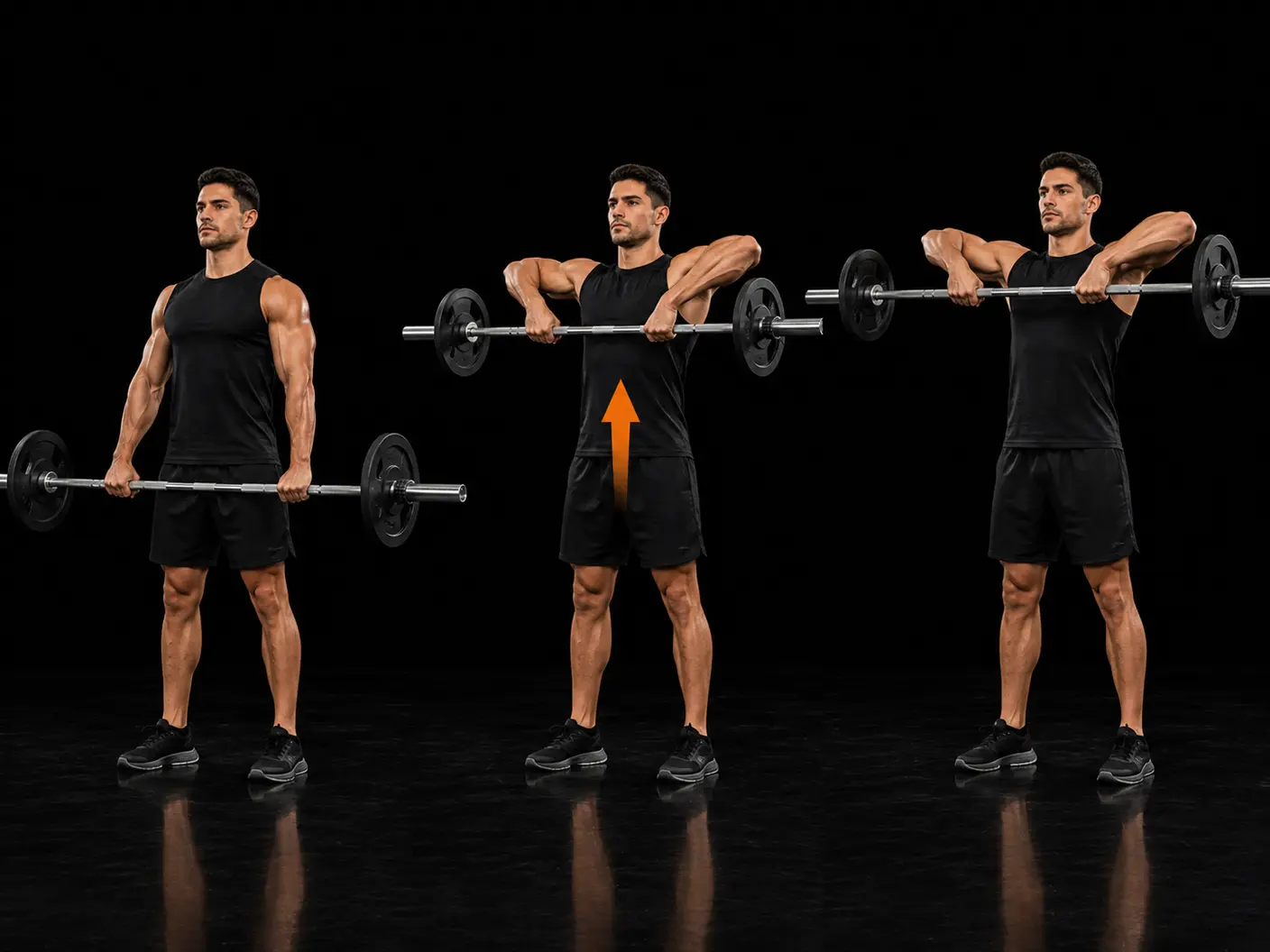
The wide-grip upright row is a barbell pulling movement that targets the medial deltoid and upper trapezius by drawing the bar vertically toward the collarbones with the elbows leading throughout. The wider hand position distinguishes it from its narrow-grip counterpart, reducing internal shoulder rotation and placing greater emphasis on the lateral head of the deltoid rather than the trapezius. It suits intermediate trainees looking to add width to the shoulder girdle through direct hypertrophy work.
How to do it
Grip a barbell wider than shoulder-width (EZ bar works well). Stand tall. Pull the bar up toward the collarbones; elbows lead and stay higher than the hands. Stop when the upper arms reach parallel to the floor — do not go higher. Lower under control.
Coaching cues
- Elbows lead
- Stop at horizontal
- Wide grip
- Slow eccentric
Why train it
- The wide grip prioritises the medial deltoid, making this an effective choice for building visible shoulder width when programmed alongside pressing movements.
- Pulling to the collarbone rather than the chin keeps the movement within a mechanically sound range, allowing consistent loading without excessive joint stress at the top.
- The compound nature of the exercise recruits the upper trapezius and biceps as secondary contributors, making it an efficient addition to an upper-body hypertrophy session.
- A controlled eccentric, as the cues specify, increases time under tension across the deltoid and trapezius, which is a key driver of muscular adaptation.
Common mistakes
- Pulling the bar too high — stop when the upper arms reach parallel to the floor, as continuing beyond this point places unnecessary stress on the shoulder joint.
- Allowing the hands to lead rather than the elbows — focus on driving the elbows upward and outward so they remain higher than the hands throughout the lift.
- Using momentum to initiate the pull — begin each rep from a controlled, stationary position at the hips to ensure the deltoids and trapezius are doing the work rather than a hip drive.
- Rushing the lowering phase — follow the coaching cue for a slow eccentric and return the bar under deliberate control to maximise muscle stimulus and maintain technique.
Primary: Lateral Deltoid, Trapezius.
Secondary: Biceps Brachii, Anterior Deltoid.
Equipment
Good for
Easier variation
Face pull — similar target without shoulder impingement risk.
Similar movements
Frequently asked
- What muscles does the wide-grip upright row work?
- The primary muscles are the medial deltoid and upper trapezius. The biceps and anterior deltoid contribute as secondary movers throughout the pull.
- How many sets and reps should I do for muscle growth?
- For hypertrophy, three to four sets of eight to twelve repetitions is a well-supported range. Rest ninety seconds to two minutes between sets and prioritise a controlled tempo, particularly on the way down.
- What is the difference between a wide-grip and narrow-grip upright row?
- A narrow grip shifts more emphasis toward the upper trapezius and tends to involve greater internal shoulder rotation at the top of the movement. The wider grip used here reduces that rotation and recruits the medial deltoid more directly, which suits shoulder-width development.
- Can I use an EZ bar instead of a straight barbell?
- Yes — the form description explicitly notes that an EZ bar works well for this movement. The angled grip can feel more comfortable at the wrist and elbow for many lifters without altering the mechanics meaningfully.
- Is this exercise suitable for beginners?
- The movement is classed as intermediate difficulty, so a degree of baseline shoulder stability and barbell experience is advisable before including it. Beginners would benefit from establishing sound pressing and rowing foundations first, then introducing this exercise once they can reliably control a loaded barbell.
Want this movement in a plan built for you?
Adaptiv programmes the right exercises for your goal, equipment and experience — then adapts them as you train.
Build my programme