Tempo Squat (3-1-1)
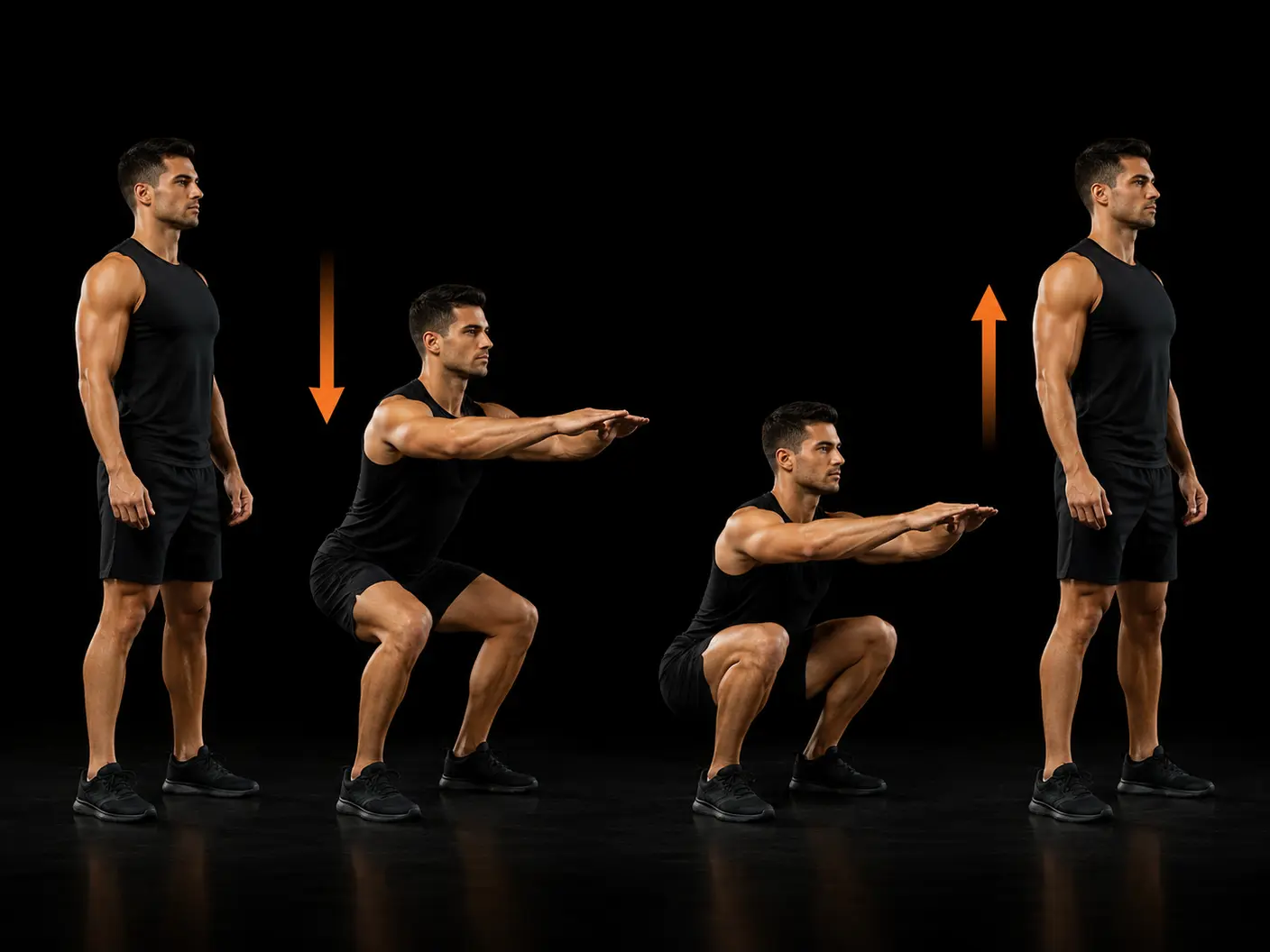
The tempo squat (3-1-1) is a barbell back squat performed to a strict timing protocol: a three-second controlled descent, a one-second pause at the bottom, and a one-second ascent. This structure deliberately extends time under tension across the quadriceps, glutes, hamstrings, and core, making the movement considerably more demanding than a conventional squat at the same load. It suits intermediate lifters looking to build strength or muscle, address weak points in the squat pattern, or develop the positional discipline that carries over to athletic performance.
How to do it
Execute a back squat with a prescribed tempo: 3 seconds on the descent, 1-second pause at the bottom, 1-second ascent. Maintain perfect form throughout. The slowed eccentric and pause increase time under tension.
Coaching cues
- 3 seconds down
- 1 second hold
- Stand up controlled
- Maintain form throughout
Why train it
- The extended eccentric phase and bottom pause increase time under tension, creating a strong stimulus for hypertrophy in the quadriceps and glutes without requiring maximal loading.
- Slowing the descent removes momentum as a crutch, exposing and reinforcing weaknesses in positional control throughout the full range of motion.
- The one-second pause at the bottom demands active stabilisation from the core and posterior chain, building the kind of structural integrity that supports heavier conventional squat work over time.
- Because load must be reduced relative to a standard back squat, the tempo variation allows quality volume to be accumulated with lower absolute stress on the joints and connective tissue.
Common mistakes
- Speeding up on the way down — count each second deliberately and resist the urge to let gravity take over during the eccentric phase.
- Losing spinal position at the bottom pause — brace the core and maintain an upright torso before initiating the ascent rather than relaxing into the hold.
- Bouncing out of the bottom instead of pausing — the one-second hold must be a genuine pause under control, not a brief touch-and-go.
- Using too much load for the prescribed tempo — select a weight that allows perfect form across all three phases, typically 60–70 per cent of your conventional back squat one-rep max as a starting point.
Primary: Quadriceps, Gluteus Maximus.
Secondary: Hamstrings, Rectus Abdominis.
Equipment
Good for
Easier variation
Light-load tempo squat — lower intensity.
Similar movements
Frequently asked
- What muscles does the tempo squat (3-1-1) work?
- The primary muscles trained are the quadriceps and glutes. The hamstrings and core act as secondary contributors, with the core playing a particularly active role during the bottom pause.
- How many sets and reps should I do for a tempo squat?
- For hypertrophy, three to four sets of six to ten repetitions works well, as the extended time under tension means even lower rep ranges accumulate significant muscular stress. For strength-focused work, three to five sets of four to six reps at a heavier relative load is appropriate.
- How much weight should I use compared to my normal back squat?
- A practical starting point is 60–70 per cent of your conventional back squat load. The slowed eccentric and pause substantially increase the difficulty, so most lifters find this range challenging even if it appears modest on paper.
- Is the tempo squat suitable for building athletic performance?
- Yes — the controlled eccentric and paused bottom position develop the deceleration strength and positional stability that underpin change-of-direction movements, jumping, and landing mechanics in sport contexts.
- What is a good alternative to the tempo squat if I do not have access to a barbell?
- A tempo goblet squat or tempo dumbbell squat uses the same timing protocol and trains the same pattern without a barbell or squat rack; these are practical substitutes when equipment is limited, though the loading ceiling will be lower.
Want this movement in a plan built for you?
Adaptiv programmes the right exercises for your goal, equipment and experience — then adapts them as you train.
Build my programme