Tate Press
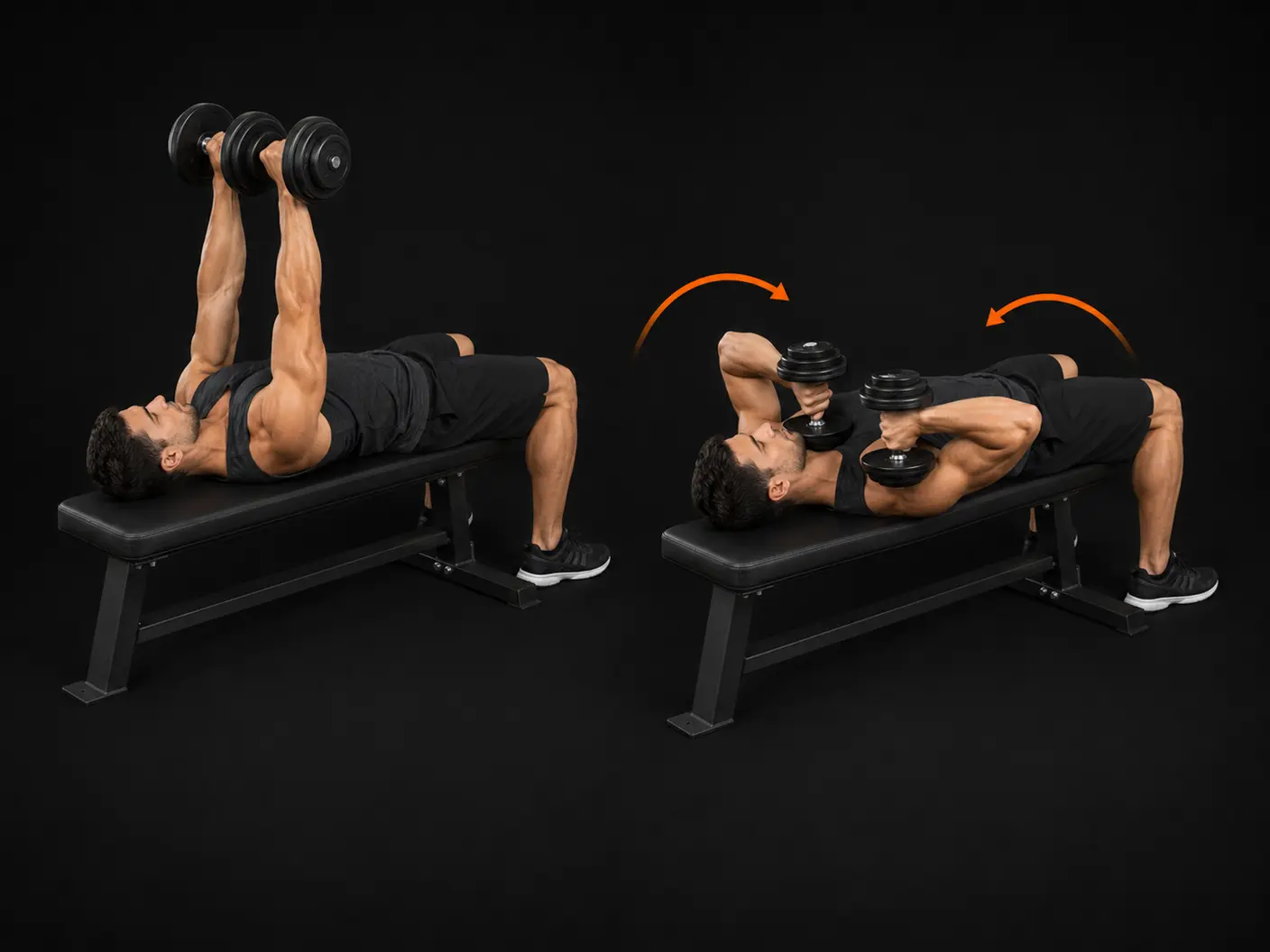
The Tate press is a dumbbell isolation movement performed lying flat on a bench, in which the elbows flare outward as the weights arc down toward the chest before pressing back to lockout. It trains the triceps brachii through a range of motion that places particular demand on the medial and lateral heads, making it a useful accessory exercise for lifters looking to develop upper-arm thickness. It suits intermediate trainees who already have a baseline of pressing strength and can control the movement safely through its full arc.
How to do it
Lie flat, press two dumbbells over the chest with palms forward. Elbows flared out. Lower the dumbbells in an outward arc toward the chest until they nearly touch the pecs, bending the elbows. Press back up to lockout, squeezing the triceps.
Coaching cues
- Elbows flared
- Arc to the chest
- Press to lockout
- Squeeze the triceps
Why train it
- The outward elbow position places direct, sustained tension on the medial and lateral heads of the triceps, making it an efficient tool for targeted hypertrophy of the upper arm.
- The arcing path of the dumbbells allows a longer effective range of motion than many triceps isolation exercises, giving the muscle more time under load per repetition.
- Because each arm works independently, the Tate press can help identify and address left-to-right strength imbalances that compound pressing movements may conceal.
- Finishing a session with Tate presses accumulates high-quality volume in the triceps without placing significant load through the shoulder joint, keeping overall fatigue manageable.
Common mistakes
- Allowing the elbows to drift inward during the descent — maintain a consistent outward flare throughout the arc to keep the intended muscles under load.
- Letting the dumbbells bounce off the chest at the bottom — control the lowering phase and stop the weights just short of contact with the pecs to preserve tension.
- Using momentum to press the weights back up — initiate every rep from a dead stop at the bottom and drive smoothly to lockout by contracting the triceps deliberately.
- Failing to reach full lockout at the top — extend the elbows completely on each repetition and squeeze the triceps at the top to maximise muscular stimulus.
Primary: Triceps Brachii.
Equipment
Good for
Easier variation
EZ-bar skull crusher — simpler path.
Similar movements
Frequently asked
- What muscles does the Tate press work?
- The Tate press primarily targets the triceps brachii, with particular emphasis on the medial and lateral heads. The anconeus acts as a secondary contributor, assisting elbow extension throughout the movement.
- How many sets and reps should I do for the Tate press?
- For hypertrophy, three to four sets of eight to fifteen repetitions with a controlled tempo is a practical starting point. Select a load that allows you to reach near-muscular failure within that rep range while maintaining form through the full arc.
- Where does the Tate press fit in a programme?
- It is best placed toward the end of an upper-body or push session, after compound pressing work such as the bench press or overhead press. Using it as a finishing movement lets you accumulate triceps volume without compromising performance on heavier lifts.
- What are good alternatives to the Tate press?
- Close-grip bench press, dumbbell skull crushers, and overhead triceps extensions all train the triceps brachii and can be rotated in when variety is needed. Each alternative shifts the emphasis slightly across the three heads of the muscle, so rotating movements over time supports balanced development.
- Is the Tate press suitable for beginners?
- The movement is rated intermediate because controlling the outward elbow path and the arcing dumbbell trajectory requires a degree of proprioceptive awareness that newer lifters may not yet have developed. Beginners would benefit from building a foundation with more straightforward triceps exercises before introducing the Tate press.
Want this movement in a plan built for you?
Adaptiv programmes the right exercises for your goal, equipment and experience — then adapts them as you train.
Build my programme