Skull Crusher (Lying Triceps Extension)
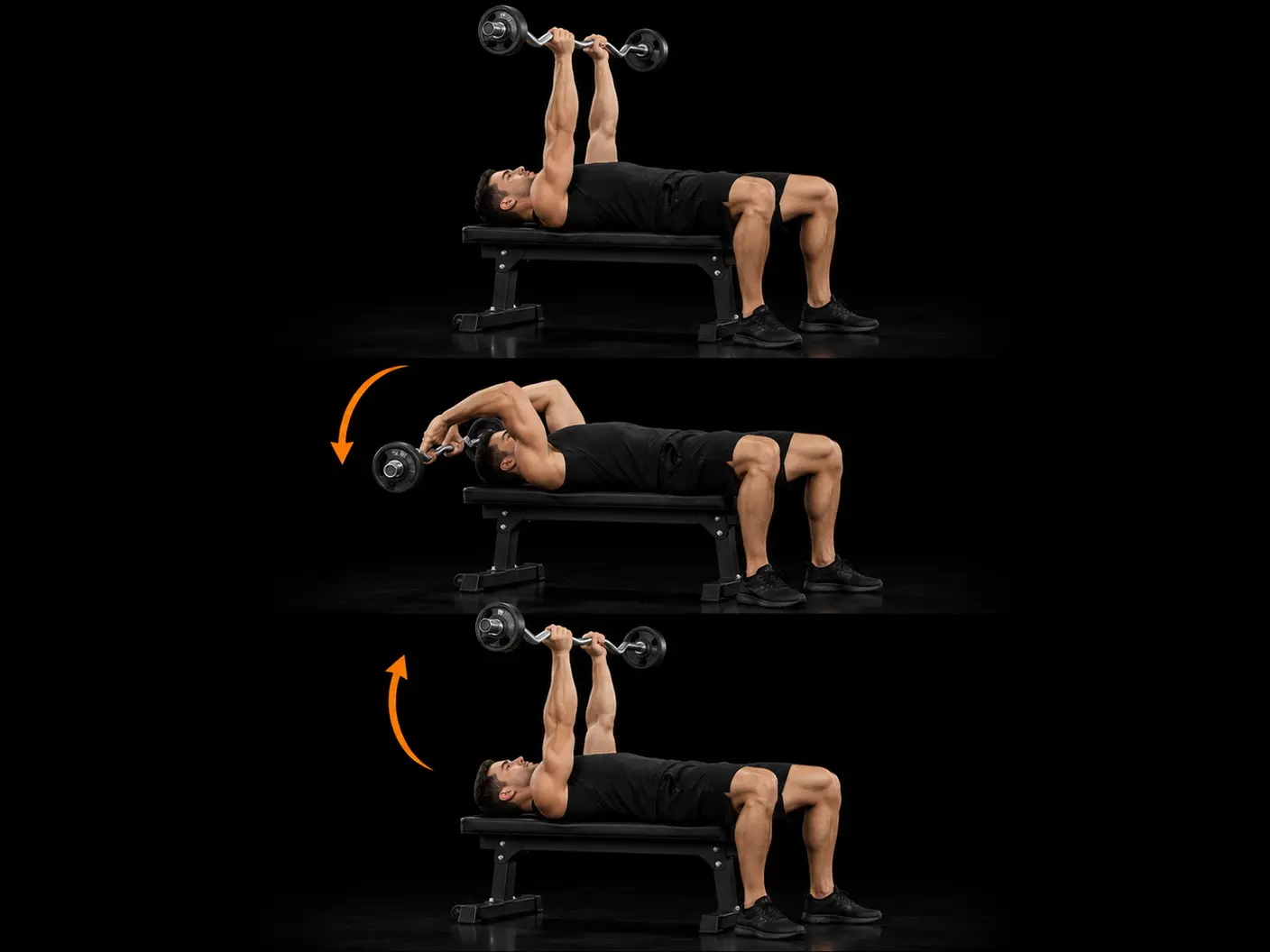
The skull crusher, formally known as the lying triceps extension, is an isolation exercise performed on a flat bench using an EZ-bar or dumbbells. It trains elbow extension through a long range of motion, placing sustained mechanical tension on the triceps brachii — particularly the long head when the upper arms are angled back. It suits intermediate lifters who have a foundation of pressing strength and are looking to add dedicated volume for arm development.
How to do it
Lie flat, press an EZ-bar over the chest with straight arms. Let the upper arms angle back slightly toward the head. Lower the bar toward the forehead or behind the head by flexing the elbows only. Extend to lockout. Pause; squeeze.
Coaching cues
- Upper arms angle back
- Elbows stay put
- Lower toward the forehead
- Pause at lockout
Why train it
- The angled upper arm position stretches the long head of the triceps brachii under load, making this one of the more effective single-joint movements for triceps hypertrophy.
- Working from a fixed, supine position removes the shoulder and chest contribution common in pressing movements, directing virtually all effort to the triceps and the supporting anconeus.
- The EZ-bar grip reduces wrist torque compared with a straight bar, making it easier to sustain good position across multiple sets and higher rep ranges.
- Because the movement is performed lying down, it pairs efficiently within a session — requiring minimal setup and allowing the lifter to move directly into pressing or other bench-based work.
Common mistakes
- Letting the elbows flare outward — keep them tracking in line with the wrists throughout the descent and extension to maintain elbow joint integrity and target the intended musculature.
- Moving the upper arms during the repetition — once set at a slight backward angle, the upper arms should remain stationary; only the forearms move as the elbows flex and extend.
- Rushing through the lowering phase — control the bar toward the forehead or just behind the head with a deliberate tempo rather than letting momentum dictate the range.
- Skipping the pause at lockout — a brief squeeze at full extension reinforces the contraction and ensures each repetition is completed rather than cut short.
Primary: Triceps Brachii.
Equipment
Good for
Easier variation
Dumbbell skull crusher — individual side loading.
Similar movements
Frequently asked
- What muscles do skull crushers work?
- The primary muscle is the triceps brachii, with the angled upper arm position placing particular emphasis on its long head. The anconeus acts as a secondary stabiliser at the elbow joint throughout the movement.
- How many sets and reps should I do for skull crushers?
- For hypertrophy, three to four sets of eight to twelve repetitions is a practical starting point. Select a load that allows you to reach the lower end of that range with sound form before progressing weight.
- EZ-bar or dumbbells — which is better for skull crushers?
- Both are valid options. The EZ-bar allows a consistent grip width across all repetitions and is generally easier to control at heavier loads, while dumbbells permit each arm to move independently, which can be useful if one side is less developed than the other.
- Where in my session should I programme skull crushers?
- Skull crushers work best as an accessory movement placed after your main compound pressing exercises, when the triceps have already been recruited but still have capacity for isolated volume work.
- Are skull crushers suitable for beginners?
- This exercise is rated intermediate — it requires stable shoulder positioning and a degree of body awareness to keep the elbows fixed under load. Beginners are better served building triceps strength through close-grip pressing before introducing this variation.
Want this movement in a plan built for you?
Adaptiv programmes the right exercises for your goal, equipment and experience — then adapts them as you train.
Build my programme