Rope Triceps Pushdown
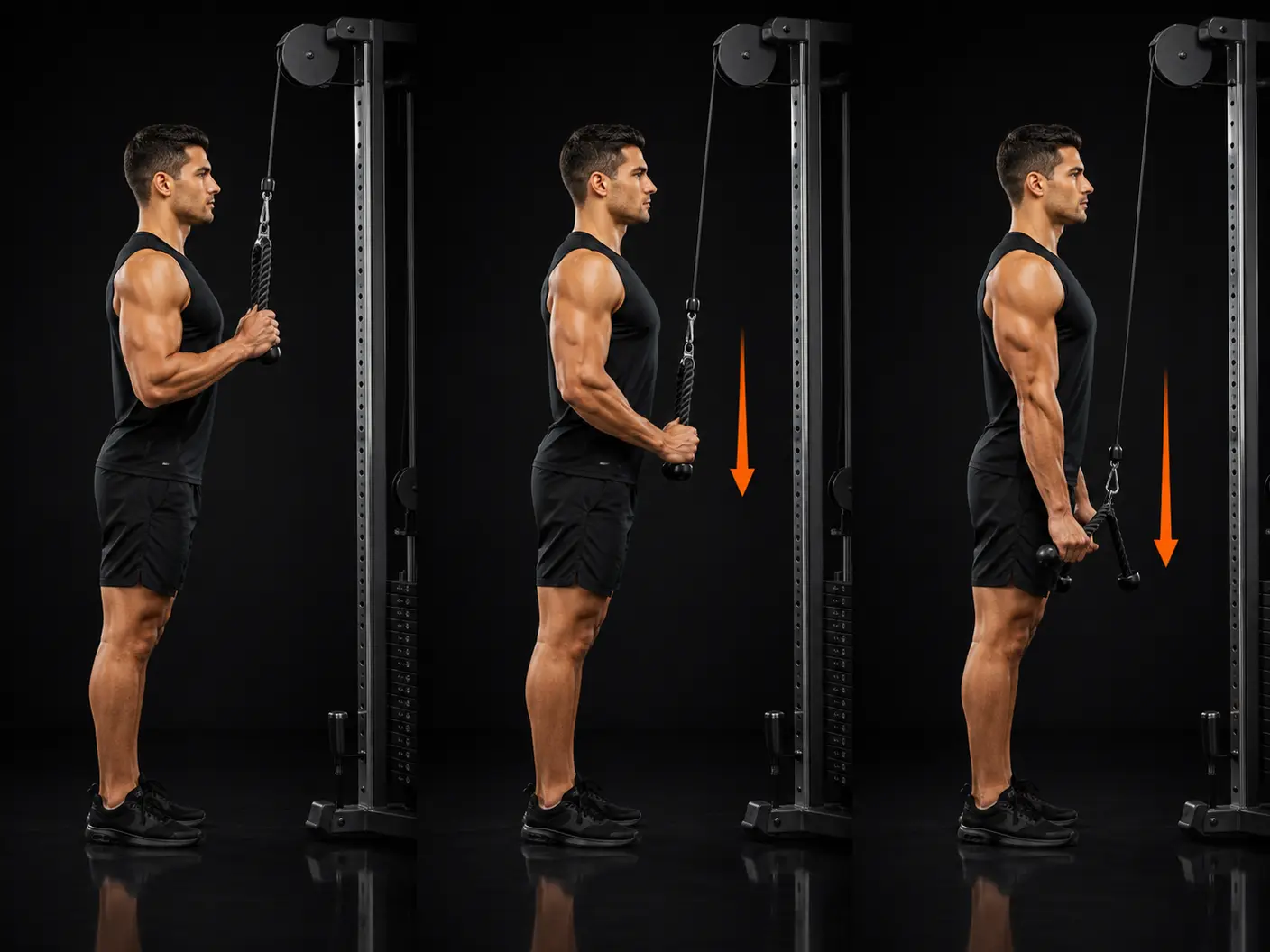
The rope triceps pushdown is a cable-based isolation exercise targeting the triceps brachii, performed by driving a rope attachment downward from a high pulley and spreading the ends apart at lockout. The neutral grip and rope's freedom of movement allow a fuller range of motion and a more pronounced peak contraction than a fixed-bar attachment. It suits trainees of any experience level looking to add direct triceps volume, and is a staple finishing exercise in upper-body hypertrophy programmes.
How to do it
Stand facing a high cable, rope attached. Grip the rope with palms facing each other. Elbows pinned. Push down and pull the ends of the rope apart at the bottom. Pause; squeeze. Return under control.
Coaching cues
- Pull rope apart at the bottom
- Elbows pinned
- Squeeze at lockout
- Slow return
Why train it
- The rope's splaying action at the bottom of the rep increases the stretch placed on the lateral head of the triceps, improving the quality of the contraction at lockout.
- Because the movement is cable-driven, tension remains constant throughout the range of motion, removing the dead spots that occur with free-weight triceps work.
- Pinning the elbows to the sides enforces strict isolation of the triceps, minimising shoulder and chest involvement and keeping the stimulus exactly where it is intended.
- The foundational difficulty level makes this an accessible entry point for building triceps mass without the technical demands of compound pressing movements.
Common mistakes
- Allowing the elbows to flare away from the body — keep them fixed at the sides throughout the entire rep so the triceps, not the lats or shoulders, do the work.
- Skipping the rope-apart action at lockout — actively pull the ends of the rope outward at the bottom of every rep to achieve a full contraction of the lateral head.
- Using momentum and leaning heavily over the cable — stand tall, brace lightly, and let the muscle move the load rather than using bodyweight to drive the rope down.
- Rushing the return phase — allow the rope to travel back up under control, as the eccentric portion contributes meaningfully to hypertrophy stimulus.
Primary: Triceps Brachii.
Equipment
Good for
Easier variation
Straight-bar pushdown — fixed path is simpler.
Similar movements
Frequently asked
- What muscles does the rope triceps pushdown work?
- The primary muscle trained is the lateral head of the triceps brachii. The medial head and anconeus contribute as secondary movers, making this a comprehensive stimulus for the back of the upper arm.
- How many sets and reps should I do for muscle growth?
- For hypertrophy, three to four sets of ten to fifteen reps works well for most trainees. Select a load that challenges you in the final two or three reps while allowing full control of the eccentric and a clean lockout on every repetition.
- Where does this exercise fit in a workout?
- The rope triceps pushdown is best placed toward the end of an upper-body or push session, after compound pressing movements such as the bench press or overhead press have already fatigued the triceps through heavier loading.
- Is there an alternative if I do not have access to a cable machine?
- Resistance bands attached to a high anchor point replicate the movement pattern reasonably well and maintain constant tension in a similar way to a cable stack. Overhead triceps extensions with a dumbbell are an alternative free-weight option, though the resistance curve differs.
- Should I use this exercise if I experience elbow discomfort during pressing?
- If you are currently experiencing elbow discomfort, speak with a qualified physiotherapist or sports medicine professional before continuing or modifying your training — this guide is not a substitute for individual assessment.
Want this movement in a plan built for you?
Adaptiv programmes the right exercises for your goal, equipment and experience — then adapts them as you train.
Build my programme