Overhead Cable Triceps Extension
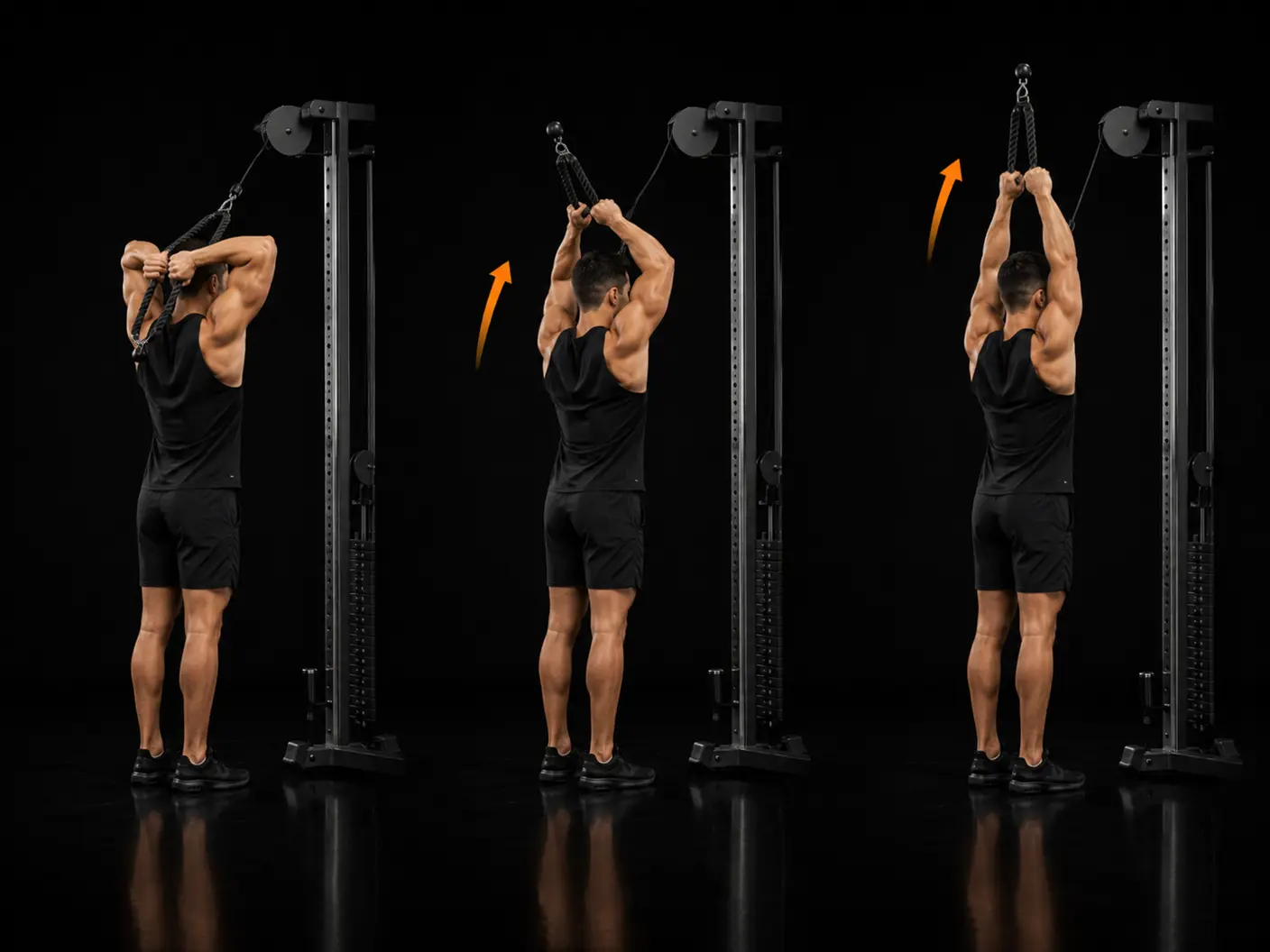
The overhead cable triceps extension is an isolation movement that trains the triceps through a full range of motion, with particular emphasis on the long head due to the overhead position of the upper arm. The continuous tension provided by the cable keeps load on the muscle throughout the stretch and contraction, making it a reliable option for adding volume to triceps development. It suits lifters at any training level looking to bring up arm size or improve elbow extension strength.
How to do it
Face away from a high cable with a rope. Grip the rope with palms facing each other; step forward, arms overhead. Split stance. Extend the elbows forward and slightly up — elbows stay in place. Pause at lockout. Return slowly to a deep triceps stretch behind the head.
Coaching cues
- Arms by the ears
- Elbows stay put
- Full stretch behind the head
- Pause at lockout
Why train it
- The overhead arm position places the long head of the triceps in a stretched state, maximising its contribution and providing a stimulus that pressing movements alone cannot replicate.
- Cable resistance maintains tension at the bottom of the movement — the deep stretch position — where a dumbbell or barbell would otherwise go slack.
- The split stance and forward lean create a stable base that allows you to focus entirely on elbow extension mechanics rather than managing balance.
- As a foundational isolation exercise, it is straightforward to load progressively, making it a practical choice for hypertrophy-focused programmes across a range of experience levels.
Common mistakes
- Letting the elbows flare wide — keep them pointing forward and in line with the ears throughout the movement so the load stays on the triceps rather than dispersing into the shoulders.
- Cutting the range of motion short on the return — allow the forearms to travel fully behind the head into a deep stretch before initiating the next rep.
- Using momentum to swing the weight up — control the concentric phase deliberately and pause at full lockout to ensure the triceps complete the work.
- Allowing the torso to shift or rotate during the set — set a firm split stance, brace the core, and keep the upper arms stationary so only the elbows are moving.
Primary: Triceps Brachii.
Equipment
Good for
Easier variation
Lying DB triceps extension — similar lengthened position, lower complexity.
Similar movements
Frequently asked
- What muscles does the overhead cable triceps extension work?
- The primary muscle is the triceps brachii long head, which is emphasised because the upper arm is held overhead, placing that head under a greater stretch than in pushdown variations. The lateral and medial heads of the triceps assist throughout the extension.
- How many sets and reps should I do for the overhead cable triceps extension?
- For hypertrophy, 3–4 sets of 10–15 repetitions works well, with a controlled tempo and a deliberate pause at lockout. Keep rest periods to 60–90 seconds to maintain metabolic stress on the muscle.
- What is the difference between this exercise and a cable pushdown?
- A pushdown keeps the upper arm at the side of the body, which reduces the stretch on the long head and shifts more emphasis to the lateral head. The overhead position in this exercise lengthens the long head before each contraction, providing a complementary stimulus rather than a duplicate one.
- Can I use a straight bar instead of a rope for this exercise?
- A rope is generally preferred because it allows the hands to separate slightly at lockout, encouraging full elbow extension and a more natural wrist position. A straight bar can be used, but it restricts wrist movement and may make it harder to achieve a deep stretch without discomfort at the elbows.
- Is this exercise suitable if I have elbow discomfort?
- Overhead elbow extension under load can place stress on the elbow joint, particularly at end range. If you experience discomfort, check with a qualified professional before continuing rather than attempting to work through it.
Want this movement in a plan built for you?
Adaptiv programmes the right exercises for your goal, equipment and experience — then adapts them as you train.
Build my programme