Dumbbell Overhead Triceps Extension
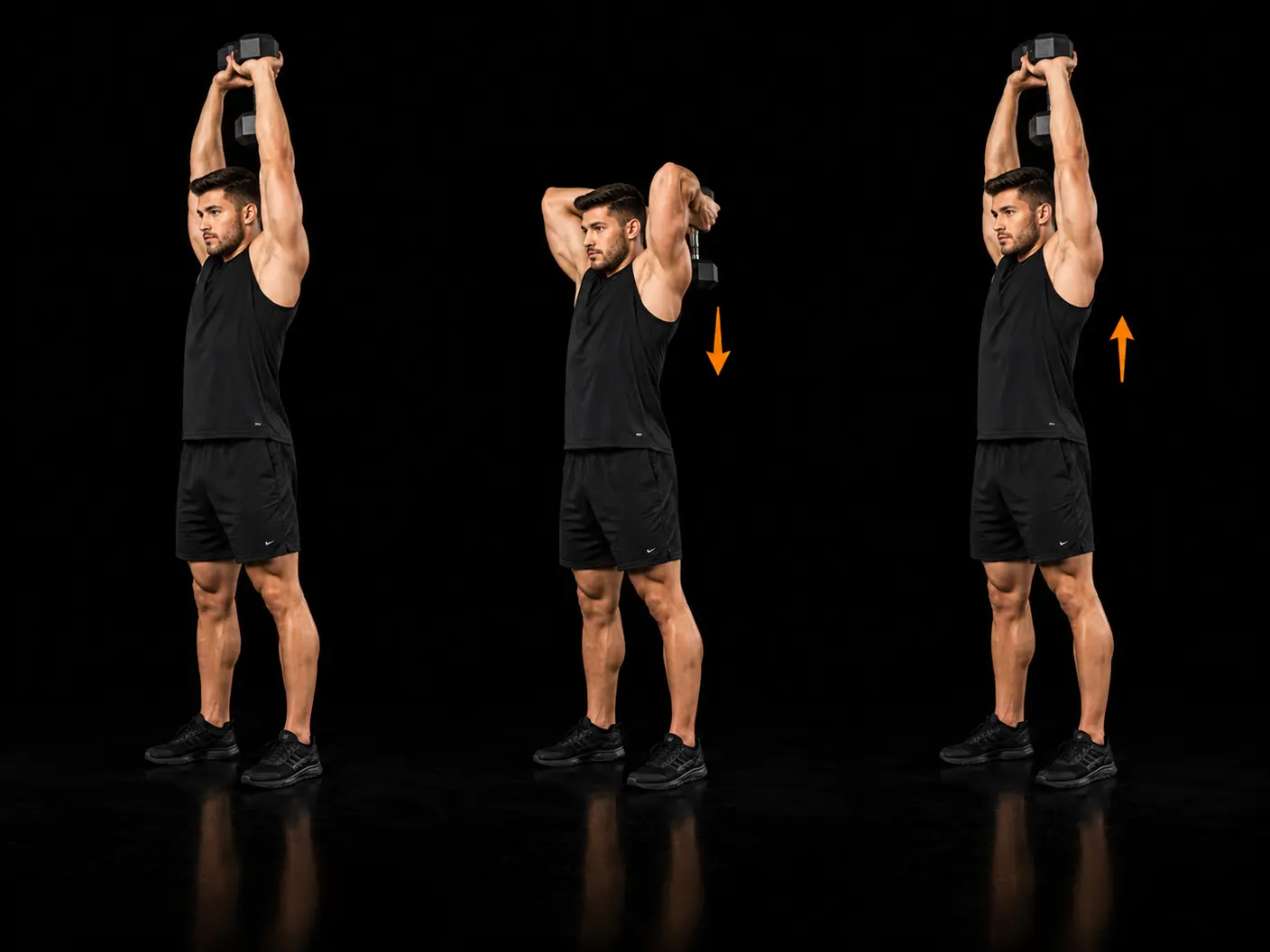
The dumbbell overhead triceps extension is an isolation movement that trains the elbow extension pattern with the arms elevated, placing particular emphasis on the long head of the triceps. Holding a single dumbbell with both hands, you control the load through a deep range of motion behind the head — a position that stretches the long head more fully than pressing variants allow. It suits anyone from beginners building foundational upper-arm strength to more experienced lifters looking to add volume to a hypertrophy programme.
How to do it
Hold one dumbbell with both hands, palms pressed against the inner plate. Press the dumbbell overhead with arms fully extended. Lower it behind the head by bending at the elbows until the forearms pass parallel to the floor, keeping the upper arms stationary and close to the ears. Press back up to full elbow extension.
Coaching cues
- Upper arms fixed
- Elbows close to the head
- Full extension
- Control the descent
Why train it
- The overhead position places the long head of the triceps under a pronounced stretch, making it an effective choice for targeting that portion of the muscle through a full range of motion.
- Using a single dumbbell with a double-handed grip simplifies load management and reduces the balance demands compared with using two separate dumbbells, making technique easier to maintain.
- The movement complements pressing exercises by developing elbow extension strength independently, which can support performance in bench press and overhead press patterns over time.
- Its foundational difficulty rating means it can be introduced early in a training programme, giving newer lifters a reliable way to accumulate triceps volume with manageable technique demands.
Common mistakes
- Allowing the elbows to flare wide — keep them close to the sides of the head throughout the movement to maintain tension on the triceps and reduce unnecessary stress on the shoulder joint.
- Letting the upper arms drift forward or backward during the rep — fix the upper arms vertically and move only at the elbows, ensuring the triceps rather than momentum are doing the work.
- Cutting the range of motion short on the descent — lower the dumbbell until the forearms pass parallel to the floor to achieve the stretch through the long head that makes this exercise particularly effective.
- Rushing the lowering phase — control the descent deliberately rather than letting the weight drop, as a slower eccentric places greater mechanical demand on the muscle and reduces the risk of losing position at the elbow.
Primary: Triceps Brachii.
Secondary: Rectus Abdominis.
Equipment
Good for
Easier variation
Triceps kickback — avoids the overhead position for those with shoulder mobility restrictions.
Similar movements
Frequently asked
- What muscles does the dumbbell overhead triceps extension work?
- The primary muscle trained is the long head of the triceps. The core acts as a secondary stabiliser to maintain an upright torso position throughout the movement.
- How many sets and reps should I do for muscle growth?
- For hypertrophy, three to four sets of eight to fifteen reps works well for most people. Prioritise a controlled tempo and full range of motion over loading the bar beyond what technique can support.
- Why is the overhead position better for the long head of the triceps?
- The long head crosses the shoulder joint as well as the elbow, meaning it is more fully lengthened when the arms are raised overhead. This stretched position has been associated with greater hypertrophic stimulus compared with movements performed with the arms at the sides.
- What are good alternatives if I find the overhead position uncomfortable?
- Triceps pushdowns and lying dumbbell skull crushers both train elbow extension and load the triceps effectively, though they do not place the long head under the same degree of stretch. If you experience discomfort in the overhead position, consider checking your technique with a qualified coach before ruling the exercise out.
- Can beginners include this exercise in their programme?
- Yes — it is rated as a foundational movement, which means the coordination demands are manageable for newer lifters. Start with a light dumbbell to establish the pattern of keeping the upper arms fixed and elbows close to the head before progressing the load.
Want this movement in a plan built for you?
Adaptiv programmes the right exercises for your goal, equipment and experience — then adapts them as you train.
Build my programme