Cable Triceps Pushdown (Straight Bar)
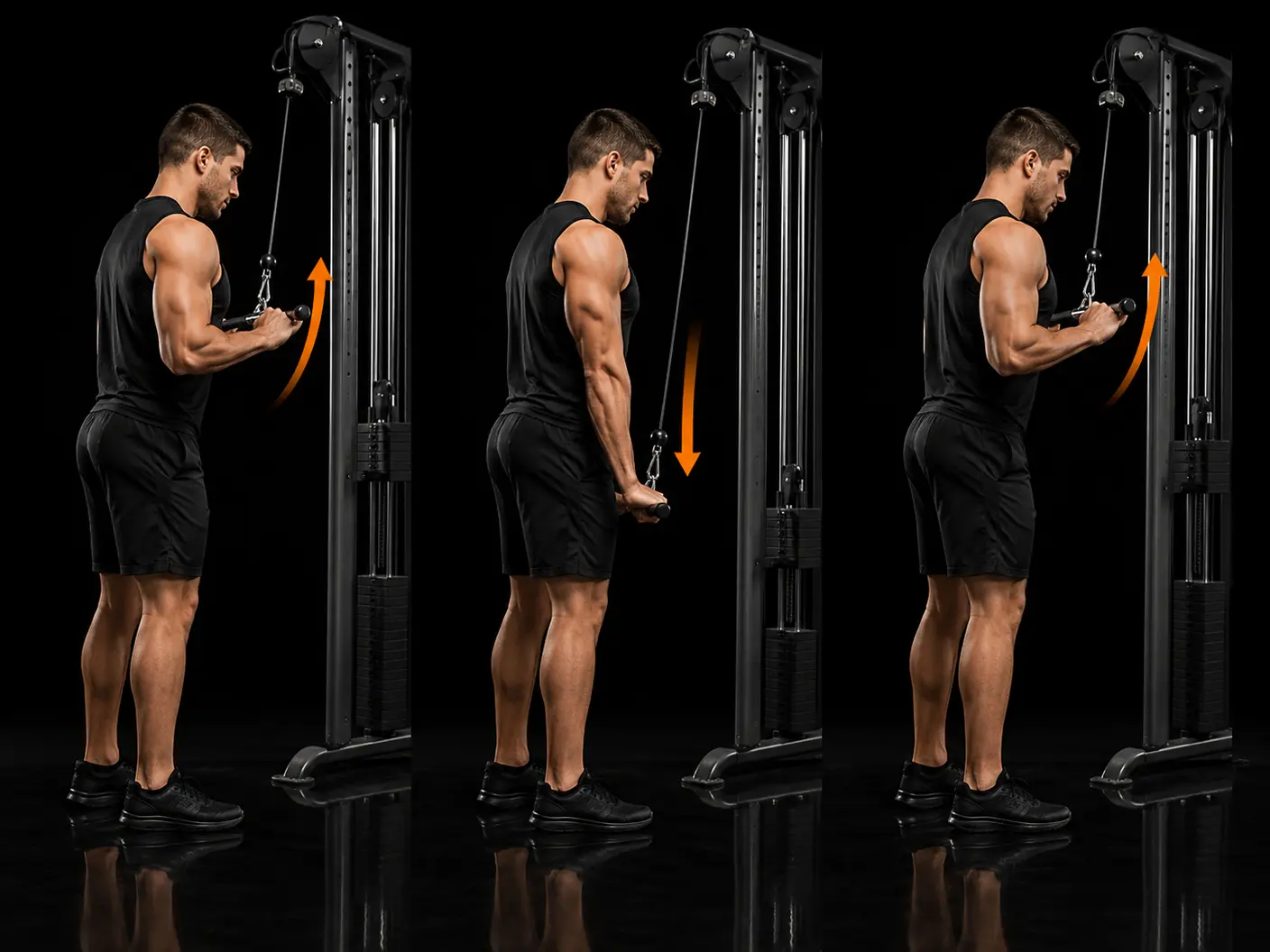
The cable triceps pushdown (straight bar) is an isolation exercise performed at a high cable station, training the elbow-extension pattern through a smooth, constant-tension arc. It targets the lateral and medial heads of the triceps brachii, with the anconeus contributing as a secondary mover. It suits lifters at any level looking to add direct triceps volume, and is a reliable staple in hypertrophy-focused upper-body programming.
How to do it
Stand facing a high cable with a straight bar. Grip overhand, shoulder-width. Elbows pinned to the sides. Start with forearms near vertical. Push the bar down by extending the elbows until arms are fully straight. Pause; squeeze the triceps. Return under control.
Coaching cues
- Elbows pinned
- Full extension
- Pause at lockout
- Slow return
Why train it
- The cable's constant tension keeps the triceps under load throughout the full range of motion, making it particularly effective for accumulating hypertrophy volume.
- The fixed elbow position isolates the triceps cleanly, removing the shoulder and chest contributions that compound pressing movements inevitably recruit.
- The straight bar allows a symmetrical, bilateral grip that is straightforward to load and progress, making it well suited to foundational programming.
- A controlled return phase provides meaningful eccentric stimulus without requiring complex equipment or technique adjustments.
Common mistakes
- Letting the elbows drift away from the sides — pin them firmly to the ribcage throughout every rep to ensure the triceps, not the shoulders, are driving the movement.
- Stopping short of full elbow extension — push to a complete lockout and pause there, as cutting the range early reduces tension on the lateral and medial heads at the point of peak contraction.
- Using momentum to swing the bar down — keep the torso still and the movement deliberate, as rocking forward transfers load away from the triceps and onto the anterior deltoid.
- Rushing the return — let the bar travel back up slowly under control, as a hasty eccentric wastes the hypertrophy stimulus the cable's constant tension provides.
Primary: Triceps Brachii.
Equipment
Good for
Easier variation
Band pushdown — lighter resistance for beginners.
Similar movements
Frequently asked
- What muscles does the cable triceps pushdown (straight bar) work?
- The primary movers are the lateral and medial heads of the triceps brachii, which together drive elbow extension against the cable's resistance. The anconeus acts as a secondary contributor to stabilise the elbow joint throughout the movement.
- How many sets and reps should I do for muscle growth?
- For hypertrophy, three to four sets of ten to fifteen repetitions per session works well, with a controlled tempo on both the push and the return. Allow one to two minutes of rest between sets and prioritise a full lockout and a slow eccentric over adding load prematurely.
- Is this exercise suitable for beginners?
- Yes — it is classified as a foundational movement, meaning the technique is accessible without a long learning curve. New lifters should begin with a modest load that allows clean form, particularly keeping the elbows pinned and achieving full extension on every rep.
- What are good alternatives if I do not have access to a cable machine?
- Overhead dumbbell triceps extensions or close-grip press-up variations train elbow extension using bodyweight or free weights, though they do not replicate the constant tension the cable provides. A resistance band anchored to a high point can approximate the cable pushdown pattern when machine access is unavailable.
- Can I use this exercise as part of a push day or arm day programme?
- It fits naturally at the end of a push session, after compound pressing work has already fatigued the triceps under heavier load, or as an earlier movement on a dedicated arm day where isolation volume is the primary goal. Either context is valid; adjust your working load accordingly, as residual fatigue from pressing will affect how much weight you can handle.
Want this movement in a plan built for you?
Adaptiv programmes the right exercises for your goal, equipment and experience — then adapts them as you train.
Build my programme