Swiss Ball Leg Curl
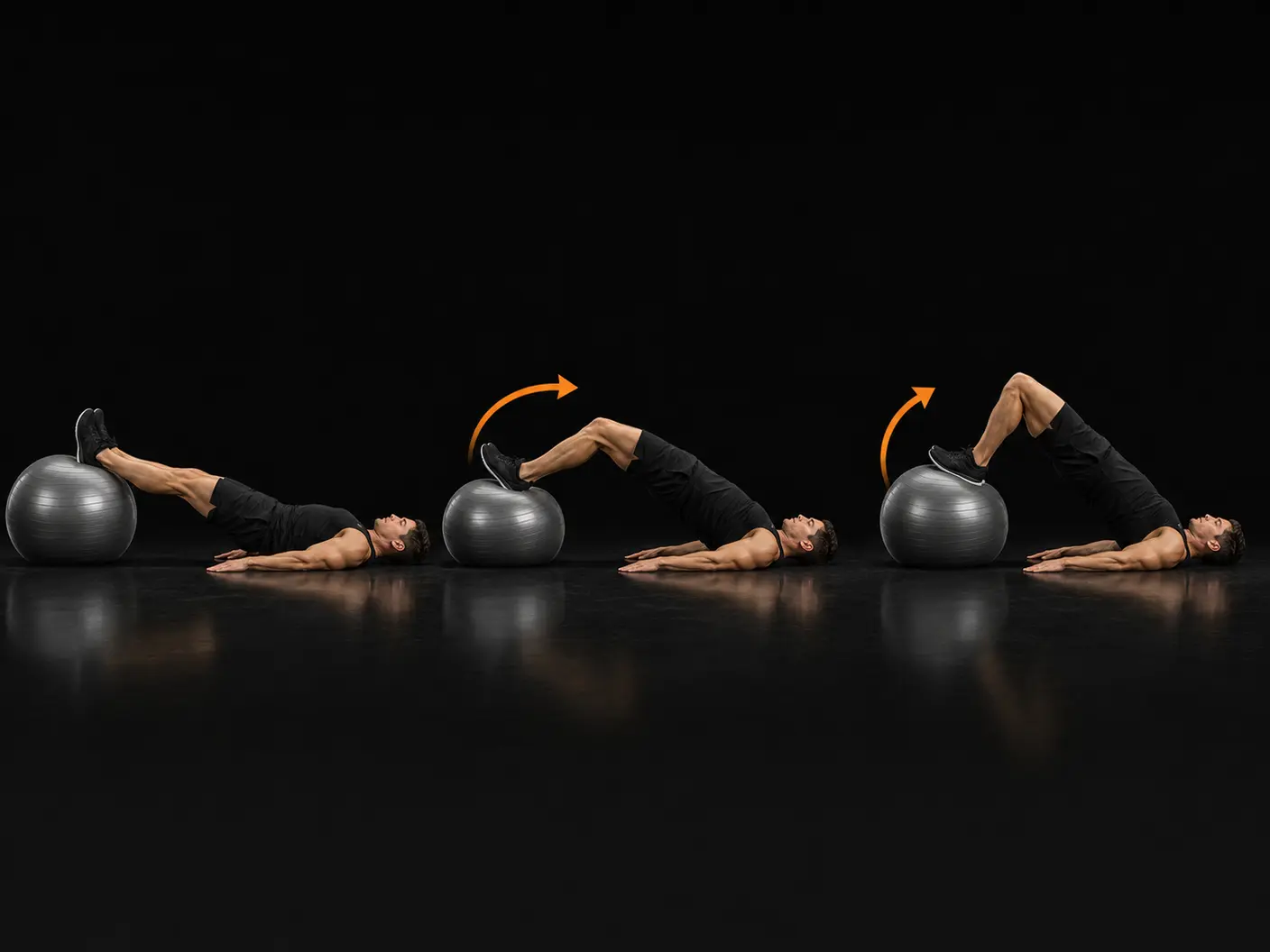
The Swiss ball leg curl is a floor-based isolation exercise that trains the hamstrings through active knee flexion while simultaneously demanding sustained hip extension throughout the movement. Lying supine with the heels on the ball, you bridge the hips and curl the ball toward the glutes, working both functions of the hamstring in a single rep. The movement suits intermediate trainees looking to develop the posterior chain with minimal equipment, and the inherent instability of the Swiss ball recruits the core as a supporting structure.
How to do it
Lie on your back, heels on a Swiss ball, arms flat on the floor. Lift the hips into a bridge. Curl the ball toward the glutes by flexing the knees; hips rise higher as the ball comes in. Extend the legs to return without letting the hips drop. Work both halves — the knee flexion and the hip extension.
Coaching cues
- Hips up
- Drive heels into ball
- Control the rollout
- Keep hips high
Why train it
- Training knee flexion and hip extension together in one movement addresses both roles of the hamstrings, making it more complete than a standard lying leg curl machine.
- The Swiss ball introduces instability that requires the core to work continuously to maintain position, adding a secondary training stimulus without a separate exercise.
- The exercise is performed bodyweight, making it accessible for home or gym settings where heavy machinery is not available.
- Controlling the rollout on the eccentric phase builds hamstring strength through a lengthening contraction, which is associated with improved resilience in the posterior chain.
Common mistakes
- Letting the hips sag during the extension phase — keep the glutes actively contracted throughout so the hips remain elevated for the full duration of the set.
- Using momentum to curl the ball in rather than deliberate knee flexion — slow the concentric down so the hamstrings, not the swing of the legs, are doing the work.
- Allowing the heels to slide off the ball during the rollout — place the heels centrally on the ball at the start and drive them down into the surface to maintain contact.
- Rushing the return leg extension without controlling the ball — take two to three seconds to roll out so the hamstrings are loaded eccentrically rather than simply released.
Primary: Hamstrings, Gluteus Maximus.
Secondary: Rectus Abdominis.
Equipment
Good for
Easier variation
Single-leg bridge on the floor — remove the rolling element.
Similar movements
Frequently asked
- What muscles does the Swiss ball leg curl work?
- The primary muscles trained are the hamstrings and glutes. The core works as a secondary stabiliser to keep the hips elevated and the torso steady throughout the movement.
- How many sets and reps should I do for the Swiss ball leg curl?
- For hypertrophy, three to four sets of ten to fifteen reps with a controlled tempo works well. For general fitness, two to three sets in the same rep range is a sound starting point, prioritising full range of motion over load or speed.
- Is the Swiss ball leg curl suitable for beginners?
- The movement is classed as intermediate because maintaining hip height while coordinating the curl and rollout requires a degree of body control. Beginners may find it useful to practise a static glute bridge first to build the hip extension endurance needed to hold position.
- What are good alternatives if I do not have a Swiss ball?
- The exercise data does not list specific alternatives, but any movement that trains the hamstrings through knee flexion — such as a lying or seated leg curl machine — addresses a similar pattern. If you have access to a cable machine or resistance band, a prone leg curl variation would also target the same primary muscles.
- Can I use the Swiss ball leg curl to build hamstring size?
- Yes, hypertrophy is listed as a primary goal for this exercise. Consistent progressive overload through increased volume or tempo manipulation, combined with adequate recovery, supports muscle development in the hamstrings and glutes over time.
Want this movement in a plan built for you?
Adaptiv programmes the right exercises for your goal, equipment and experience — then adapts them as you train.
Build my programme