Seated Leg Curl
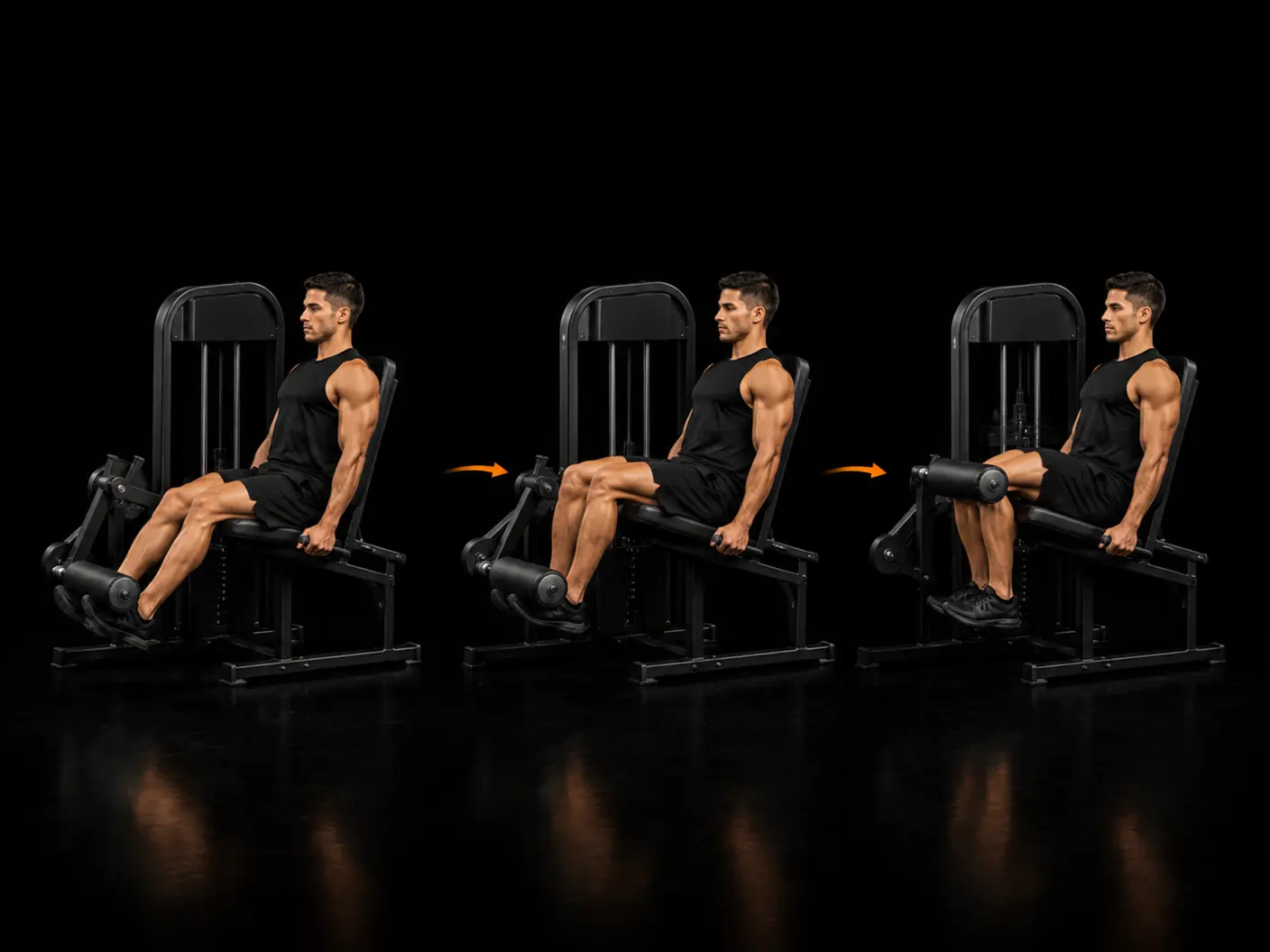
The seated leg curl is a machine-based isolation exercise that trains the hamstrings through knee flexion while the hips remain in a flexed position. This hip angle places the hamstrings under greater stretch at the start of each repetition compared to the prone variation, making it a useful tool for targeting all three hamstring muscles — the biceps femoris, semitendinosus, and semimembranosus. It suits lifters at any experience level who want to develop hamstring size or maintain balanced lower-body strength.
How to do it
Adjust the seat so the knee joint aligns with the pivot point. Set the leg pad just above the Achilles. Lock the thigh pad across the quads. Grip the handles. Curl the heels under the bench, fully flexing the knees. Pause briefly at peak contraction. Lower with a 2–3 second eccentric; do not let the stack slam.
Coaching cues
- Full knee flexion
- Pause at the bottom
- Controlled eccentric
- Toes pointed or flexed per preference
Why train it
- The seated position keeps the hips flexed throughout the set, placing the hamstrings under a longer effective range of tension and supporting hypertrophy adaptations.
- Machine-guided movement removes the need for balance or stabilisation, allowing full attention to be directed at the working muscles.
- The controlled environment makes it straightforward to apply progressive overload incrementally, which is valuable for general fitness and structural development alike.
- The gastrocnemius receives meaningful secondary work at the knee, adding calf involvement without requiring a separate exercise.
Common mistakes
- Allowing the thighs to rise off the pad during the curl — ensure the thigh pad is secured firmly and focus on keeping the legs pressed down throughout the movement.
- Letting the weight stack drop without resistance — control the eccentric over 2–3 seconds on every repetition rather than allowing gravity to do the work.
- Misaligning the knee joint with the machine's pivot point — take the time to adjust the seat position so the joint tracks correctly, reducing unnecessary shear stress on the knee.
- Cutting the range of motion short — curl the heels fully under the bench to achieve complete knee flexion and maximise hamstring contraction at the end range.
Primary: Hamstrings.
Secondary: Gastrocnemius.
Equipment
Good for
Easier variation
Lying leg curl — different hip angle that some find easier to set up.
Similar movements
Frequently asked
- What muscles does the seated leg curl work?
- The primary muscles are the hamstrings — specifically the biceps femoris, semitendinosus, and semimembranosus. The gastrocnemius also contributes as a secondary mover due to its role in knee flexion.
- How many sets and reps should I do on the seated leg curl?
- For hypertrophy, 3–4 sets of 8–15 repetitions with a controlled tempo is a well-supported approach. Ensure the load allows full range of motion and a deliberate eccentric rather than chasing heavier weights at the expense of form.
- What is the difference between the seated and prone leg curl?
- The key distinction is hip position — the seated curl keeps the hips flexed, which lengthens the hamstrings further and increases the stretch placed on them at the start of each rep. Many coaches favour the seated variation when hamstring hypertrophy is the primary goal.
- Should I point or flex my toes during the seated leg curl?
- Either is acceptable and each shifts the emphasis slightly — pointing the toes (plantarflexion) increases gastrocnemius involvement, while a neutral or flexed foot reduces it. Experiment with both and use whichever allows you to feel the hamstrings working most effectively.
- Is the seated leg curl suitable for beginners?
- Yes — it is classified as a foundational movement because the machine provides a fixed path and the setup is straightforward to learn. Focus on correct seat and pad alignment before adding load, and build familiarity with the controlled eccentric from your first session.
Want this movement in a plan built for you?
Adaptiv programmes the right exercises for your goal, equipment and experience — then adapts them as you train.
Build my programme