Step-Up
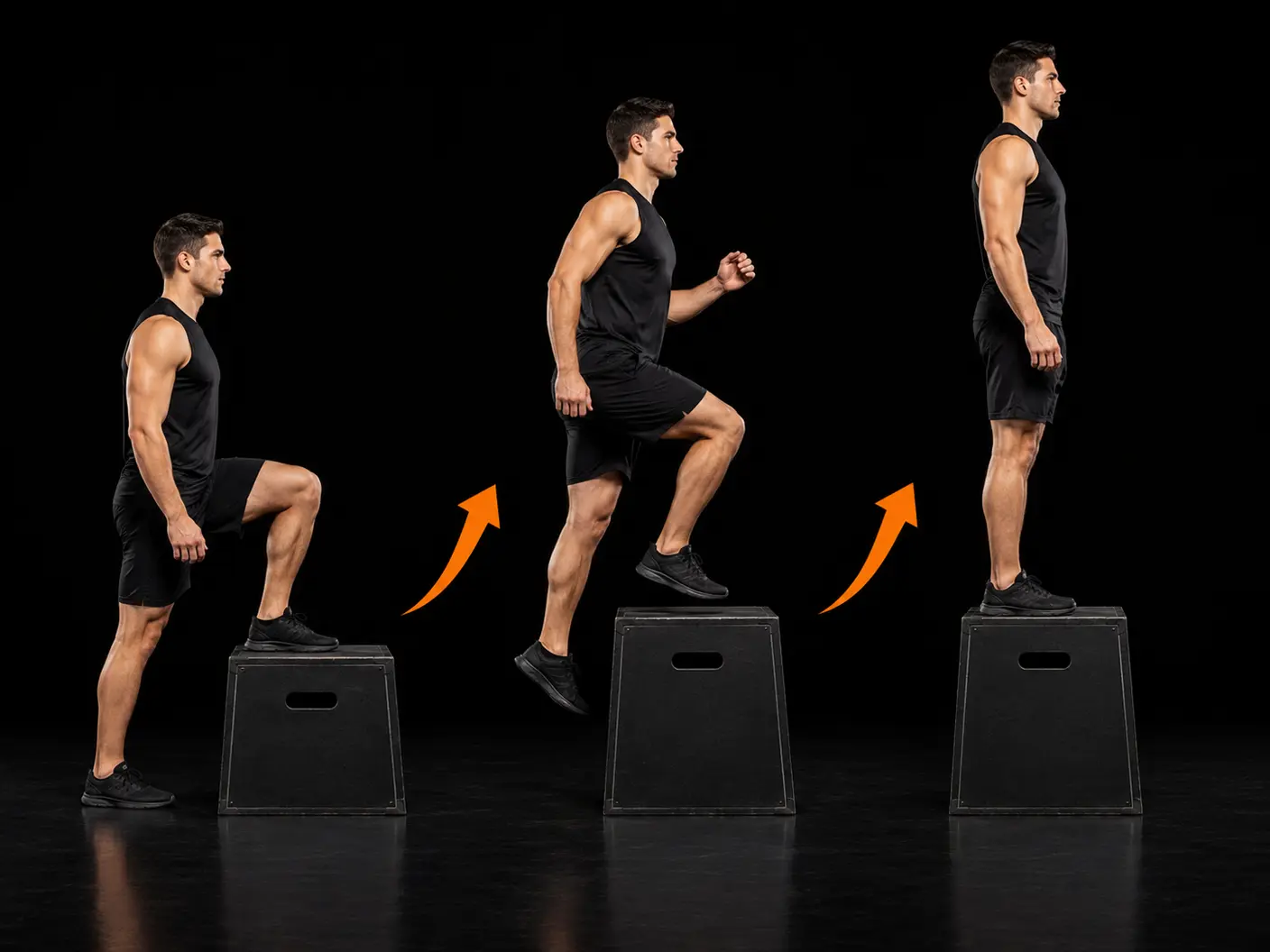
The step-up is a unilateral lower-body compound exercise that trains the lunge and split-stance pattern by driving one leg at a time against an elevated surface. It develops single-leg strength through the quadriceps and glutes, while the hamstrings, calves, and core contribute as secondary stabilisers. Suited to intermediate trainees, it transfers well across general fitness, hypertrophy, and athletic performance goals.
How to do it
Stand facing a knee-height box. Place one foot flat on the box, full foot contact. Drive through the heel of the top foot to stand — do not push off the bottom leg. Tap the back foot down lightly and lower under control. Alternate or complete all reps on one side.
Coaching cues
- Drive through the top foot
- Do not push off the bottom
- Control the descent
- Full foot on box
Why train it
- Training each leg independently exposes and reduces left-to-right strength imbalances that bilateral movements can mask.
- The controlled descent demands eccentric loading of the quadriceps and glutes, creating a strong stimulus for muscle development.
- Because the movement is mechanically similar to sprinting, stair-climbing, and change-of-direction tasks, it carries direct transfer to athletic performance.
- Box height and the optional addition of dumbbells allow straightforward progressive overload without complex loading set-ups.
Common mistakes
- Pushing off the bottom foot — concentrate all drive through the heel of the foot already on the box, keeping the trailing leg passive until it lightly taps the floor.
- Letting the knee track inward on the working leg — actively push the knee out in line with the second toe throughout the press and the descent.
- Using a box that is too low — set the box at approximately knee height so the hip and knee must work through a meaningful range; a surface that is too low reduces the training stimulus significantly.
- Rushing the descent — lower yourself under control so the eccentric phase contributes to the session rather than being wasted.
Primary: Quadriceps, Gluteus Maximus.
Secondary: Hamstrings, Rectus Abdominis, Gastrocnemius.
Equipment
Good for
Easier variation
Lower box height — reduces hip flexion and single-leg strength demand.
Similar movements
Frequently asked
- What muscles do step-ups work?
- The primary muscles are the quadriceps and glutes of the working leg. The hamstrings, calves, and core act as secondary contributors, stabilising the movement throughout the drive and the controlled descent.
- How many sets and reps should I do for step-ups?
- For hypertrophy, three to four sets of eight to twelve reps per leg with a moderate load works well. For athletic performance and general fitness, three sets of six to ten reps with a focus on explosive drive and controlled return is a practical starting point.
- What is the difference between a step-up and a Bulgarian split squat?
- Both are unilateral lunge-pattern movements, but the step-up places the working foot on an elevated surface in front of you and demands that you initiate the rep by driving upward, whereas the Bulgarian split squat elevates the rear foot and loads the front leg through a deep knee flexion. Step-ups tend to feel more accessible and sport-specific; the Bulgarian split squat typically generates greater hip-flexor stretch and overall lower-body loading.
- Can I do step-ups without dumbbells?
- Yes — the movement is effective using bodyweight alone, particularly when learning the pattern or prioritising control. Add dumbbells once you can complete all reps with full foot contact, a passive trailing leg, and a deliberate descent.
- How high should the box be for step-ups?
- A box set at approximately knee height is the standard starting point, as it creates sufficient hip and knee flexion to meaningfully load the working muscles. If you find your torso pitching excessively forward or your heel lifting, the box may be too high for your current mobility; reduce the height and build from there.
Want this movement in a plan built for you?
Adaptiv programmes the right exercises for your goal, equipment and experience — then adapts them as you train.
Build my programme