Standing Calf Raise
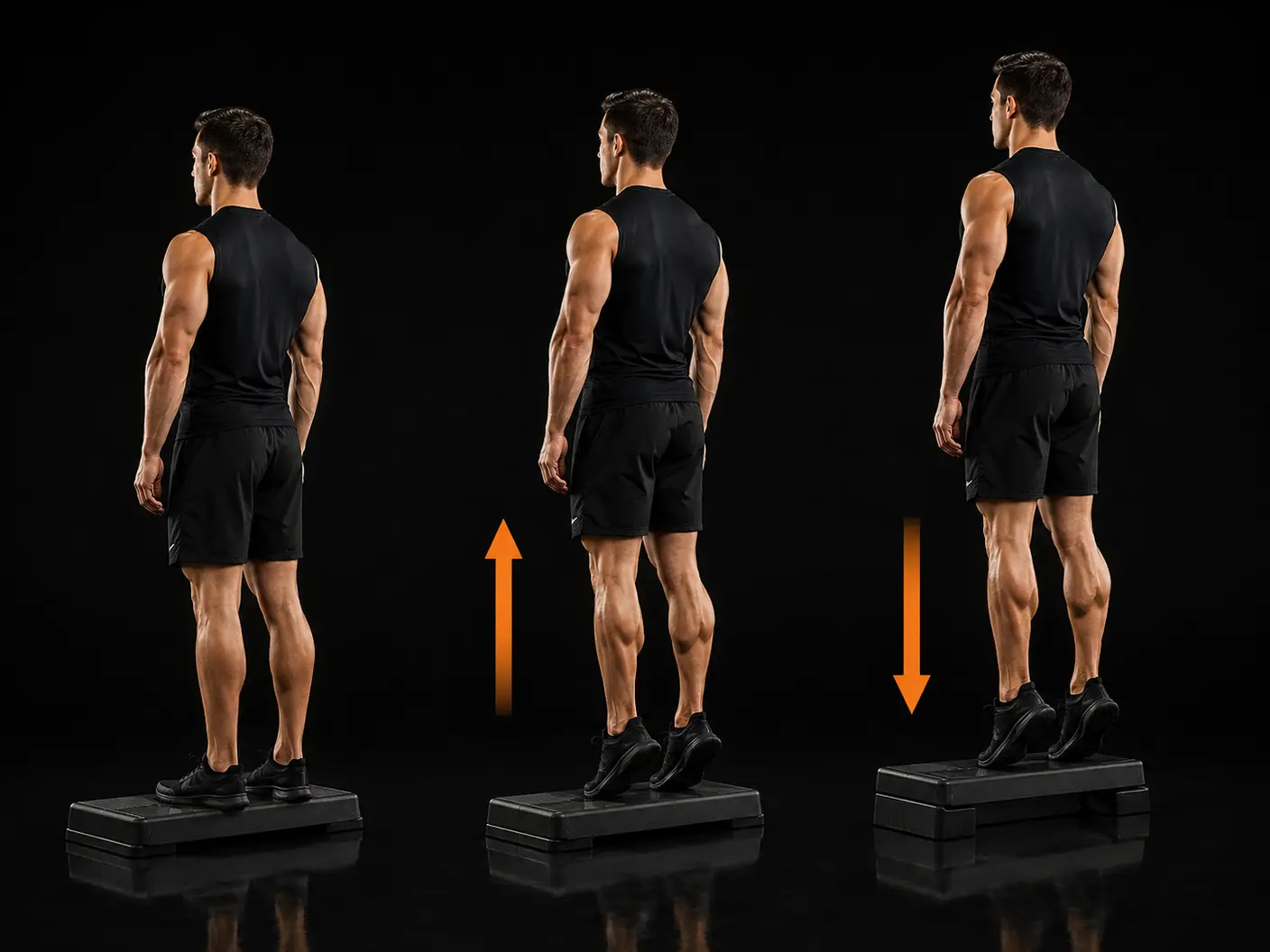
The standing calf raise is an isolation exercise that trains plantar flexion of the ankle, targeting the gastrocnemius as the primary mover with the soleus working as a secondary contributor. Performed on a standing calf raise machine or Smith machine, it allows a controlled range of motion from a full Achilles stretch to peak contraction at the top. It suits lifters at any experience level and integrates naturally into lower-body or accessory training sessions.
How to do it
Set the shoulder pads so standing tall puts slight flexion at the knees. Balls of the feet on the platform, heels hanging off. Drop the heels below the platform for a full stretch. Press through the balls of the feet, extending the ankles to peak contraction. Pause briefly at the top; lower under control into the stretch.
Coaching cues
- Full stretch at the bottom
- Peak contraction at the top
- Slow eccentric
- Do not bounce
Why train it
- Training through a full range of motion — heel below the platform to peak extension — places the gastrocnemius under a meaningful stretch, which is associated with greater hypertrophic stimulus.
- The machine setup offloads balance demands, allowing attention to stay on the quality of contraction rather than stability.
- Deliberately controlling the eccentric phase builds resilience in the Achilles tendon and surrounding connective tissue over time.
- As a foundational movement, it is straightforward to load progressively, making it a reliable option for general fitness and dedicated hypertrophy programmes alike.
Common mistakes
- Bouncing out of the bottom position — pause briefly in the stretched position and initiate each rep with muscular effort rather than elastic rebound.
- Cutting the range of motion short — allow the heels to drop fully below the platform on each rep so the gastrocnemius is loaded through its complete length.
- Rising onto the toes unevenly — distribute pressure evenly across the balls of both feet to keep the load symmetrical between limbs.
- Rushing the eccentric — lower the heels under deliberate control rather than letting gravity do the work, as the descent is where much of the stimulus is accumulated.
Primary: Gastrocnemius.
Secondary: Soleus.
Equipment
Good for
Easier variation
Bodyweight calf raise on a step — lower load, same range.
Similar movements
Frequently asked
- What muscles does the standing calf raise work?
- The gastrocnemius is the primary muscle trained, as it crosses both the knee and ankle and is most active when the leg is relatively straight. The soleus works as a secondary contributor, providing support through the movement.
- How many sets and reps should I do for calf hypertrophy?
- For hypertrophy, three to five sets of ten to twenty reps per session is a well-supported range. The calves respond well to higher rep ranges provided each set is taken close to muscular fatigue with a controlled tempo.
- Should I do the standing calf raise on a machine or a Smith machine?
- Both options are valid and train the same movement pattern. The dedicated standing calf raise machine typically offers a more stable setup, while the Smith machine can be a practical alternative when the specialist machine is unavailable.
- What is the difference between the standing and seated calf raise?
- The key distinction is knee position. Standing keeps the knee extended, placing the gastrocnemius — which crosses the knee joint — under greater tension. The seated calf raise flexes the knee, which shortens the gastrocnemius and shifts more demand onto the soleus.
- How do I progress this exercise over time?
- Add load incrementally once you can complete the top end of your rep range with a full range of motion, a deliberate eccentric, and a clear pause at the peak contraction. Chasing heavier weight at the expense of range of motion or tempo will limit the stimulus.
Want this movement in a plan built for you?
Adaptiv programmes the right exercises for your goal, equipment and experience — then adapts them as you train.
Build my programme