Sprint (Flat)
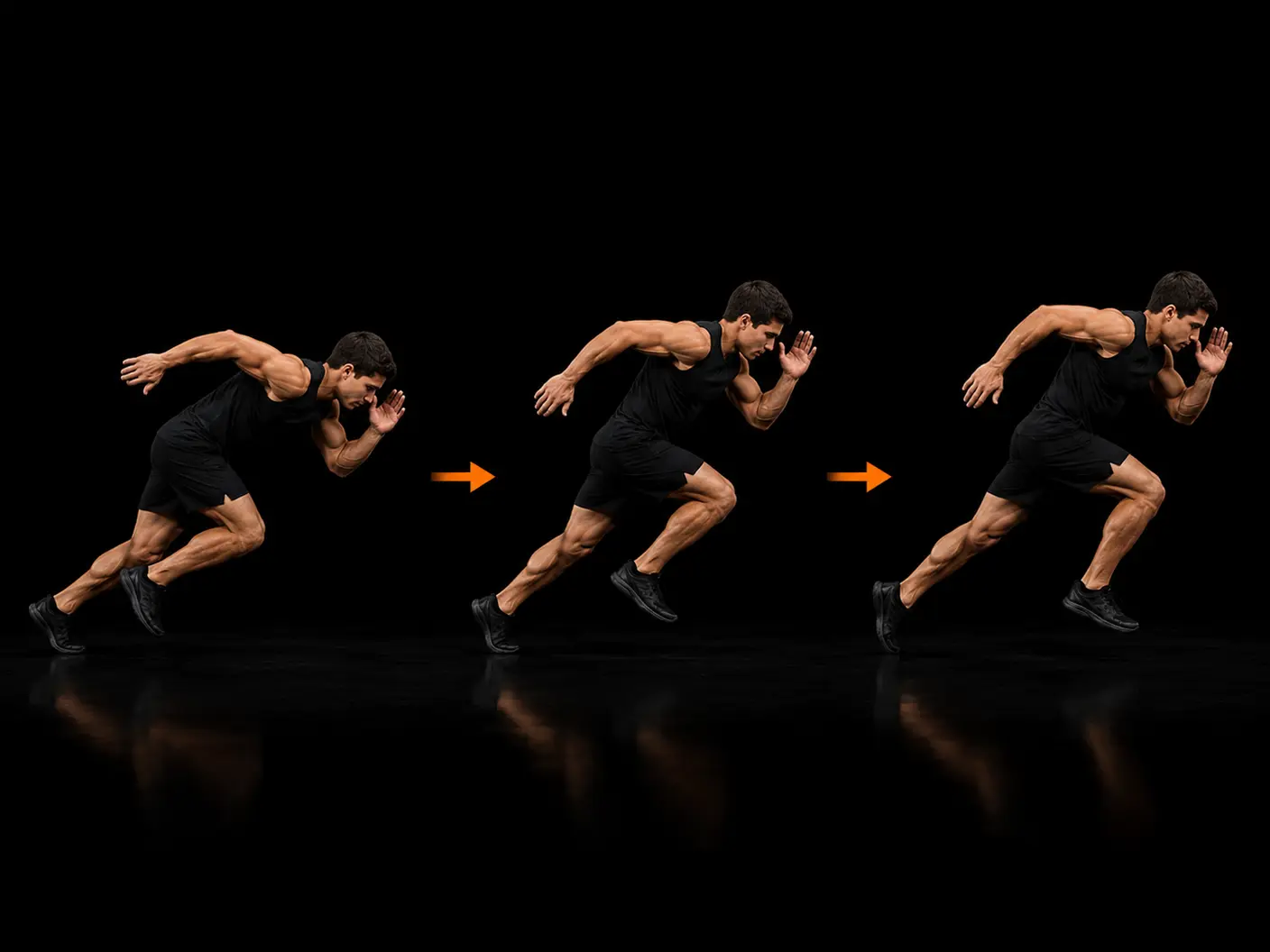
The flat sprint is a maximal-effort running effort performed over a short distance on an open track or field, typically spanning 30–70 metres and divided into acceleration, top-speed, and deceleration phases. It trains the entire lower-body power system — glutes, hamstrings, quads, and calves — while demanding significant contribution from the core and hip flexors to maintain posture and stride mechanics at high velocity. Rated as an advanced conditioning movement, it suits athletes and trained individuals who have an existing base of strength and movement quality and are working towards athletic performance or fat loss goals.
How to do it
Warm up thoroughly. Start from standing or a 3-point stance. Accelerate over 10–30 metres, then reach max velocity for 10–20 metres. Decelerate over 10–20 metres. Full recovery between reps (1:10+ work to rest).
Coaching cues
- Drive the knees
- Pump the arms
- Run tall at top speed
- Full recovery between reps
Why train it
- Flat sprints develop maximal lower-body power by demanding near-complete recruitment of the glutes, hamstrings, and quads under high-speed conditions that slower training cannot replicate.
- The intensity of maximal sprinting creates a substantial metabolic demand in a short work period, making it an efficient method for supporting fat loss goals within a well-structured programme.
- Repeated sprint work improves acceleration mechanics and top-end running velocity, translating directly into performance gains for field and court sports.
- Sprinting reinforces upright posture, arm drive, and coordinated limb timing, which carry over to general movement quality and athleticism beyond the track.
Common mistakes
- Failing to warm up adequately — complete a thorough warm-up including dynamic mobility and progressive build-up runs before any maximal effort, as cold muscles cannot produce full power safely.
- Cutting recovery too short — the prescribed 1:10 or greater work-to-rest ratio exists because incomplete recovery causes mechanics to break down and turns a sprint session into poorly executed conditioning work.
- Staying upright during the acceleration phase — lean forward with intention in the first 10–30 metres to direct force into the ground behind you, then gradually rise to a tall position as you approach top speed.
- Allowing the arms to cross the midline — keep the elbows driving straight back and forward, as lateral arm movement bleeds energy and disrupts the rotational balance needed for efficient stride mechanics.
Primary: Gluteus Maximus, Hamstrings, Quadriceps, Gastrocnemius.
Secondary: Rectus Abdominis, Hip Flexors.
Equipment
Good for
Easier variation
Tempo runs — sub-max running with incomplete recovery.
Similar movements
Frequently asked
- Which muscles does the flat sprint work?
- The primary muscles are the glutes, hamstrings, quads, and calves, which generate propulsive force through each stride. The core and hip flexors work as secondary contributors to stabilise the trunk and drive the legs through their range of motion at speed.
- How many reps and sets should I do for flat sprints?
- A typical session might involve 4–8 sprint reps of 30–60 metres, depending on your training phase and current fitness level. Because quality is the priority, stop adding reps the moment your mechanics or speed drop noticeably — volume that compromises output does not serve the goal.
- How much rest should I take between sprint reps?
- Use a work-to-rest ratio of at least 1:10, meaning a 6-second sprint warrants roughly 60 seconds of recovery at minimum. In practice, most athletes benefit from 2–4 minutes of full rest between maximal efforts to ensure each rep is genuinely fast.
- Is sprint training suitable for fat loss?
- Sprinting is listed as a primary goal match for fat loss because maximal-effort work generates a significant metabolic response relative to the time under load. It is most effective when placed within a coherent programme that also addresses nutrition and overall training volume.
- What are good alternatives to flat sprints if I do not have access to a track?
- Hill sprints, sled pushes, or cycle ergometer sprint intervals can replicate much of the conditioning stimulus if open space is unavailable. Each alters the specific mechanical demands somewhat, so consult a qualified coach if you need to match the movement pattern closely for a sport-specific goal.
Want this movement in a plan built for you?
Adaptiv programmes the right exercises for your goal, equipment and experience — then adapts them as you train.
Build my programme