Spider Curl
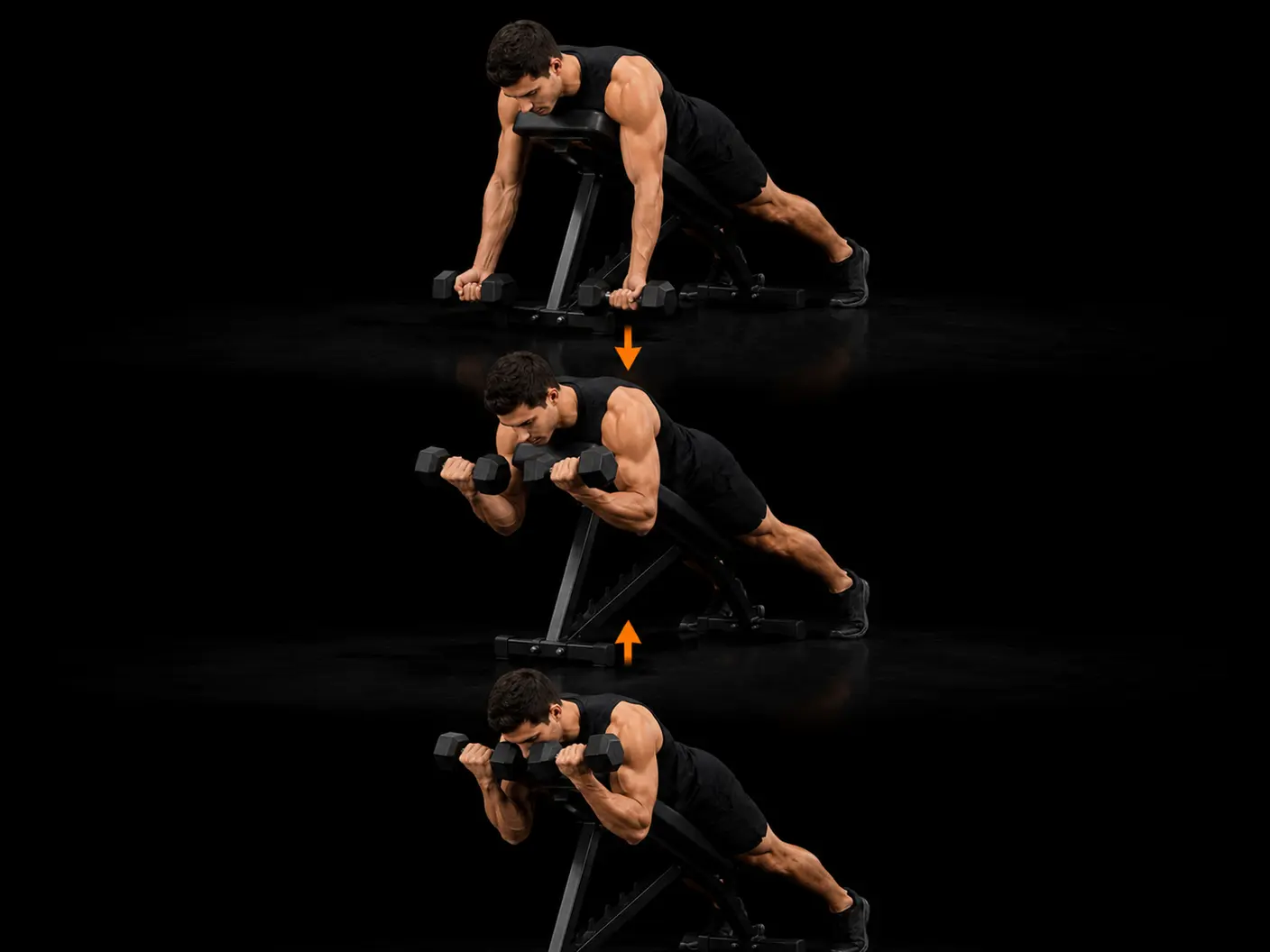
The spider curl is a strict isolation exercise performed chest-down on an incline bench, with the arms hanging freely toward the floor. The bench position eliminates any temptation to recruit the shoulder or use momentum, placing the biceps brachii — particularly the short head — under direct, consistent tension throughout the range of motion. It suits lifters at any experience level who want to add targeted volume to the upper arm without relying on compensatory movement patterns.
How to do it
Lie chest-down on an incline bench, arms hanging straight down. Hold a bar or dumbbells. Curl the weight up with a strict movement — the bench eliminates shoulder flexion. Pause at peak. Lower to full extension.
Coaching cues
- Arms hang straight
- Strict curl
- Squeeze at peak
- Full stretch at the bottom
Why train it
- The chest-supported position removes momentum entirely, ensuring the biceps brachii and brachialis do the work on every repetition.
- Hanging the arms perpendicular to the floor creates a strong stretch at the bottom of each rep, which is associated with greater hypertrophic stimulus in the target muscle.
- The short head of the biceps brachii is emphasised due to the arm position relative to the torso, making this a useful complement to incline curls that bias the long head.
- Compatible with both dumbbells and an EZ bar, the exercise can be adjusted to suit grip preference or equipment availability without compromising its mechanics.
Common mistakes
- Swinging the elbows back on the way up — keep the upper arms vertical and stationary throughout the curl so the biceps perform the work in isolation.
- Cutting the range of motion short at the bottom — lower the weight to full elbow extension on every rep to preserve the stretch that makes this movement effective.
- Using too much load and losing strict form — select a weight that allows a controlled, pause-and-squeeze repetition rather than one that forces compensation.
- Lifting the chest off the bench during the curl — maintain firm contact with the pad throughout, as raising the torso reintroduces the shoulder flexion the position is designed to eliminate.
Primary: Biceps Brachii.
Secondary: Brachialis.
Equipment
Good for
Easier variation
Preacher curl — similar isolated arm position.
Similar movements
Frequently asked
- What muscles does the spider curl work?
- The primary muscle targeted is the biceps brachii, with particular emphasis on the short head due to the arm position. The brachialis, which sits beneath the biceps and contributes to elbow flexion, is also engaged as a secondary muscle.
- How many sets and reps should I do for spider curls?
- For hypertrophy, 3–4 sets of 8–15 repetitions is a practical range. Prioritise a controlled tempo, a genuine squeeze at peak contraction, and full extension at the bottom rather than simply accumulating reps.
- What is the difference between a spider curl and a regular dumbbell curl?
- A standard curl allows the shoulder to flex as fatigue sets in, which reduces tension on the biceps. The spider curl's chest-down position prevents shoulder movement entirely, making the stimulus more consistent and harder to cheat.
- Can I do spider curls with an EZ bar instead of dumbbells?
- Yes — an EZ bar is a suitable alternative and may reduce wrist discomfort for some lifters. The slight supination available with dumbbells can increase biceps activation, so both options are worth trialling to find what suits your anatomy.
- Where does the spider curl fit in a training programme?
- It works best as an accessory exercise placed after compound pulling movements such as rows or pull-ups, once the primary strength work is complete. Use it to add focused volume to the biceps without the fatigue that would compromise heavier lifts.
Want this movement in a plan built for you?
Adaptiv programmes the right exercises for your goal, equipment and experience — then adapts them as you train.
Build my programme