Dumbbell Curl (Alternating)
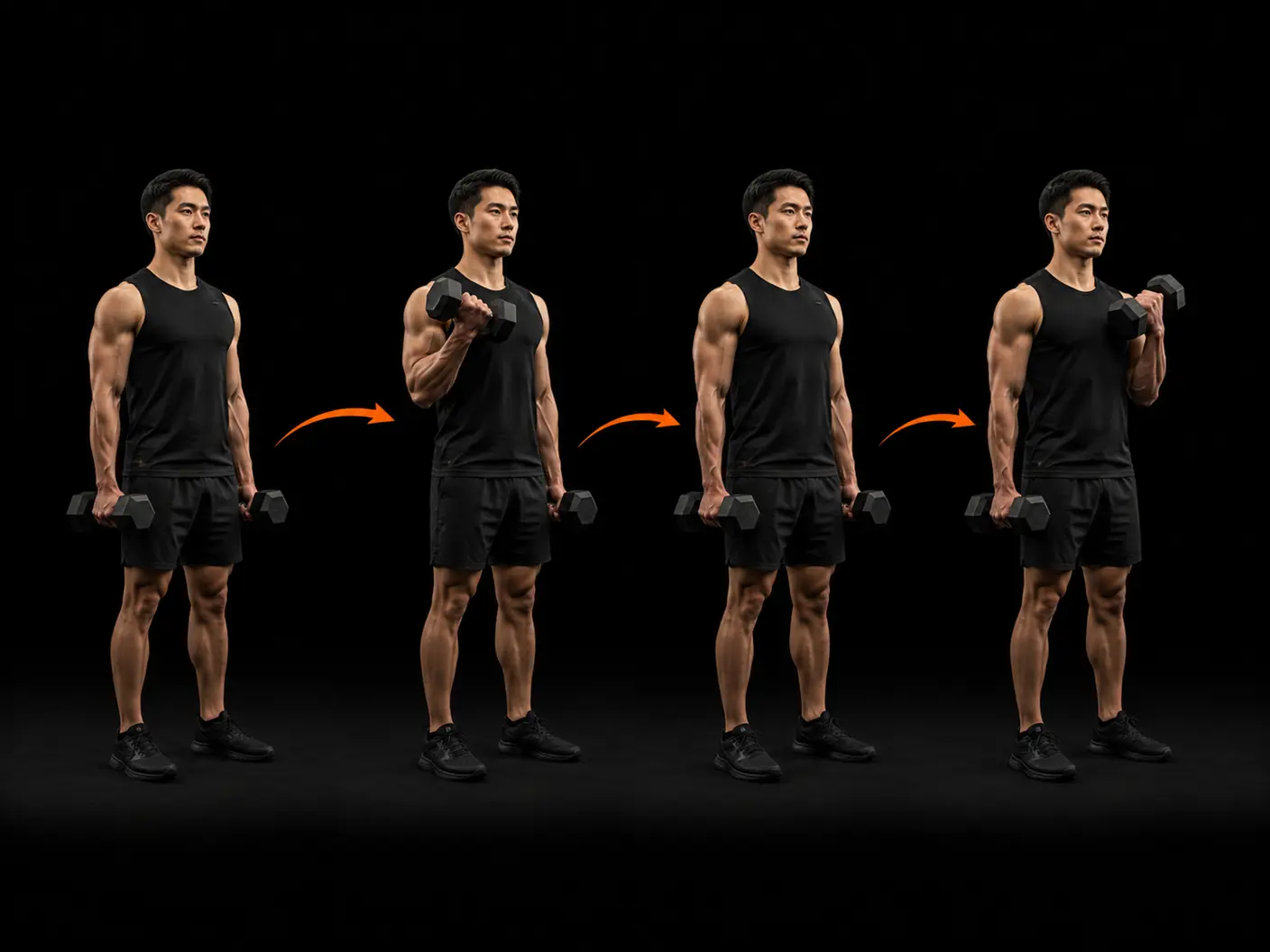
The alternating dumbbell curl is an isolation movement that trains elbow flexion one arm at a time, allowing each limb to work independently through a full range of motion. The supinating grip — rotating the palm from neutral to facing up during the lift — recruits the biceps brachii more completely than a fixed-grip curl. It suits lifters at any level looking to develop arm size and symmetry, and fits naturally into upper-body or arm-focused sessions.
How to do it
Stand or sit tall, dumbbells at the sides, palms facing inward. Curl one dumbbell, rotating the palm to face up as it comes up. Pause at the top. Lower under control. Curl the opposite arm; alternate.
Coaching cues
- Rotate on the way up
- Pause at the top
- Slow eccentric
- No swing
Why train it
- Training each arm independently highlights and helps address strength or size imbalances between limbs.
- The forearm supination during the curl increases biceps brachii involvement across the range of motion, supporting hypertrophy of the muscle.
- The alternating rhythm naturally encourages a controlled tempo, making it easier to maintain focus on the working arm and manage the eccentric phase.
- The brachialis and brachioradialis receive meaningful secondary stimulus, contributing to overall arm thickness and elbow flexor development.
Common mistakes
- Swinging the torso to generate momentum — keep the upper arms pinned to the sides and initiate every rep from the elbow, not the back.
- Skipping the supination — begin rotating the palm upward early in the curl so the biceps are fully engaged before you reach the top position.
- Rushing the lowering phase — resist the weight on the way down with a slow, deliberate eccentric rather than letting the dumbbell drop.
- Neglecting the pause at the top — a brief hold at peak contraction reinforces the mind-muscle connection and prevents the rep from becoming purely ballistic.
Primary: Biceps Brachii.
Secondary: Brachialis, Brachioradialis.
Equipment
Good for
Easier variation
Seated DB curl — removes body english.
Similar movements
Frequently asked
- Which muscles does the alternating dumbbell curl work?
- The primary muscle is the biceps brachii, with the brachialis and brachioradialis working as secondary elbow flexors. The supinating action during the lift places particular demand on the biceps brachii throughout the movement.
- How many sets and reps should I do for muscle growth?
- For hypertrophy, three to four sets of eight to fifteen reps per arm is a well-supported range. Choose a load that makes the final two or three reps genuinely demanding while still allowing clean form and full supination.
- Should I sit or stand for alternating dumbbell curls?
- Both positions are valid. Standing requires slightly more postural control to avoid torso swing, while seated removes that variable and isolates the arms more strictly. If you find yourself compensating with body English, sitting is the more honest option.
- What are good alternatives if I don't have dumbbells?
- A barbell or EZ-bar curl trains the same elbow flexion pattern with both arms simultaneously. Cable curls offer continuous tension through the range of motion and are a useful variation when dumbbells are unavailable.
- How does this differ from a standard dumbbell curl?
- The key differences are the alternating sequence and the emphasis on forearm supination. Curling one arm at a time allows greater focus on each rep, and the palm rotation from neutral to supinated engages the biceps brachii more fully than a fixed neutral or supinated grip throughout.
Want this movement in a plan built for you?
Adaptiv programmes the right exercises for your goal, equipment and experience — then adapts them as you train.
Build my programme