Hammer Curl
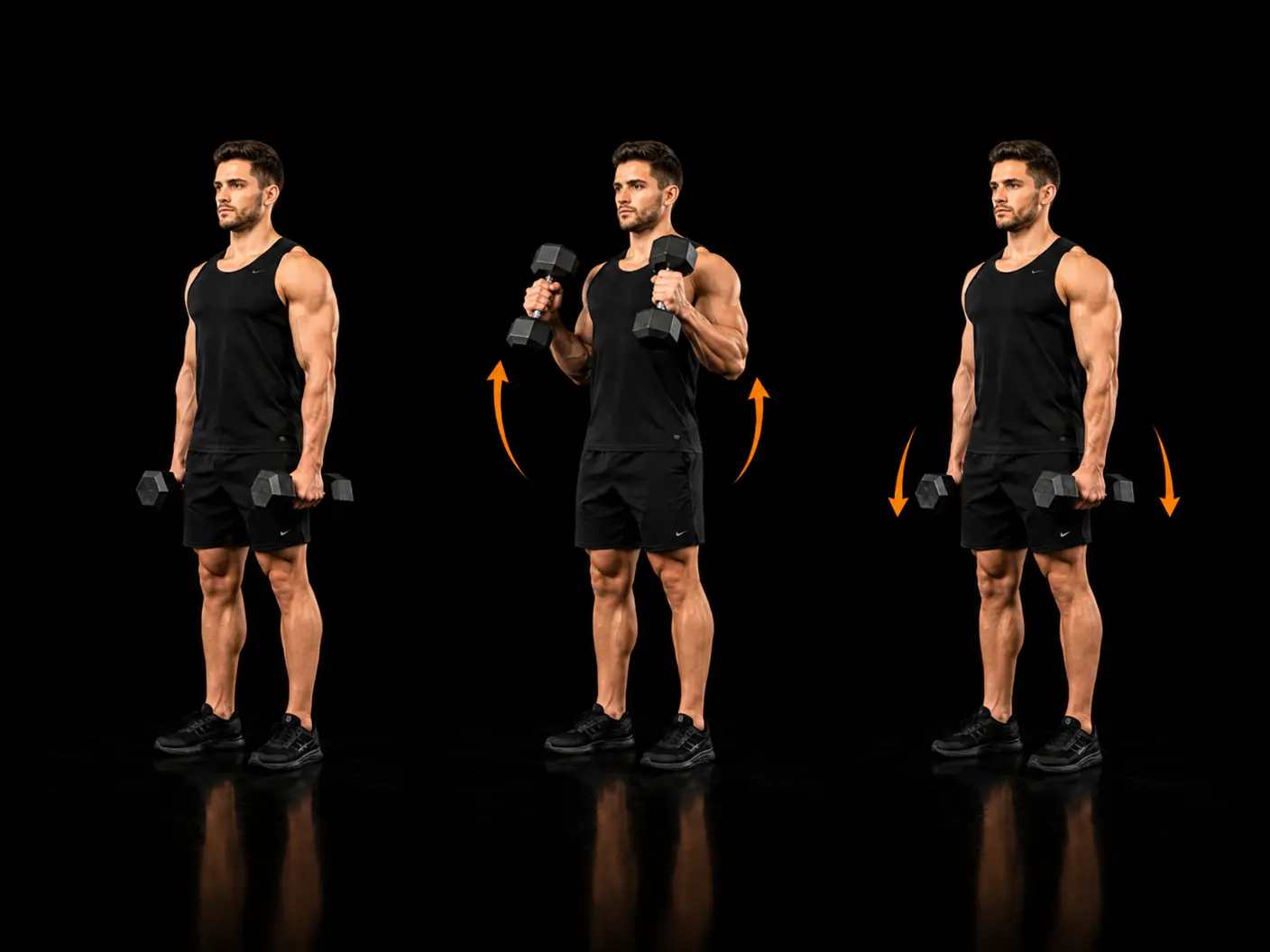
The hammer curl is a dumbbell isolation exercise that trains the elbow flexors through a neutral-grip curl pattern, keeping the palms facing each other throughout the entire range of motion. Unlike a standard biceps curl, this grip shifts the primary loading onto the brachialis and brachioradialis rather than the biceps brachii, making it a reliable choice for building arm thickness and forearm development. It suits lifters of all experience levels and fits naturally into upper-body or arm-focused training days.
How to do it
Stand or sit tall, dumbbells at the sides with a neutral grip (palms facing each other). Elbows tucked. Curl both (or alternate) dumbbells up without rotating the grip. Pause at peak. Lower under control.
Coaching cues
- Neutral grip the whole way
- Elbows tucked
- Pause at peak
- Slow eccentric
Why train it
- Training with a neutral grip places greater demand on the brachialis, a muscle that sits beneath the biceps and contributes directly to overall upper-arm size when developed.
- The brachioradialis runs along the forearm and is recruited heavily during hammer curls, supporting forearm strength and thickness alongside elbow flexion work.
- The slow eccentric and pause at peak contraction prescribed for this movement increase time under tension, a key driver of hypertrophy stimulus per set.
- Because the neutral grip is a natural wrist position, this variation is often more comfortable to load progressively than a supinated curl, making consistent long-term programming straightforward.
Common mistakes
- Rotating the grip mid-rep — maintain a strict neutral (palms-facing) position from the start of the curl to the top and back down, as any supination reduces the intended stimulus on the brachialis and brachioradialis.
- Letting the elbows drift forward and away from the torso — keep them tucked at the sides throughout so the load stays on the elbow flexors rather than the anterior deltoid taking over.
- Using momentum to swing the dumbbells up — initiate every rep with a deliberate contraction and control the weight rather than relying on body sway, which reduces mechanical tension on the target muscles.
- Rushing the lowering phase — the slow eccentric is a core part of the stimulus here, so take at least two to three seconds to return to the start position under full control.
Primary: Brachialis, Brachioradialis.
Secondary: Biceps Brachii.
Equipment
Good for
Easier variation
Cable hammer curl with rope — constant tension.
Similar movements
Frequently asked
- What muscles do hammer curls work?
- The primary muscles trained are the brachialis and brachioradialis, with the biceps brachii acting as a secondary contributor. The neutral grip is what distinguishes the loading pattern from a standard curl and shifts emphasis toward these two muscles.
- How many sets and reps should I do for hammer curls?
- For hypertrophy, three to four sets of eight to fifteen reps is a well-supported range. Prioritise a controlled eccentric and a genuine pause at the top rather than chasing high rep counts with poor form.
- Should I curl both arms at the same time or alternate?
- Both approaches are effective. Alternating allows you to focus on one side at a time and can help address asymmetries, while bilateral curls keep sessions more time-efficient. Choose based on your preference and how the movement fits your programme structure.
- What is a good alternative to the hammer curl?
- A rope cable curl with a neutral grip closely replicates the stimulus by keeping the palms facing each other under constant cable tension throughout the movement. Cross-body hammer curls, where the dumbbell travels across the body to the opposite shoulder, are another variation that increases brachialis involvement.
- Can beginners include hammer curls in their programme?
- Yes — this exercise is classified as foundational difficulty and requires only dumbbells and a basic understanding of elbow flexion mechanics. Beginners should start with a load that allows full control of the eccentric and a clean pause at peak contraction before progressing weight.
Want this movement in a plan built for you?
Adaptiv programmes the right exercises for your goal, equipment and experience — then adapts them as you train.
Build my programme