Incline Dumbbell Curl
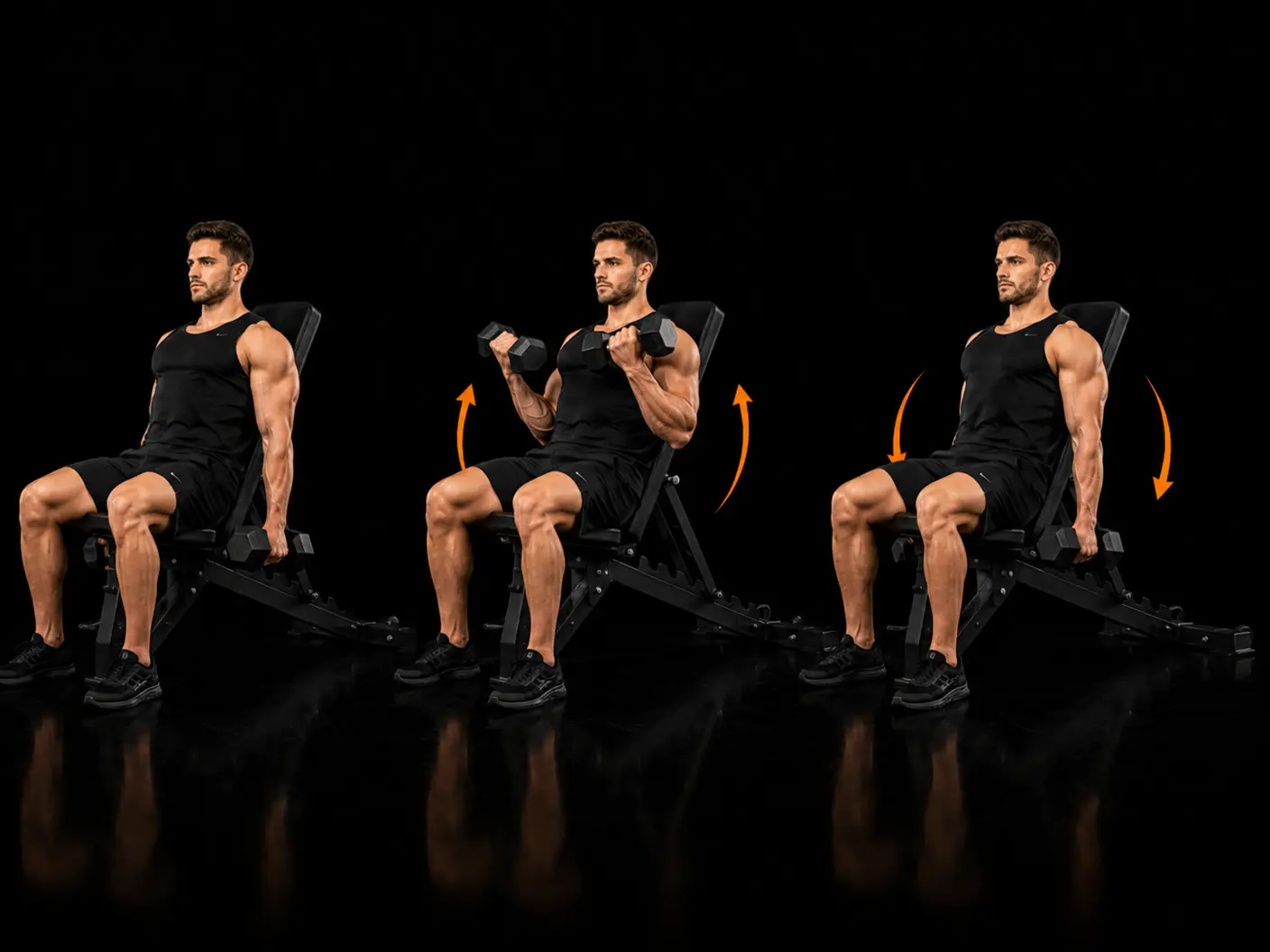
The incline dumbbell curl is an isolation exercise performed on a bench set to a 45–60° angle, positioning the elbows behind the torso to place the biceps brachii long head under a greater stretch than standard standing curls allow. This mechanical advantage targets the long head specifically and increases the time the muscle spends under tension through its full range of motion. It suits intermediate lifters looking to develop biceps peak and overall arm thickness within a hypertrophy-focused programme.
How to do it
Set a bench to 45–60° incline. Sit back with dumbbells hanging below the shoulders, palms forward. Curl both dumbbells up; elbows stay under or slightly behind the shoulders. Pause at peak. Lower to a full stretch — long head fully lengthened.
Coaching cues
- Elbows behind the torso
- Stretch at the bottom
- Full range
- No swing
Why train it
- The inclined position stretches the long head of the biceps at the bottom of every rep, creating a lengthened loading stimulus that is difficult to replicate from a standing or preacher position.
- Keeping the elbows fixed behind the torso removes momentum from the movement, ensuring the biceps — rather than the shoulders or trunk — perform the work throughout each repetition.
- The secondary involvement of the brachialis, a muscle that runs beneath the biceps, contributes to overall arm thickness when trained consistently at full range.
- Because the body is supported by the bench, the exercise isolates the upper arm effectively, making it a reliable accessory movement to pair with compound pulling work.
Common mistakes
- Letting the elbows drift forward at the top — keep them fixed under or just behind the shoulders throughout the curl so the long head remains the primary mover.
- Using body swing or shoulder flexion to initiate the rep — control the eccentric fully and start each curl from a dead stop at the bottom to eliminate momentum.
- Cutting the range of motion short on the descent — lower the dumbbells until the arms are fully extended and the long head is completely lengthened before beginning the next rep.
- Setting the bench angle too upright — a 45–60° incline is the working range; a steeper angle reduces the stretch on the long head and diminishes the exercise's primary advantage.
Primary: Biceps Brachii.
Secondary: Brachialis.
Equipment
Good for
Easier variation
Standing DB curl — less stretch but easier setup.
Similar movements
Frequently asked
- What muscles does the incline dumbbell curl work?
- The primary muscle is the biceps brachii long head, which is placed under a pronounced stretch due to the inclined position of the arm. The brachialis acts as a secondary mover and contributes to overall upper arm development.
- How many sets and reps should I do for the incline dumbbell curl?
- For hypertrophy, three to four sets of eight to twelve repetitions with a controlled tempo is a reliable starting point. Prioritise a full stretch at the bottom of each rep over loading the bar with weight that compromises range of motion.
- What angle should the bench be set to?
- A 45–60° incline is the recommended range. Angles closer to 45° increase the stretch on the long head; steeper settings begin to reduce this advantage, making the exercise less distinct from a standard seated curl.
- How does the incline dumbbell curl differ from a standard dumbbell curl?
- The key difference is elbow position — the incline bench places the elbows behind the torso, stretching the long head of the biceps in a way that a standing curl cannot achieve. This makes it particularly effective for targeting biceps peak and lengthened-position overload.
- Can beginners perform the incline dumbbell curl?
- The exercise is classed as intermediate because the stretched position demands good control and an understanding of how to eliminate momentum; beginners who swing through standard curls will find this harder to execute correctly. Developing solid technique on standing and seated dumbbell curls first is a sensible progression before introducing this variation.
Want this movement in a plan built for you?
Adaptiv programmes the right exercises for your goal, equipment and experience — then adapts them as you train.
Build my programme