Cable Curl (Straight Bar)
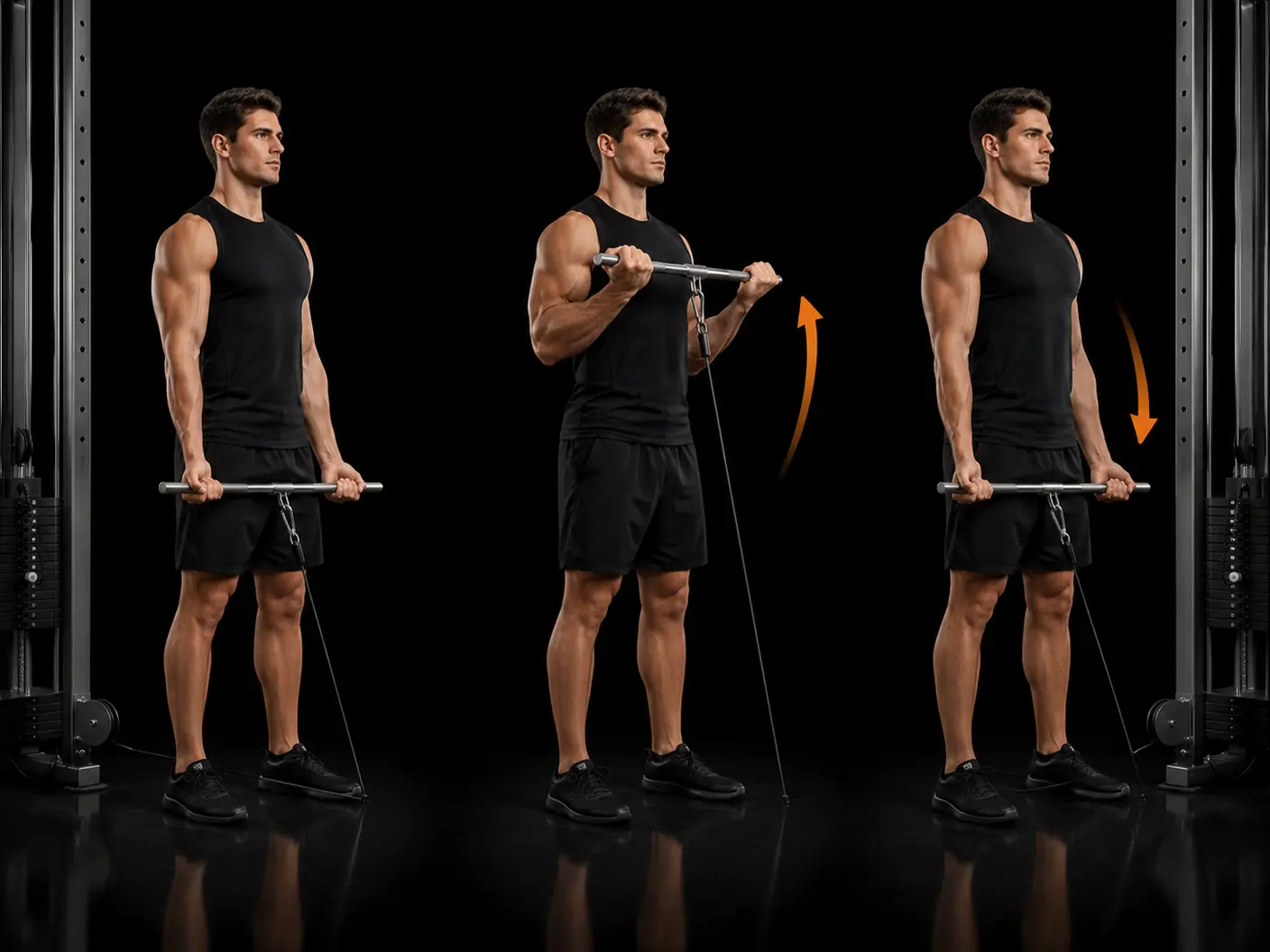
The cable curl with a straight bar is an isolation movement targeting the biceps brachii through a fixed, supinated grip. Unlike free-weight curls, the cable attachment maintains tension throughout the entire arc of motion — including at the bottom of the rep, where a dumbbell or barbell offers little resistance. It suits lifters at any stage who want to develop upper arm size and practise deliberate, controlled elbow flexion.
How to do it
Stand facing a low cable with a straight bar attached. Grip shoulder-width, supinated. Elbows tucked. Curl the bar up; pause at peak contraction. Lower under control to full extension.
Coaching cues
- Elbows stay put
- Constant tension
- Squeeze at the top
- Slow descent
Why train it
- The cable's constant load profile means the biceps are under tension even at full extension, maximising time under tension compared with many free-weight alternatives.
- Fixing the elbows at the sides and moving only the forearm isolates the biceps brachii with minimal contribution from the shoulders or back, making technique easier to monitor and reinforce.
- The controlled eccentric phase encouraged by the cable stack builds both size and motor control in the biceps and its synergists, the brachialis and brachioradialis.
- The foundational difficulty level and stable equipment setup make this an accessible entry point for beginners while remaining a reliable hypertrophy tool for more experienced lifters.
Common mistakes
- Allowing the elbows to drift forward on the way up — keep them anchored at the sides throughout the curl so the biceps, not momentum, produce the movement.
- Using body swing to complete the rep — if you need to lean back or rock the torso, reduce the load and focus on a strict, isolated curl.
- Letting the bar drop quickly on the way down — lower under control to full extension, as the eccentric phase contributes meaningfully to muscle development.
- Gripping the bar too wide or too narrow relative to the shoulders — a shoulder-width, fully supinated grip maximises biceps brachii recruitment and reduces unnecessary wrist strain.
Primary: Biceps Brachii.
Secondary: Brachialis, Brachioradialis.
Equipment
Good for
Easier variation
EZ-bar cable curl — easier on the wrists.
Similar movements
Frequently asked
- What muscles does the cable curl with a straight bar work?
- The primary muscle trained is the biceps brachii. The brachialis and brachioradialis act as secondary contributors, assisting with elbow flexion throughout the movement.
- How many sets and reps should I do for muscle growth?
- For hypertrophy, three to four sets of eight to fifteen reps is a well-supported range. Rest sixty to ninety seconds between sets and select a load that makes the final two reps genuinely challenging without breaking form.
- Is the cable curl better than a barbell curl?
- Neither is objectively superior — they complement each other. The cable version provides tension at the bottom of the range where a barbell offers very little, making it particularly useful for maximising time under tension within a programme.
- Can beginners do this exercise?
- Yes. It is classified as a foundational movement, and the cable machine provides a smooth, guided resistance that is forgiving of minor positional adjustments. Focus on keeping the elbows still and lowering the bar under control from the first session.
- What can I use instead of a cable curl with a straight bar?
- The most direct alternatives are the barbell curl, which replicates the supinated straight-bar grip using free weights, or a cable curl with an EZ-bar attachment if wrist comfort is a concern. Both train the same primary and secondary muscles through a comparable movement pattern.
Want this movement in a plan built for you?
Adaptiv programmes the right exercises for your goal, equipment and experience — then adapts them as you train.
Build my programme