EZ-Bar Curl
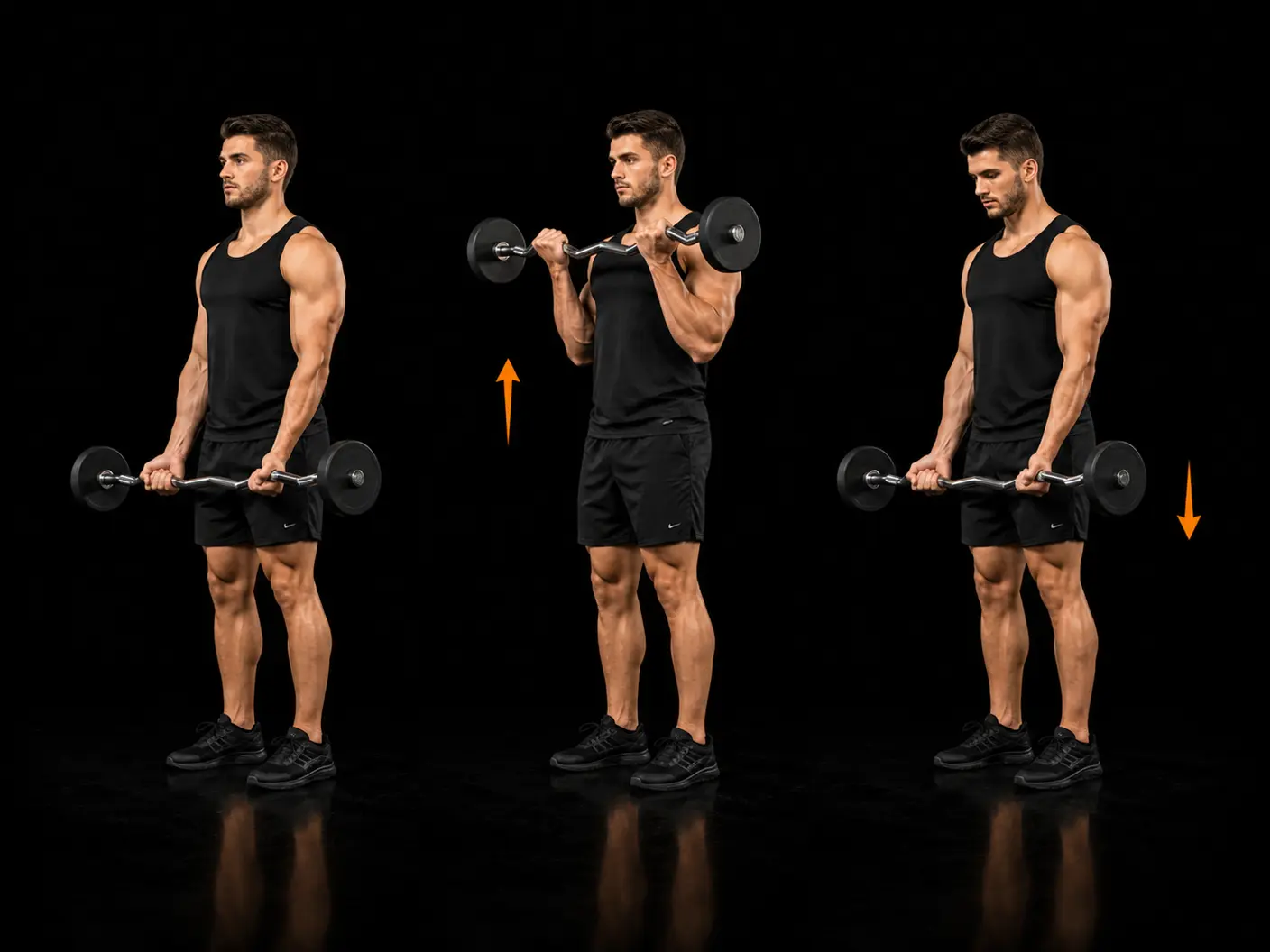
The EZ-bar curl is a foundational isolation movement that trains elbow flexion through a fixed, controlled range of motion. The angled grip of the EZ-bar reduces supination stress at the wrist compared to a straight bar, making it a practical choice for consistent upper-arm training. It suits lifters at any level who are looking to develop the biceps brachii with a tool that accommodates wrist and elbow comfort.
How to do it
Grip an EZ bar at the angled points, shoulder-width. Elbows tucked. Curl the bar up by flexing the elbows. Pause at peak. Lower under control to a full stretch.
Coaching cues
- Elbows pinned
- No swing
- Full stretch
- Squeeze at the top
Why train it
- The angled grip reduces wrist and forearm strain, allowing many lifters to train at higher volumes with less discomfort than a straight barbell permits.
- The movement loads the biceps brachii directly across a full range of elbow flexion, supporting muscle hypertrophy when programmed with appropriate sets and repetitions.
- The brachialis and brachioradialis receive meaningful secondary stimulus, contributing to overall upper-arm thickness rather than biceps peak alone.
- Because the movement is mechanically simple, it is straightforward to load progressively over time, making it a reliable long-term addition to an upper-body programme.
Common mistakes
- Swinging the torso to initiate the curl — pin the elbows to the sides and drive the movement from elbow flexion alone, keeping the upper arms stationary throughout.
- Cutting the range of motion short at the bottom — lower the bar until the elbows reach full extension so the biceps receive a complete stretch on every repetition.
- Allowing the elbows to flare wide as the bar rises — keep them tucked close to the torso to maintain consistent tension on the target musculature.
- Rushing the lowering phase — control the descent over at least two seconds to maximise time under tension and reduce the risk of losing position at the shoulder.
Primary: Biceps Brachii.
Secondary: Brachialis, Brachioradialis.
Equipment
Good for
Easier variation
Dumbbell curl — allows individual side loading.
Similar movements
Frequently asked
- What muscles does the EZ-bar curl work?
- The primary muscle is the biceps brachii, which drives elbow flexion throughout the lift. The brachialis and brachioradialis act as secondary movers, contributing to elbow flexion particularly in the semi-supinated grip position the EZ-bar provides.
- How many sets and reps should I do for the EZ-bar curl?
- For hypertrophy, three to four sets of eight to fifteen repetitions with two to three minutes of rest between sets is a well-supported approach. Select a load that makes the final two or three reps genuinely challenging while allowing you to maintain clean form throughout.
- Is the EZ-bar curl better than a straight-bar curl?
- Neither is categorically superior, but the EZ-bar's angled grip places the wrist in a more neutral position, which suits lifters who experience discomfort with the full supination a straight bar requires. Both movements train the same primary and secondary muscles; the practical difference lies in wrist and forearm comfort at higher training volumes.
- Where should the EZ-bar curl sit in my programme?
- It works well as a primary or secondary exercise in an upper-body or arm-focused session, typically performed after compound pulling movements such as rows or pull-ups. Placing it later in the session means the larger muscle groups are trained first while you still have sufficient focus and energy for quality isolation work.
- What are good alternatives to the EZ-bar curl if I do not have access to the equipment?
- A dumbbell curl performed with a neutral or semi-supinated grip replicates much of the wrist positioning the EZ-bar provides. A straight barbell curl is a direct structural alternative, though some lifters find it less comfortable at the wrist over repeated sessions.
Want this movement in a plan built for you?
Adaptiv programmes the right exercises for your goal, equipment and experience — then adapts them as you train.
Build my programme