Snatch Pull
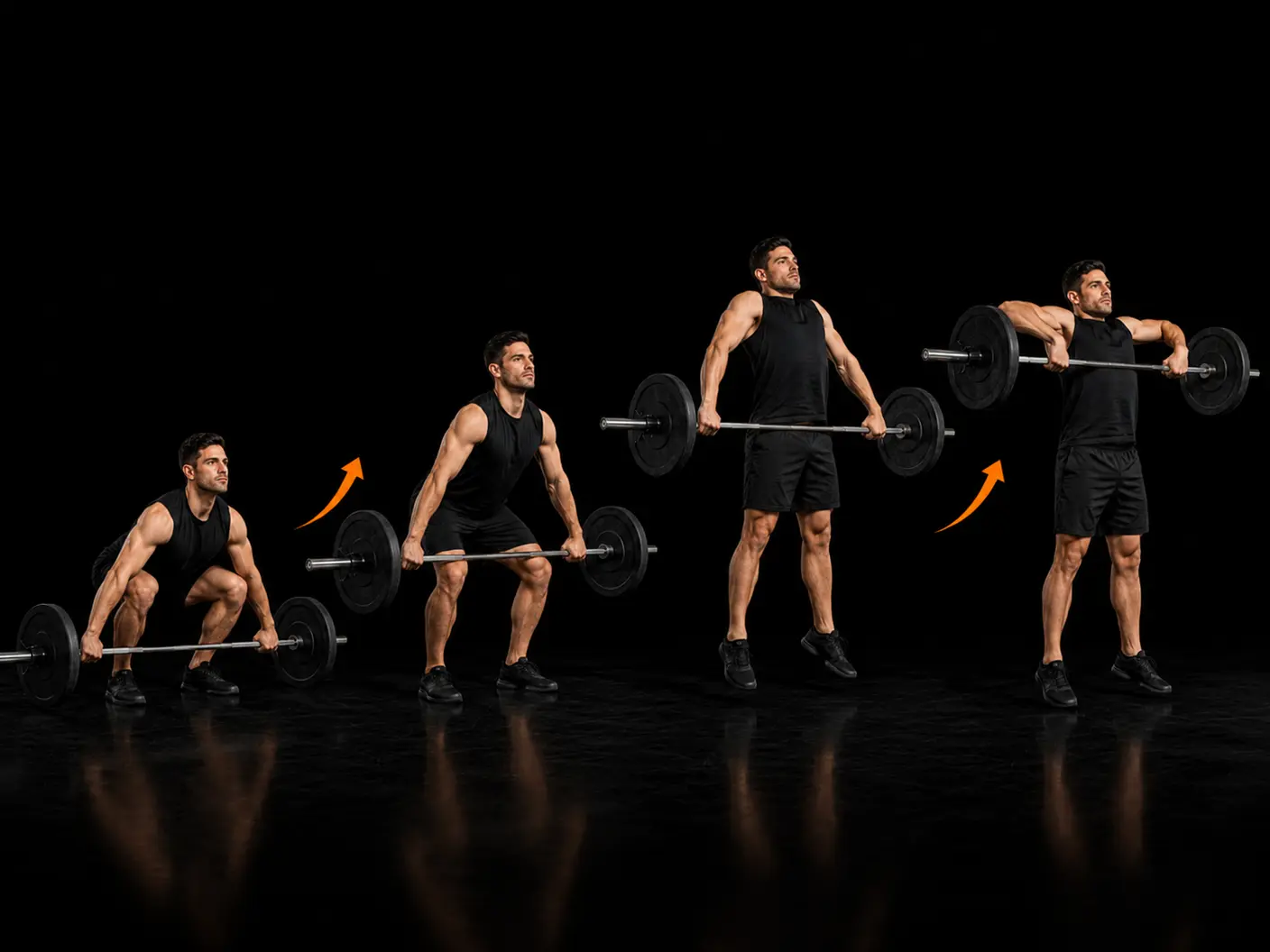
The snatch pull is a barbell pulling derivative performed with a wide snatch grip that trains the full triple extension pattern — ankle, knee, and hip — used in Olympic weightlifting. The movement develops explosive posterior chain power and upper back strength through the aggressive shrug at the top of the pull, without the technical demand of the catch phase. It suits intermediate to advanced lifters looking to build pulling strength and rate of force development, whether as part of an Olympic lifting programme or as a power development tool for sport.
How to do it
Set up as a snatch, snatch-grip. Execute the pull through full triple extension — hips and shoulders rise together then hips fire explosively. Shrug aggressively. The bar rises to chest or upper chest; no turnover or catch. Lower to the floor under control.
Coaching cues
- Patient off the floor
- Triple extension
- Aggressive shrug
- No turnover
Why train it
- It develops explosive hip extension and rate of force development by demanding maximal effort through the triple extension phase.
- The wide snatch grip places significant mechanical demand on the traps and upper back, building the pulling strength required for the full snatch.
- Removing the turnover and catch allows heavier loads than the full snatch, making it an effective overload stimulus for the pulling pattern.
- It reinforces positional discipline from the floor — practising the sequenced rise of hips and shoulders that underpins efficient Olympic lifting mechanics.
Common mistakes
- Jerking the bar from the floor — maintain controlled tension through the initial pull so the hips and shoulders rise together before the explosive drive.
- Pulling with the arms too early — the arms should remain straight through the extension phase, with the shrug initiating only after full hip and knee extension.
- Letting the hips rise faster than the shoulders off the floor — keep the back angle consistent through the first pull so the legs drive the bar rather than the lower back.
- Cutting the pull short before full triple extension — the ankles, knees, and hips must all reach full extension before the aggressive shrug, otherwise much of the power potential is lost.
Primary: Gluteus Maximus, Hamstrings, Quadriceps, Trapezius.
Secondary: Erector Spinae, Latissimus Dorsi, Forearm Flexors.
Equipment
Good for
Easier variation
Clean pull — narrower grip; easier technical demand.
Similar movements
Frequently asked
- What muscles does the snatch pull work?
- The primary muscles are the glutes, hamstrings, quads, and traps. The erectors, lats, and forearms work as secondary contributors to maintain position and control the bar throughout the pull.
- How many sets and reps should I do for the snatch pull?
- For power and pulling strength, three to five sets of two to four reps is a common prescription, with loads typically sitting between 90 and 110 percent of your one-rep-max snatch. Because the movement relies on speed and quality, higher rep ranges tend to compromise the intent of the lift.
- What is the difference between a snatch pull and a clean pull?
- The key difference is grip width — the snatch pull uses a wide snatch grip, which alters the bar path, shoulder mechanics, and the height to which the bar is pulled. The snatch pull also demands a slightly more horizontal back angle from the floor compared to the clean pull.
- Can beginners programme the snatch pull?
- The snatch pull is rated as an advanced movement because it requires sound positional awareness, hamstring mobility, and an understanding of the triple extension sequence. Beginners are generally better served building that foundation through Romanian deadlifts, hang positions, and coached introduction to Olympic lifting before progressing to the full pull from the floor.
- Is the snatch pull useful for athletes who do not compete in weightlifting?
- Yes — the snatch pull trains explosive triple extension and rate of force development, qualities relevant to sprinting, jumping, and change-of-direction sports. The wide grip is less intuitive for non-weightlifters, so some coaches substitute the clean pull instead, but the snatch pull remains a valid power development tool when technique is sound.
Want this movement in a plan built for you?
Adaptiv programmes the right exercises for your goal, equipment and experience — then adapts them as you train.
Build my programme