Snatch-Grip Deadlift
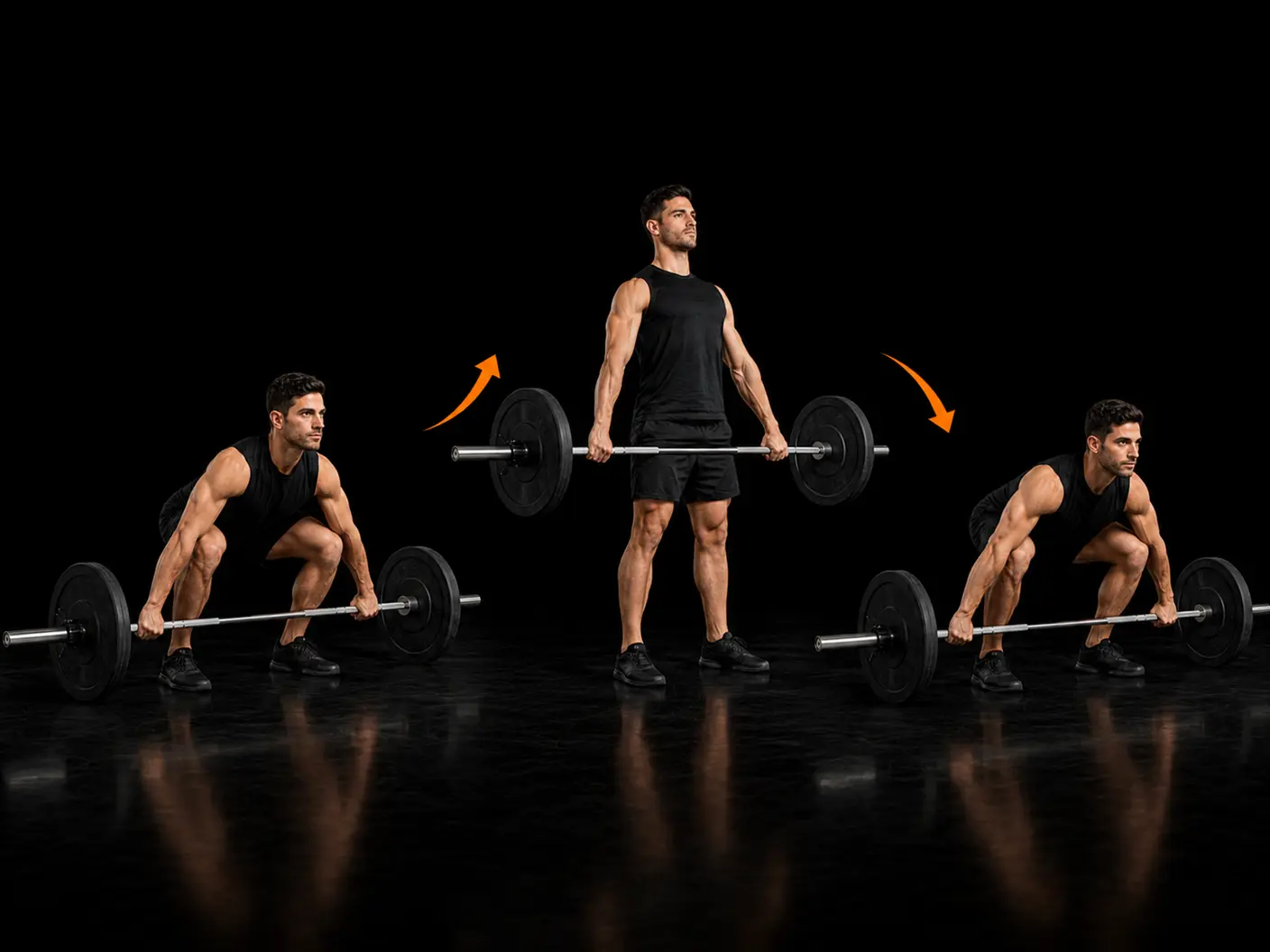
The snatch-grip deadlift is a barbell hinge movement performed with a wide, snatch-width grip that forces a lower starting hip position and a more upright torso than a conventional deadlift. This altered geometry places significant demand on the upper back, traps, and hamstrings while requiring greater lat engagement and grip strength to maintain position throughout the pull. It suits intermediate to advanced lifters looking to build posterior chain mass, address upper back weakness, or carry over strength to Olympic lifting.
How to do it
Grip the bar wide — roughly where you would snatch (hip crease to thigh at lockout). Set up as a deadlift; the wide grip forces lower hips and higher chest. Pack the lats. Drive the floor; bar travels vertically. Lock out tall.
Coaching cues
- Wide grip
- Low hips
- Chest proud
- Bar over mid-foot
Why train it
- The wide grip increases the range of motion compared with a conventional deadlift, creating greater time under tension for the hamstrings and glutes across each rep.
- The grip width demands active lat engagement and a proud chest throughout the lift, making it an effective tool for building upper back and trap thickness.
- The lower starting hip position closely mirrors the set-up mechanics of the snatch, making it a specific strength exercise for athletes developing Olympic lifting performance.
- Loading the movement with a barbell allows progressive overload over time, supporting long-term strength and hypertrophy goals across the entire posterior chain.
Common mistakes
- Gripping too narrow — confirm your grip places the bar at hip-crease height when standing, which is the reference point for a true snatch-width position.
- Allowing the hips to rise faster than the shoulders at the start of the pull — keep the chest proud and drive the floor with both legs so the torso angle stays consistent off the floor.
- Letting the bar drift away from the body — pack the lats hard before initiating the pull and keep the bar in contact with, or very close to, the legs throughout the ascent.
- Neglecting grip preparation — the wide hand position significantly increases forearm and grip demand, so use hook grip or build grip strength progressively rather than relying immediately on straps.
Primary: Rhomboids, Trapezius, Hamstrings, Gluteus Maximus.
Secondary: Latissimus Dorsi, Erector Spinae, Forearm Flexors.
Equipment
Good for
Easier variation
Conventional deadlift — same pattern, easier grip width.
Similar movements
Frequently asked
- What muscles does the snatch-grip deadlift work?
- The primary muscles are the upper back, traps, hamstrings, and glutes. The lats, erectors, and forearms work as secondary contributors, with the lats playing a particularly active role in keeping the bar close to the body.
- How does the snatch-grip deadlift differ from a conventional deadlift?
- The wider grip forces a lower hip position and a higher chest angle at set-up, increasing the range of motion and shifting more demand onto the upper back and traps. This makes it a more technically demanding variation that also places greater stress on grip and lat engagement.
- What sets and reps should I use for the snatch-grip deadlift?
- For strength, 3–5 sets of 3–5 reps at a challenging load works well. For hypertrophy, 3–4 sets of 6–8 reps with a controlled tempo allows sufficient time under tension without the grip becoming the limiting factor prematurely.
- Is the snatch-grip deadlift suitable for beginners?
- It is classified as an advanced movement due to the technical demands on hip position, lat engagement, and grip width. Lifters should have a well-established conventional deadlift before adding this variation to their programme.
- What are good alternatives to the snatch-grip deadlift?
- The Romanian deadlift is a useful alternative for targeting the hamstrings and glutes with a similar hinge pattern but lower technical complexity. Rack pulls at a snatch-grip width can also be used to build positional strength and upper back engagement without the full range of motion.
Want this movement in a plan built for you?
Adaptiv programmes the right exercises for your goal, equipment and experience — then adapts them as you train.
Build my programme