Sit-Up
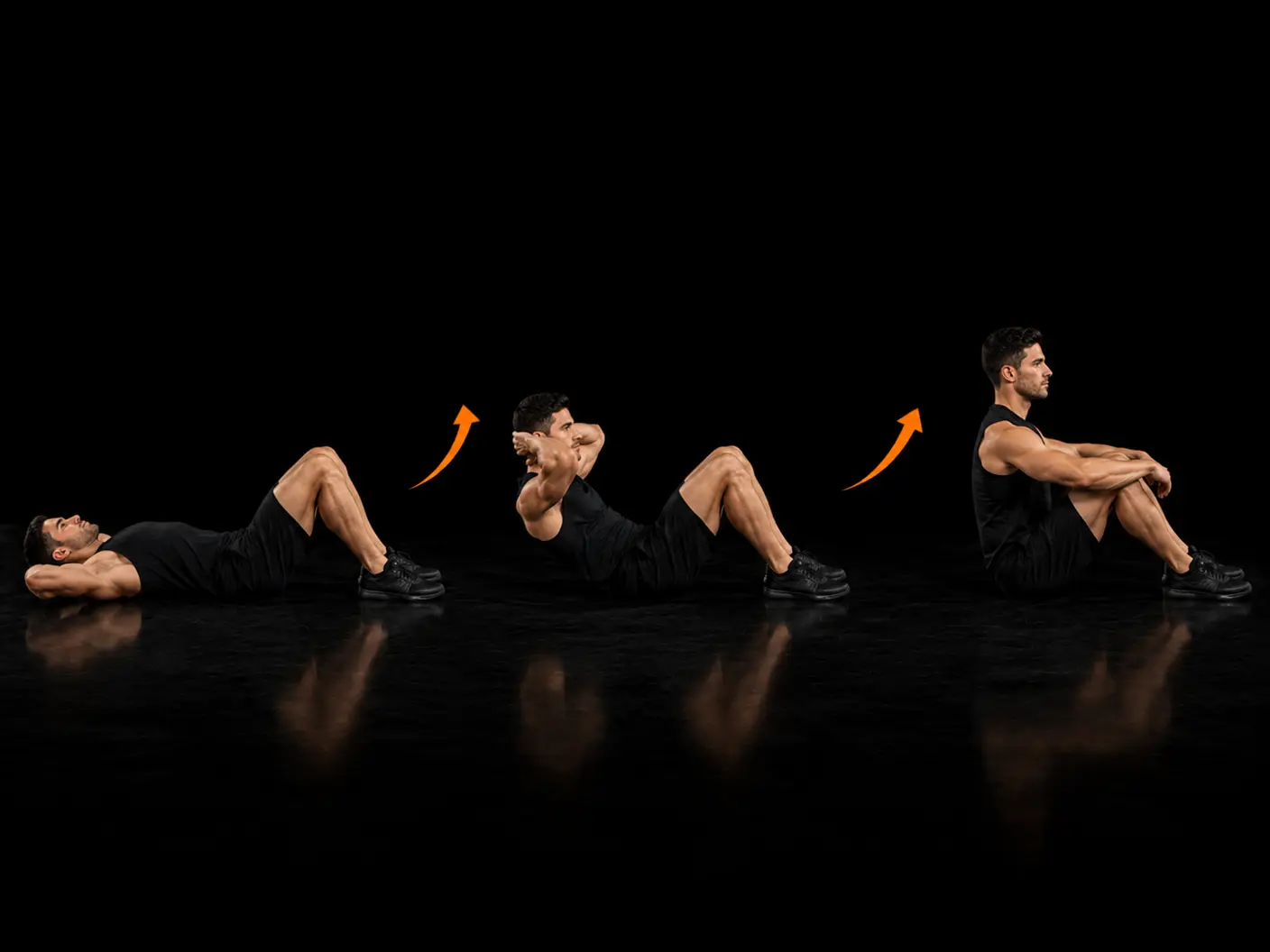
The sit-up is a foundational bodyweight exercise that trains spinal flexion through a full range of motion, primarily loading the rectus abdominis and hip flexors. It follows a core anti-extension pattern, requiring the torso to curl upright from a supine position under deliberate control. It suits beginners building foundational trunk strength as well as those maintaining general fitness without the need for additional equipment.
How to do it
Lie on your back with knees bent and feet flat on the floor, or anchored under a strap. Place hands across the chest or behind the head. Curl the upper body up by flexing at the waist until the torso is upright, then lower under control. Keep the movement smooth — avoid momentum by throwing the head forward.
Coaching cues
- Curl up don't heave
- Chin tucked
- Full range
- Lower slowly
Why train it
- It develops the rectus abdominis through a full range of motion, which is rarely achieved with shorter-range movements such as crunches.
- The involvement of the hip flexors makes it a useful exercise for building the anterior chain strength required in everyday movement and athletic performance.
- Requiring no equipment, it can be performed anywhere and integrated easily into warm-up routines, circuit training, or standalone conditioning work.
- Its foundational difficulty level makes it an accessible entry point for clients who are new to structured core training.
Common mistakes
- Heaving with the head and neck — lead with the chest and curl the spine sequentially rather than throwing the head forward to generate momentum.
- Rushing the descent — lower the torso under control on the way down, as the eccentric phase contributes meaningfully to the training stimulus.
- Holding the breath throughout the repetition — exhale as you curl up and inhale as you lower to maintain intra-abdominal pressure and rhythm.
- Allowing the lower back to arch sharply off the floor at the start — keep the lumbar spine in a neutral or slightly flattened position before initiating the curl.
Primary: Rectus Abdominis, Hip Flexors.
Secondary: Obliques.
Equipment
Good for
Easier variation
Crunch — partial range reduces the hip flexor demand for those with lower back sensitivity.
Similar movements
Frequently asked
- What muscles does the sit-up work?
- The sit-up primarily targets the rectus abdominis and hip flexors, with the obliques working as secondary stabilisers throughout the movement.
- How many sets and reps should I do for the sit-up?
- For general fitness, two to four sets of ten to twenty repetitions suits most people. Focus on controlled execution over high volume, particularly if you are newer to the movement.
- What is the difference between a sit-up and a crunch?
- A sit-up takes the torso through a full range of motion until upright, whereas a crunch involves only a partial curl off the floor. The sit-up therefore loads the hip flexors to a greater degree and covers more of the rectus abdominis range.
- Can I do sit-ups every day?
- The rectus abdominis and hip flexors are muscles like any other and benefit from adequate recovery between sessions. Training them two to four times per week with appropriate volume is a reasonable starting point for general fitness.
- Are sit-ups suitable if I have lower back discomfort?
- Some individuals find spinal flexion exercises aggravate lower back symptoms. If you have existing lower back concerns, it is advisable to consult a qualified professional before including sit-ups in your programme.
Want this movement in a plan built for you?
Adaptiv programmes the right exercises for your goal, equipment and experience — then adapts them as you train.
Build my programme