Single-Leg Hamstring Curl (Machine)
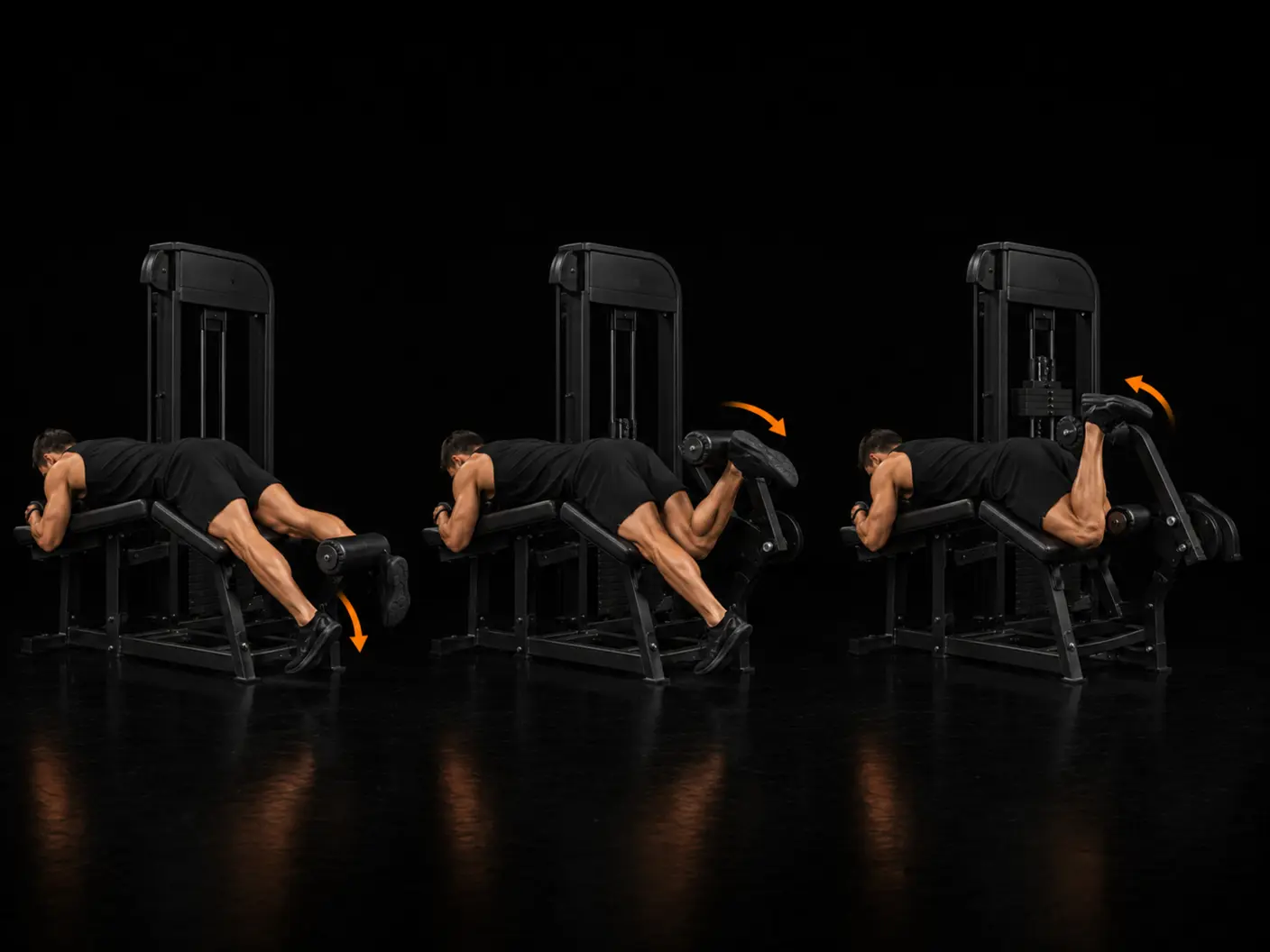
The single-leg hamstring curl is an isolation exercise performed on a seated or lying leg curl machine, training one limb at a time through knee flexion against resistance. By removing the stronger leg from the equation, it targets the hamstrings directly and exposes any strength or size discrepancy between sides. It suits a wide range of trainees, from those new to structured resistance training through to experienced lifters managing imbalances or adding targeted volume.
How to do it
Use either the seated or lying leg curl machine with one leg at a time. Set up as normal; the working leg under the pad, other leg relaxed. Curl through full range; pause briefly; lower with control. Address the weaker side first.
Coaching cues
- One leg at a time
- Full range
- Pause at peak
- Slow eccentric
Why train it
- Training one leg at a time highlights and progressively corrects left-to-right strength differences that bilateral machine work can mask.
- The controlled, isolated environment makes it straightforward to accumulate quality hamstring volume without the technical demands of compound movements.
- A deliberate pause at peak contraction and a slow eccentric phase place the hamstrings under sustained mechanical tension, supporting hypertrophy across the full muscle length.
- Starting each set on the weaker side ensures that leg is never shortchanged on effort or volume, making this a reliable tool for symmetry work.
Common mistakes
- Lifting the hips off the pad during the curl — keep the pelvis pressed firmly down throughout the movement so the hamstrings, not the lower back, produce the force.
- Using momentum to initiate the repetition — begin each curl with a deliberate, controlled contraction rather than a jerk or kick, particularly on the weaker side.
- Cutting the range of motion short — allow the leg to extend fully at the bottom and curl as far as the machine permits at the top so the hamstrings are worked through their complete functional range.
- Rushing the lowering phase — resist the weight on the way down at the same tempo you applied going up, as the eccentric portion carries significant training value for both strength and hypertrophy.
Primary: Hamstrings.
Secondary: Gastrocnemius.
Equipment
Good for
Easier variation
Bilateral machine leg curl — reduces load per leg by allowing compensation.
Similar movements
Frequently asked
- What muscles does the single-leg hamstring curl work?
- The primary muscle trained is the hamstring group, which spans the back of the thigh and performs knee flexion. The gastrocnemius, the larger calf muscle that also crosses the knee joint, acts as a secondary contributor during the curl.
- How many sets and reps should I do?
- For hypertrophy, three to four sets of eight to twelve repetitions per leg is a practical starting point. Because you work each side independently, begin with the weaker leg and match that rep count exactly on the stronger side.
- Should I use the seated or lying leg curl machine?
- Both are suitable for this exercise. The seated version places the hamstrings in a more lengthened position at the hip, which some research suggests may enhance the hypertrophic stimulus, while the lying version is more widely available. Choose based on the equipment at hand and personal comfort.
- How does the single-leg version differ from the standard bilateral hamstring curl?
- The bilateral version allows the stronger leg to compensate, potentially masking imbalances over time. Training one leg at a time forces each limb to produce its own force independently, making strength differences visible and ensuring both sides receive equal workload.
- Is this exercise suitable for beginners?
- Yes — it is rated foundational in difficulty, making it accessible early in a training programme. The machine provides a fixed movement path, which reduces the coordination demand and allows a beginner to focus on learning the contraction quality before progressing to more complex hamstring work.
Want this movement in a plan built for you?
Adaptiv programmes the right exercises for your goal, equipment and experience — then adapts them as you train.
Build my programme