Single-Leg Glute Bridge
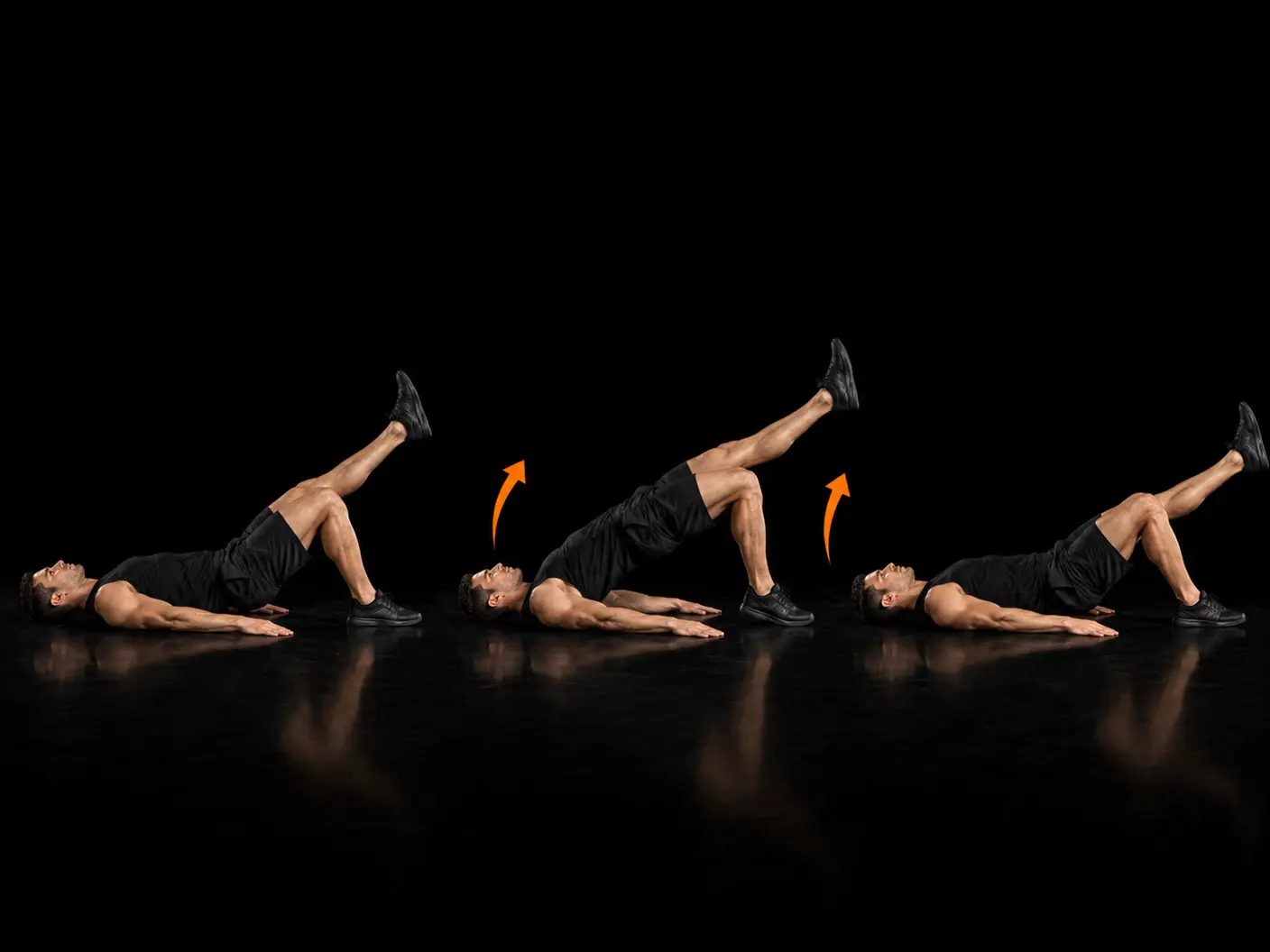
The single-leg glute bridge is a bodyweight hinge movement performed supine, in which one leg is extended whilst the other drives the hips upward from the floor. It trains unilateral hip extension, demanding greater glute and hamstring recruitment than its bilateral counterpart whilst also challenging core stability to keep the pelvis level. It suits beginners building foundational strength, those working through a rehabilitation programme, and experienced lifters seeking to address side-to-side imbalances.
How to do it
Lie on your back with knees bent and feet flat on the floor. Extend one leg straight, keeping it parallel to the thigh of the working leg. Drive through the planted heel to lift the hips until the body forms a straight line from shoulder to knee. Squeeze the glute at the top; keep the hips level. Lower under control without resting on the floor.
Coaching cues
- Drive through the heel
- Squeeze at the top
- Keep hips level
- Straight leg stays tall
Why train it
- Training one side at a time exposes and addresses strength asymmetries between the left and right glute, which bilateral movements can mask.
- The demand to keep the hips level throughout each repetition actively engages the core as a stabiliser, reinforcing pelvic control under load.
- Requiring only bodyweight and floor space, it fits easily into warm-ups, home training sessions, or rehabilitation protocols without any equipment.
- Progressive loading is straightforward — slowing the tempo, pausing at the top, or elevating the foot increases difficulty as strength develops.
Common mistakes
- Allowing the hips to rotate or drop on the extended-leg side — brace the core and actively cue level hips throughout the entire range of motion.
- Pushing through the toes rather than the heel — drive the planted heel into the floor to maximise glute activation and reduce excessive quad contribution.
- Resting the hips on the floor between repetitions — lower under control and reverse direction before contact to maintain tension in the working muscles.
- Letting the extended leg drop below the line of the working thigh — keep it parallel and the toes pointed upward to maintain correct alignment and consistent resistance.
Primary: Gluteus Maximus.
Secondary: Hamstrings, Rectus Abdominis.
Equipment
Good for
Easier variation
Bilateral glute bridge — both feet planted reduces the unilateral demand.
Similar movements
Frequently asked
- What muscles does the single-leg glute bridge work?
- The primary muscle trained is the gluteus maximus, which performs hip extension against bodyweight. The hamstrings of the working leg assist the movement, and the core musculature is recruited throughout to stabilise the pelvis and prevent the hips from rotating.
- How many sets and reps should I do for the single-leg glute bridge?
- For general fitness and hypertrophy, 3 sets of 10–15 repetitions per side is a practical starting point. For rehabilitation or activation work, lower volumes of 2–3 sets of 8–12 reps with a deliberate pause at the top are common. Adjust based on your current capacity and the role the exercise plays in your programme.
- Is the single-leg glute bridge suitable for beginners?
- Yes — it is classified as a foundational movement and requires no equipment, making it an accessible entry point for developing hip extension strength. Beginners should focus on keeping the hips level and driving through the heel before progressing tempo or volume.
- What is the difference between a single-leg glute bridge and a single-leg hip thrust?
- The primary distinction is the position of the upper back: in the glute bridge the shoulders remain flat on the floor, whereas the hip thrust uses an elevated surface behind the shoulders, increasing the range of motion and potential peak load on the glute. The bridge is generally the more appropriate starting point before progressing to the thrust.
- Can I do this exercise if I have lower back discomfort?
- The single-leg glute bridge is often included in rehabilitation contexts precisely because it trains the glute with relatively low spinal loading, but individual circumstances vary considerably. If you are managing a back condition, consult a qualified professional before adding it to your programme.
Want this movement in a plan built for you?
Adaptiv programmes the right exercises for your goal, equipment and experience — then adapts them as you train.
Build my programme