Frog Pump
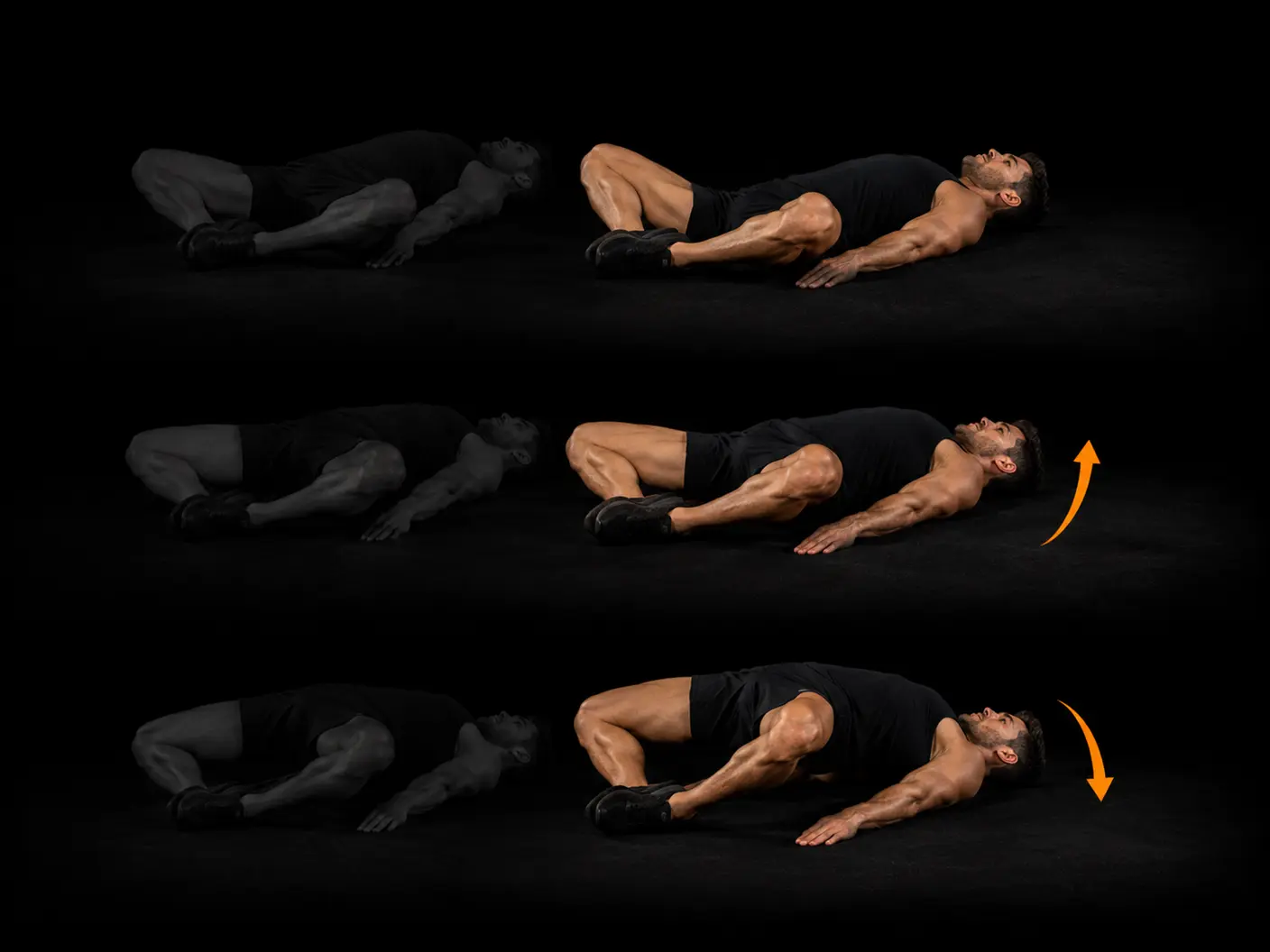
The frog pump is a supine hip hinge variation performed with the soles of the feet pressed together and the knees dropped out to the sides, creating a diamond-shaped leg position. This stance places the hip abductors and external rotators in a shortened position, shifting demand more directly onto the gluteus maximus and adductors with each repetition. It suits beginners learning to feel and contract the glutes, as well as more advanced trainees using it as an accessory or activation movement within a broader programme.
How to do it
Lie on your back. Bring the soles of the feet together, knees falling out to the sides in a diamond shape. Drive through the outer edges of the feet to lift the hips. Squeeze the glutes hard at the top. Lower under control.
Coaching cues
- Feet pressed together
- Knees fall out
- Squeeze at top
- Short, controlled reps
Why train it
- The foot and knee position reduces hamstring contribution, making it easier to isolate and feel the gluteus maximus working through each rep.
- It requires no equipment to be effective, making it a practical choice for home training, warm-ups, or sessions where loading options are limited.
- The adductors are recruited as a secondary muscle group, providing a degree of inner-thigh stimulus that standard glute bridges do not emphasise as directly.
- Short, controlled repetitions at moderate-to-high volume make it well suited to hypertrophy-focused accessory work without placing significant load on the lower back or knees.
Common mistakes
- Failing to squeeze the glutes at the top — pause briefly at peak hip extension and consciously contract the glutes before lowering to ensure the target muscle is doing the work.
- Rushing through repetitions — keep each rep short and controlled, as momentum reduces time under tension and diminishes the glute stimulus.
- Lifting the lower back into hyperextension rather than the hips — focus on driving the hips up while keeping the ribcage down and the core lightly braced.
- Allowing the feet to separate during the set — keep the soles firmly pressed together throughout, as this foot position is what creates the unique loading angle on the glutes.
Primary: Gluteus Maximus.
Secondary: Adductors.
Equipment
Good for
Easier variation
Regular glute bridge — easier hip position for beginners.
Similar movements
Frequently asked
- What muscles does the frog pump work?
- The primary muscle trained is the gluteus maximus. The adductors are engaged as a secondary muscle group due to the diamond-shaped leg position used throughout the movement.
- How many sets and reps should I do for the frog pump?
- For hypertrophy and general fitness, 3–4 sets of 15–25 repetitions works well, particularly when performed with bodyweight or a light dumbbell placed on the hips. The exercise lends itself to higher rep ranges because the load and joint stress are relatively low.
- Can I add weight to the frog pump?
- Yes — placing a dumbbell across the hip crease is the most straightforward way to progress the movement once bodyweight repetitions feel easy and you can consistently feel the glutes working throughout each rep.
- Is the frog pump a good glute activation exercise before lifting?
- It is commonly used in this way, as the position helps many people establish a strong mind-muscle connection with the glutes before heavier compound work such as deadlifts or squats. Keep the load light and the reps controlled if using it as a warm-up.
- What is the difference between a frog pump and a glute bridge?
- A standard glute bridge uses a parallel foot position, which allows the hamstrings to contribute more to hip extension. The frog pump's externally rotated, feet-together stance reduces hamstring involvement and places more of the demand on the gluteus maximus and adductors.
Want this movement in a plan built for you?
Adaptiv programmes the right exercises for your goal, equipment and experience — then adapts them as you train.
Build my programme