Single-Arm Push-Up
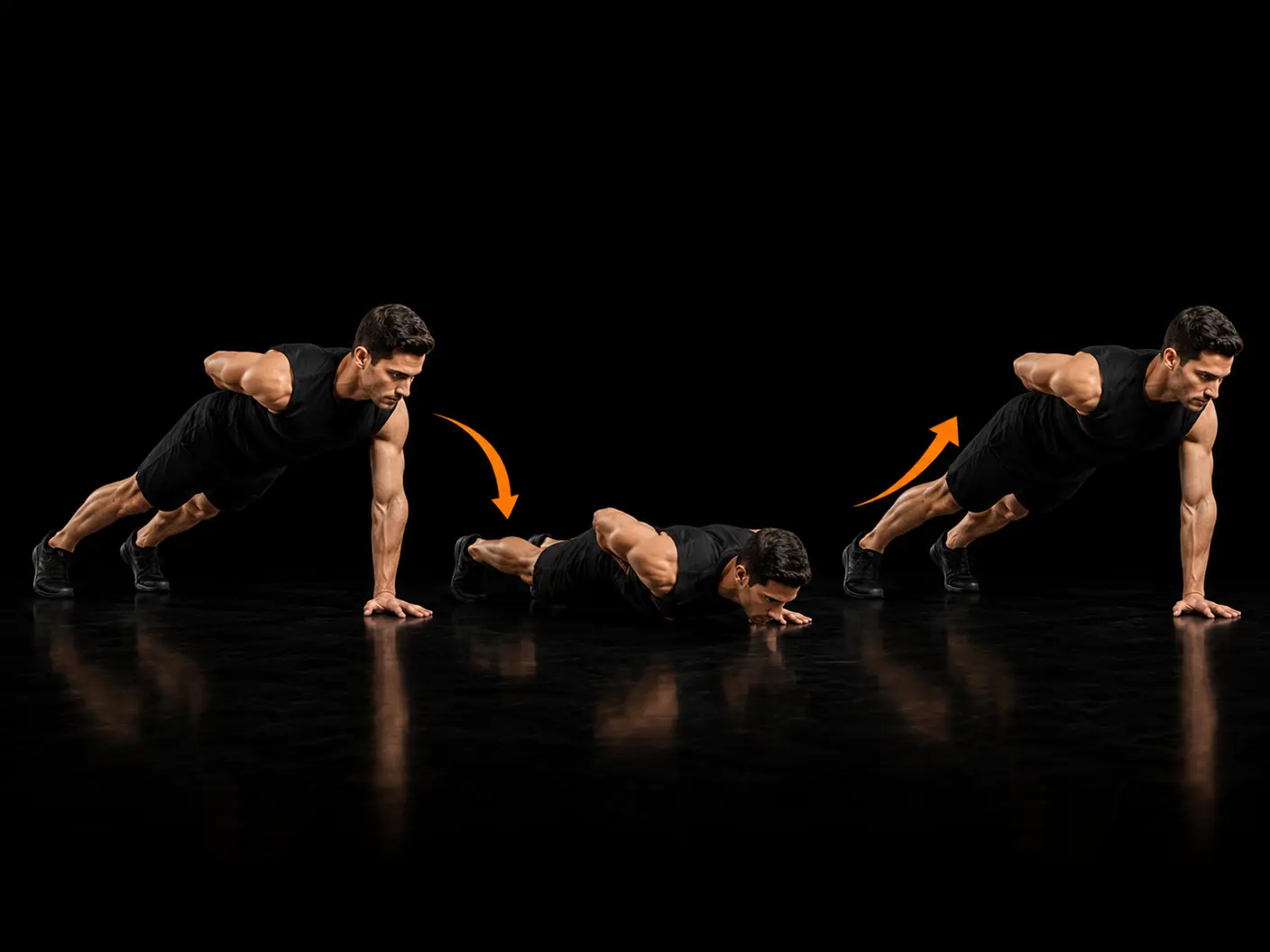
The single-arm push-up is an advanced bodyweight pressing movement that loads the pectoralis major and triceps through a unilateral horizontal push pattern. Unlike its bilateral counterpart, it demands significant anti-rotation stability from the core and serratus anterior to keep the hips and shoulders square throughout each repetition. It suits experienced trainees who have already built a solid foundation in standard push-up variations and are looking to develop pressing strength without external load.
How to do it
Set up in a push-up position with feet wide for stability. Place one hand behind the back or on the hip. With one hand below the chest, lower yourself as far as possible while resisting rotation of the torso. Press back up. Keep the hips and shoulders parallel to the floor throughout.
Coaching cues
- Feet wide
- Resist rotation
- Lower slowly
- Press with one arm
Why train it
- It develops genuine unilateral pressing strength in the pectoralis major and triceps, exposing and addressing side-to-side asymmetries that bilateral movements can mask.
- The anti-rotation demand placed on the core makes it an efficient choice for athletes who need pressing strength and trunk stability within a single movement.
- As a bodyweight exercise it requires no equipment, making it a practical option for maintaining upper-body strength in any training environment.
- Progressive difficulty can be managed simply by adjusting foot width or hand elevation, allowing the movement to remain challenging across a range of strength levels.
Common mistakes
- Allowing the hips or shoulders to rotate toward the working arm — actively brace the core and keep both hips and shoulders parallel to the floor throughout the entire rep.
- Placing the feet too close together — widen the stance to increase the base of support and make resisting rotation mechanically achievable.
- Rushing the descent — lower yourself under control to build tension through the chest and triceps and to give the core enough time to stabilise the torso.
- Positioning the hand too far forward or to the side — keep it directly below the chest so the pressing mechanics remain efficient and shoulder stress is minimised.
Primary: Pectoralis Major, Triceps Brachii.
Secondary: Anterior Deltoid, Obliques, Serratus Anterior.
Equipment
Good for
Easier variation
Archer push-up — both hands on the floor with the working arm doing most of the work.
Similar movements
Frequently asked
- What muscles does the single-arm push-up work?
- The primary muscles are the pectoralis major and triceps. The anterior deltoid, serratus anterior, and core musculature — particularly in an anti-rotation capacity — are engaged as secondary contributors throughout the movement.
- How many sets and reps should I do for the single-arm push-up?
- For strength development, 3–5 sets of 3–6 reps per arm works well, with full recovery between sets. If you cannot yet complete a clean rep with the hips and shoulders level, reduce the difficulty by elevating the hand on a box or bench rather than compromising form.
- What are good progressions to build up to the single-arm push-up?
- Archer push-ups and single-arm negatives are practical stepping stones, as both reduce the load on the working arm while reinforcing the anti-rotation demand. Ensure you can perform at least 20 strict standard push-ups before attempting the full single-arm variation.
- Is the single-arm push-up useful for athletic performance?
- Yes — the combination of horizontal pressing strength and rotational stability makes it relevant for athletes in sports that require force production or bracing through asymmetrical positions. It trains qualities that transfer to contact sports, throwing mechanics, and any activity demanding trunk stiffness under load.
- Can the single-arm push-up replace bench pressing?
- It trains a similar movement pattern but the loading characteristics differ; the bench press allows progressive overload via added weight, whereas the single-arm push-up is capped by bodyweight. The two movements complement each other well, but if maximum pressing strength is the primary goal, barbell or dumbbell pressing should remain central to the programme.
Want this movement in a plan built for you?
Adaptiv programmes the right exercises for your goal, equipment and experience — then adapts them as you train.
Build my programme