Shrimp Squat
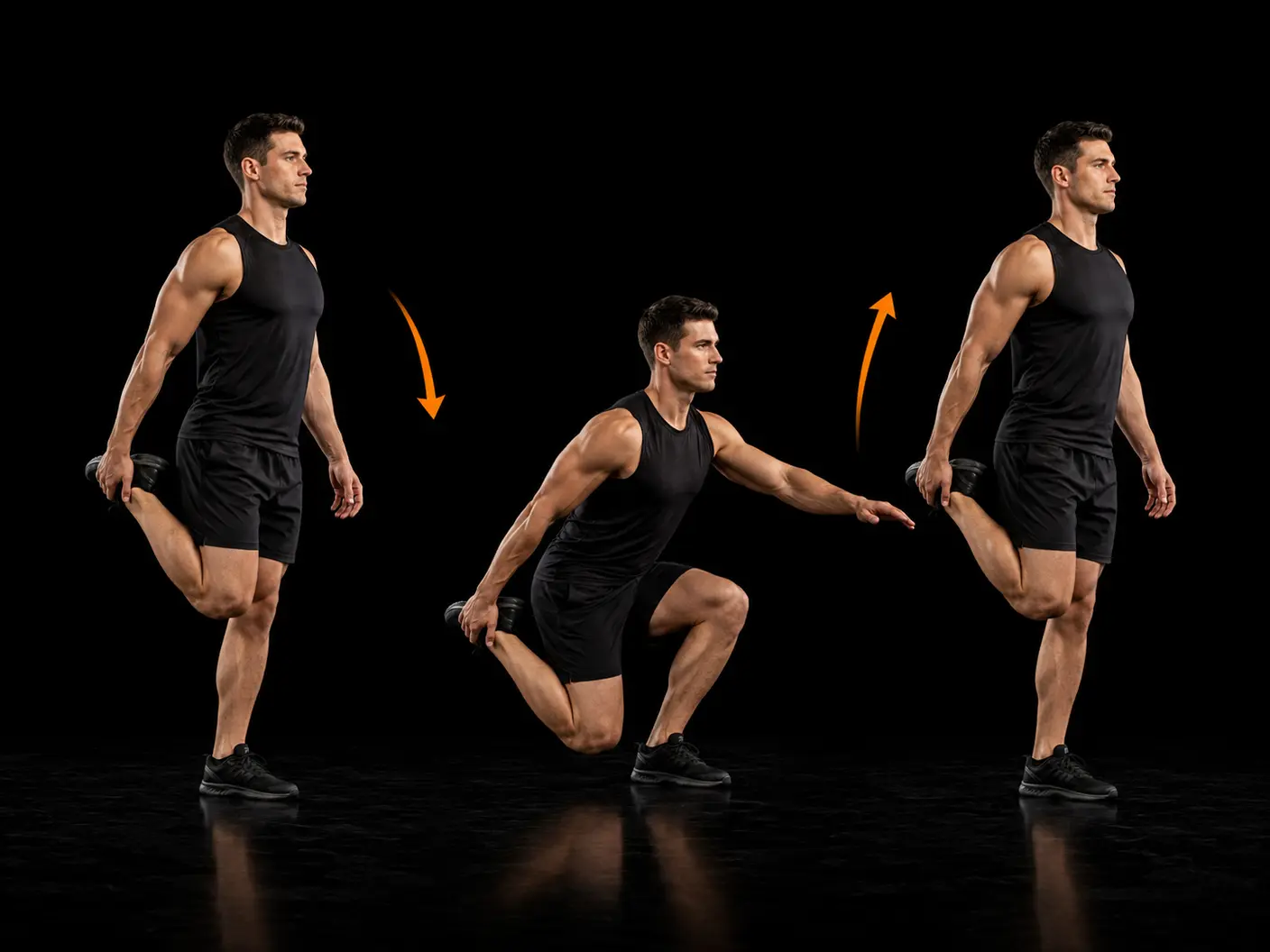
The shrimp squat is a single-leg bodyweight squat that demands significant quadriceps strength, hip mobility, and balance in combination. Unlike the pistol squat, the non-working leg is held behind the body — foot gripped by the same-side hand — which shifts demand toward the anterior chain and challenges hip flexor flexibility simultaneously. It suits experienced trainees who have already developed solid single-leg stability and are looking to push bodyweight lower-body training further.
How to do it
Stand on one leg, other leg bent back at the knee — the foot held by the same-side hand. Opposite arm forward for balance. Descend by sitting back and down; the trailing knee taps the floor. Drive up through the working foot.
Coaching cues
- Tap the knee
- Drive through the mid-foot
- Opposite arm for balance
- Controlled descent
Why train it
- Training one leg at a time exposes and addresses side-to-side strength imbalances that bilateral squatting can mask.
- The movement places a high demand on the quadriceps through a long range of motion, making it a valuable tool for athletes who need strong, resilient knees under load.
- Because no external load is required, it can be programmed anywhere and progresses skill and strength concurrently.
- The balance and coordination demands transfer directly to athletic contexts where single-leg force production and stability are essential.
Common mistakes
- Letting the torso collapse forward excessively — brace the core and sit back into the descent to keep an upright, controlled position throughout.
- Allowing the working knee to drift inward — drive it out in line with the toes from the first inch of the descent to the top of the drive.
- Rushing the descent and bouncing off the knee tap — control the trailing knee to the floor under tension rather than dropping into it passively.
- Neglecting the opposite arm — extend it forward deliberately as a counterbalance, which meaningfully improves stability and keeps the centre of mass over the working foot.
Primary: Quadriceps, Gluteus Maximus.
Secondary: Rectus Abdominis, Gastrocnemius, Hip Flexors.
Equipment
Good for
Easier variation
Bulgarian split squat — remove the balance demand.
Similar movements
Frequently asked
- What muscles does the shrimp squat work?
- The primary muscles are the quadriceps and glutes, which drive the movement. The calves, hip flexors, and core work as secondary contributors to stabilise the ankle, manage the position of the trailing leg, and maintain trunk control throughout the rep.
- How many sets and reps should I do for the shrimp squat?
- For strength and skill development, 3–4 sets of 3–6 controlled reps per leg works well, prioritising quality over volume. Because the movement is technically demanding, it responds better to fresh, focused sets early in a session than to high-fatigue accumulation work.
- What are good progressions to build up to a shrimp squat?
- Build single-leg squat confidence with assisted or elevated single-leg squats first, then progress to the shrimp squat with the rear foot resting on a bench rather than held in the hand. Once you can control depth with the foot elevated, gradually move toward the full unsupported version.
- Is the shrimp squat suitable for building muscle as well as athletic performance?
- Yes — the high quadriceps demand through a long range of motion makes it a credible hypertrophy stimulus for trained individuals. Loading can be added via a weight vest or by holding a dumbbell to increase overload once bodyweight reps are fully controlled.
- How does the shrimp squat differ from the pistol squat?
- In a pistol squat the non-working leg extends forward and is held off the floor, creating a significant counterbalance challenge. In the shrimp squat the non-working leg is held behind the body, which increases the demand on hip flexor flexibility and shifts more emphasis to the anterior chain of the working leg.
Want this movement in a plan built for you?
Adaptiv programmes the right exercises for your goal, equipment and experience — then adapts them as you train.
Build my programme