Pistol Squat
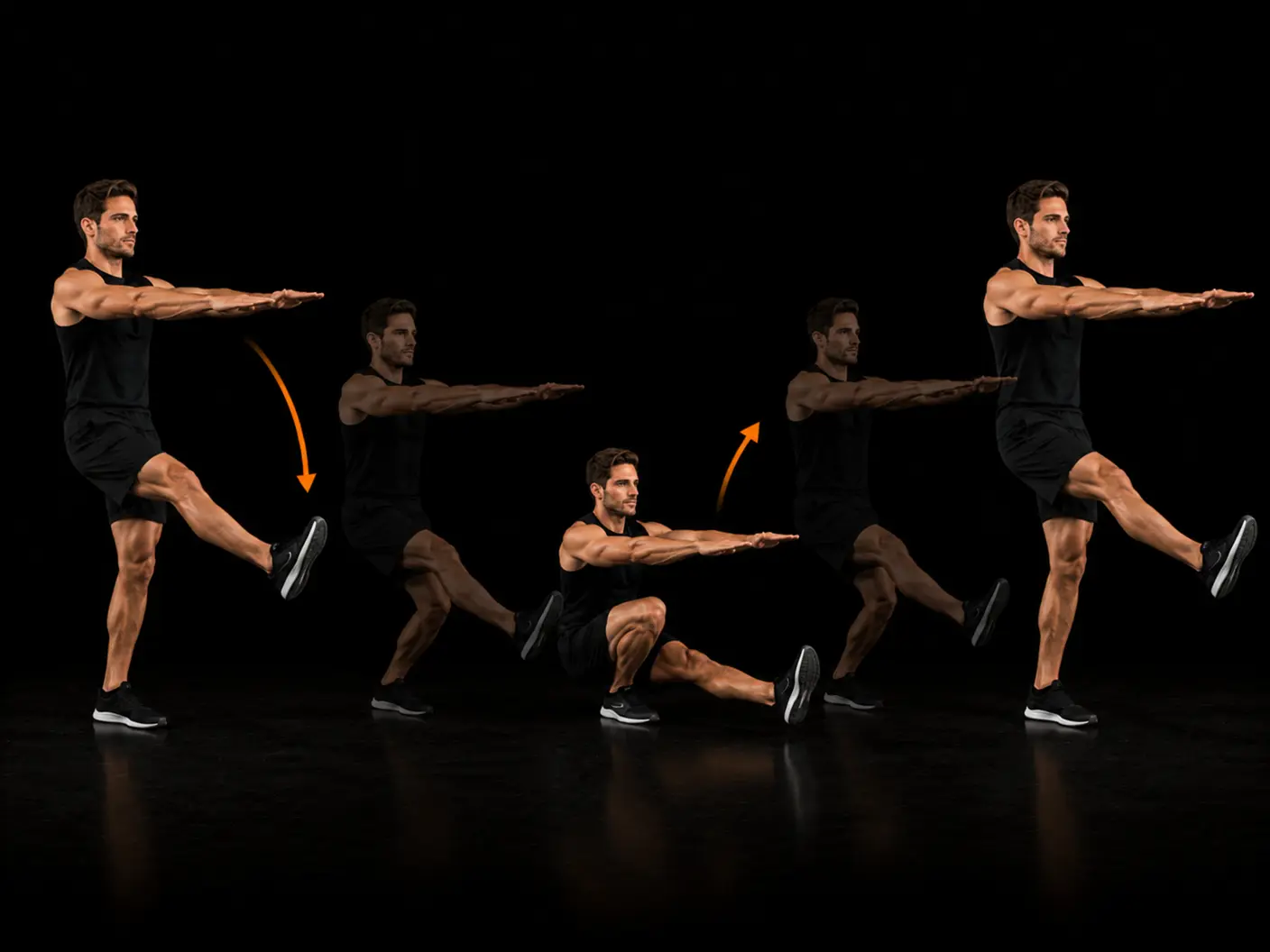
The pistol squat is a single-leg squat performed to full depth, with the non-working leg held extended in front of the body throughout the movement. It trains the squat pattern unilaterally, demanding strength, balance, and mobility in equal measure from the quadriceps, glutes, and supporting musculature. It suits experienced trainees who have already developed solid bilateral squat mechanics and are looking to address asymmetries or advance their bodyweight training.
How to do it
Stand on one leg, other leg extended forward. Arms out for balance. Sit back and down on the working leg, keeping the free leg straight and off the floor. Descend to full depth — hamstring to calf contact — with the heel planted. Drive through mid-foot to stand, keeping the torso controlled.
Coaching cues
- Heel stays down
- Free leg tall
- Chest up
- Control the descent
Why train it
- Training each leg independently exposes and reduces strength imbalances that bilateral squats can mask.
- Full-depth single-leg loading develops quad and glute strength through a long range of motion, which carries over directly to athletic movements such as sprinting, cutting, and jumping.
- Because no external load is required, the pistol squat is a practical strength exercise that can be performed anywhere without equipment.
- Holding the free leg elevated throughout the movement demands continuous contribution from the core and adductors to maintain position and control.
Common mistakes
- Lifting the heel off the floor — keep the heel firmly planted throughout the descent and drive, as losing heel contact shifts load forward and compromises depth.
- Letting the torso collapse forward excessively — keep the chest up and arms extended in front to act as a counterbalance and maintain a controlled trunk position.
- Allowing the working knee to drift inward — actively guide the knee out over the toes from the start of the descent to maintain alignment and distribute load correctly.
- Dropping too quickly on the way down — control the descent with deliberate tempo, as a passive drop removes the strength stimulus and makes the reversal at the bottom significantly harder.
Primary: Quadriceps, Gluteus Maximus.
Secondary: Hamstrings, Adductors, Rectus Abdominis, Gastrocnemius.
Equipment
Good for
Easier variation
Box pistol squat — sit back to a 12–18" box to reduce depth and balance demand.
Similar movements
Frequently asked
- What muscles does the pistol squat work?
- The primary muscles are the quadriceps and glutes of the working leg. The hamstrings, adductors, calves, and core all contribute as secondary stabilisers throughout the movement.
- How many sets and reps should I programme for the pistol squat?
- For strength and skill development, 3–5 sets of 2–5 repetitions per leg works well, with full recovery between sets. Because the movement is technically demanding, quality should take priority over accumulating volume.
- I cannot yet do a full pistol squat — what progressions should I use?
- Assisted variations are a sensible starting point — holding a suspension trainer or upright for balance removes the stability demand and lets you build depth gradually. Box pistols, where you descend to a target surface, also allow you to develop the pattern before committing to full range.
- Is the pistol squat suitable for building muscle as well as athletic performance?
- It can contribute to quad and glute development, particularly in trainees who respond well to bodyweight training or are progressing toward weighted single-leg variations. For those whose primary goal is hypertrophy, it is typically used as a complementary movement alongside loaded exercises.
- What mobility is needed to perform a pistol squat correctly?
- Adequate ankle dorsiflexion is essential to keep the heel down at depth, alongside sufficient hip flexion to hold the free leg extended. Restrictions in either area are common limiting factors, and addressing them specifically will often improve performance more quickly than simply practising the movement under load.
Want this movement in a plan built for you?
Adaptiv programmes the right exercises for your goal, equipment and experience — then adapts them as you train.
Build my programme