Seated Hip Abduction Machine
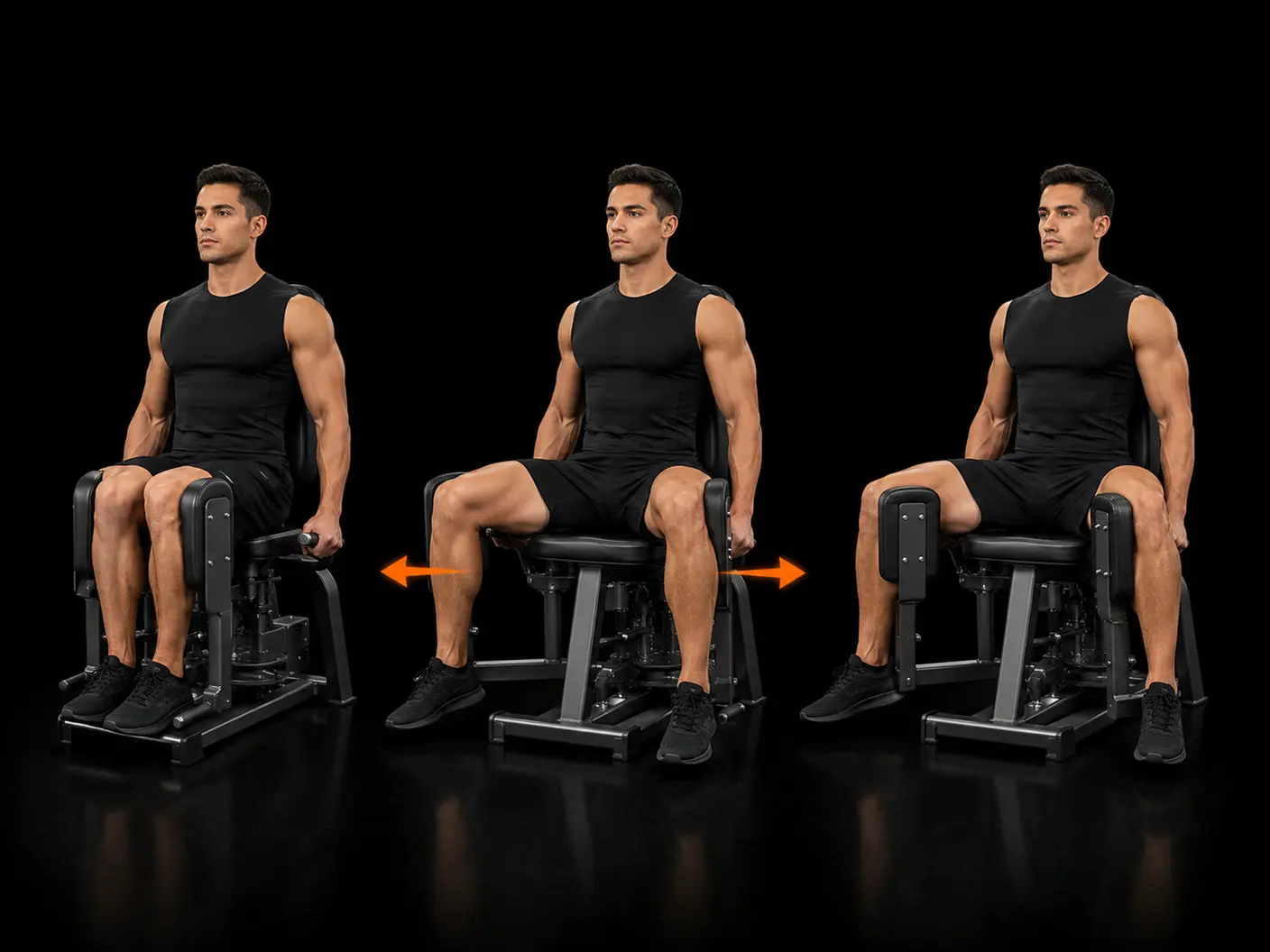
The seated hip abduction machine isolates the gluteus medius and upper gluteus maximus by driving the thighs outward against a fixed resistance through a controlled arc of motion. It trains the hip abduction pattern in a stable, supported position, removing the balance demands that bodyweight or free-weight variations introduce. It suits beginners building foundational glute strength as well as more experienced trainees seeking direct hypertrophy work for the lateral hip musculature.
How to do it
Sit into the machine with knees outside the pads, feet on the platform. Grip the handles. Press the knees outward against the pads through full range of motion. Pause briefly at peak abduction. Return under control to a stretched position.
Coaching cues
- Full range
- Pause at peak
- Controlled return
- Sit tall
Why train it
- It directly targets the gluteus medius, a muscle that is often underdeveloped and difficult to isolate through compound lower-body movements alone.
- The machine provides a stable seated position, allowing full attention to be placed on contracting the target muscles rather than managing balance or coordination.
- A brief pause at peak abduction increases time under tension at the point of maximum muscle contraction, supporting hypertrophy adaptations.
- The controlled return to the stretched position ensures the full range of motion is used in both directions, maximising stimulus to the gluteus medius and minimus.
Common mistakes
- Leaning the torso forward or rounding the lower back — sit tall with the spine neutral throughout the set to ensure the load is directed to the hip abductors rather than the lower back.
- Using momentum to swing the knees outward — initiate each repetition deliberately and press smoothly against the pads so the gluteus medius does the work rather than a postural lurch.
- Cutting the range of motion short — allow the pads to return to the fully adducted position between repetitions so the glutes work through their complete available range.
- Gripping the handles too tightly and bracing through the upper body — keep the grip relaxed, as excessive upper-body tension draws focus away from the target muscles and can disrupt a tall seated posture.
Primary: Gluteus Medius, Gluteus Maximus.
Equipment
Good for
Easier variation
Banded lateral walks — lower-load alternative.
Similar movements
Frequently asked
- What muscles does the seated hip abduction machine work?
- The primary muscles trained are the gluteus medius and the upper portion of the gluteus maximus. The gluteus minimus acts as a secondary contributor throughout the movement.
- How many sets and reps should I do on the hip abduction machine?
- For hypertrophy, three to four sets of 12 to 20 repetitions works well, with a controlled tempo and a deliberate pause at peak abduction. For general fitness and muscle endurance, slightly higher rep ranges of 15 to 25 with moderate resistance are appropriate.
- Is the seated hip abduction machine suitable for beginners?
- Yes, it is classified as a foundational movement. The fixed machine path and stable seated position make it accessible for those new to resistance training who are learning to engage the glute musculature.
- Can I use this exercise as a warm-up before squats or deadlifts?
- It can be used as a low-load activation exercise before compound lower-body work. Performing one or two lighter sets before a main session can help establish a neuromuscular connection to the gluteus medius ahead of movements that require hip stability.
- Are there alternatives if the hip abduction machine is unavailable?
- Resistance band lateral walks and side-lying hip abduction both train a similar pattern using the same primary muscles. These alternatives require no machine and can be performed with minimal equipment, though they present different stability demands to the seated machine version.
Want this movement in a plan built for you?
Adaptiv programmes the right exercises for your goal, equipment and experience — then adapts them as you train.
Build my programme