Cable Hip Abduction
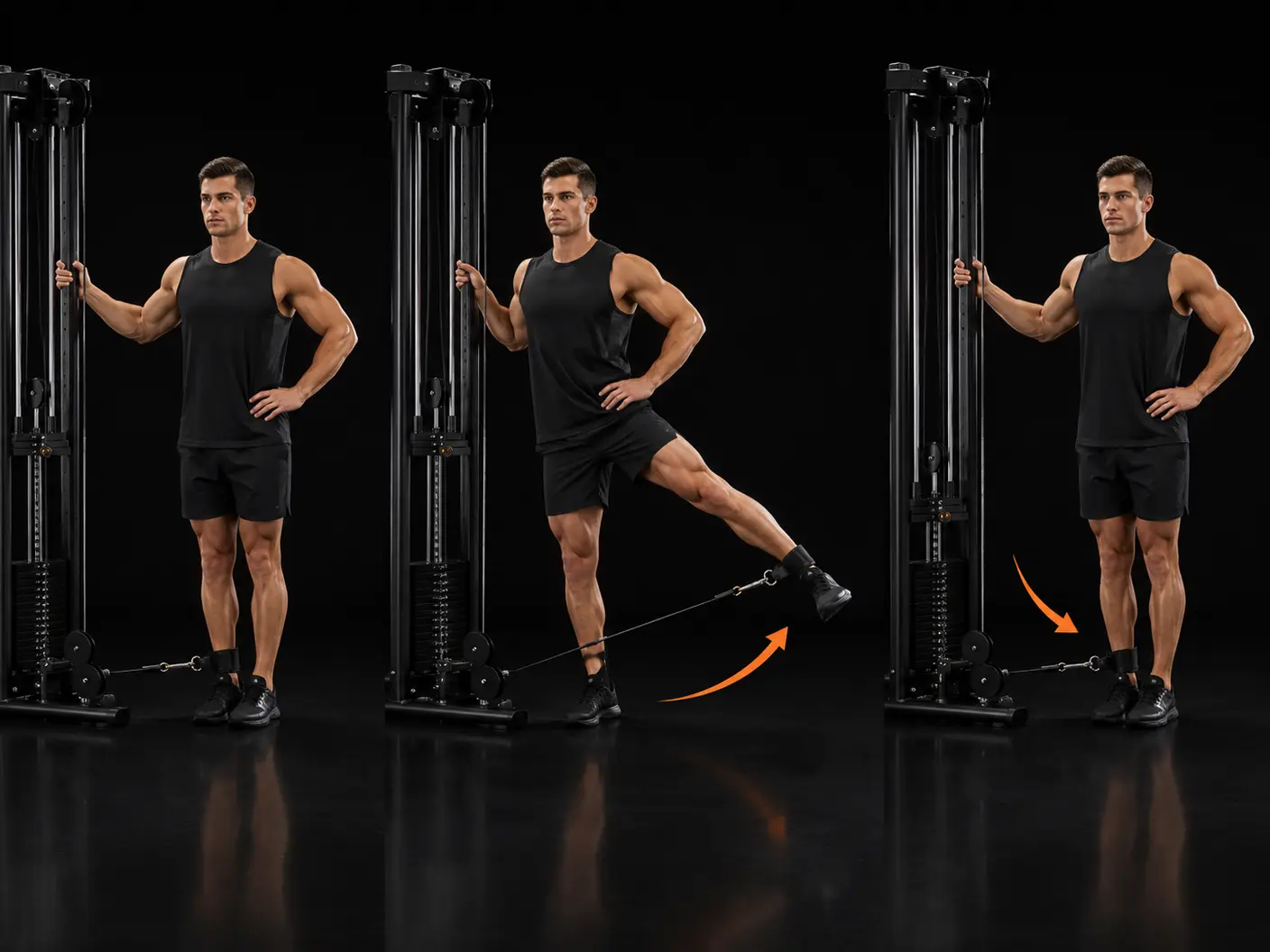
Cable hip abduction is an isolation exercise that trains the lateral hip musculature through a controlled, single-leg abduction pattern against constant cable resistance. The movement targets the gluteus medius and gluteus minimus — muscles responsible for stabilising the pelvis during gait and single-leg loading. It suits beginners building foundational hip strength as well as more advanced trainees looking to address lateral glute development directly.
How to do it
Attach an ankle cuff to a low cable. Stand sideways to the stack, cable on the ankle of the far leg. Hold the stack for balance. Brace the standing leg. Abduct the working leg outward (away from the midline) through full range without leaning the torso. Lower under control.
Coaching cues
- Torso stays tall
- Full range
- Pause at peak
- Do not lean
Why train it
- The cable provides constant tension throughout the range of motion, creating a more consistent stimulus for the gluteus medius and gluteus minimus than band or bodyweight alternatives.
- Because the exercise isolates the lateral hip, it allows targeted work on muscles that are often under-developed relative to the gluteus maximus in general lower-body programming.
- Training hip abduction in a standing position requires the supporting leg to stabilise, reinforcing single-leg balance and hip control that carries over to broader athletic and functional movement.
- The foundational difficulty level makes it an accessible entry point for those new to structured glute training, allowing sound technique to be established before progressing to more complex patterns.
Common mistakes
- Leaning the torso away from the cable — keep the trunk tall and vertical throughout; any side-bend reduces the demand on the abductors and shifts load elsewhere.
- Using momentum to swing the leg outward — initiate the movement deliberately from the hip and maintain control on both the lift and the return.
- Cutting the range of motion short — allow the working leg to travel through its full available range before pausing briefly at peak abduction as the cue directs.
- Neglecting the standing leg — the supporting leg should remain braced and the foot flat throughout; a soft or unstable base compromises the quality of every repetition.
Primary: Gluteus Medius.
Secondary: Gluteus Maximus.
Equipment
Good for
Easier variation
Banded hip abduction or clamshell — simpler setup, no cable needed.
Similar movements
Frequently asked
- What muscles does cable hip abduction work?
- The primary muscles are the gluteus medius and gluteus minimus, which sit on the lateral surface of the hip and are responsible for moving the leg away from the midline. The upper fibres of the gluteus maximus contribute as a secondary mover.
- How many sets and reps should I do for cable hip abduction?
- For hypertrophy, three to four sets of ten to fifteen repetitions per side at a controlled tempo is a practical starting point. If the goal is general fitness or muscle endurance, slightly higher rep ranges of fifteen to twenty with a moderate load are equally appropriate.
- Where does cable hip abduction fit in a programme?
- It works best as an accessory movement placed after compound lower-body exercises such as squats or hip hinges, or as part of a dedicated glute or lateral hip circuit. Programming it first can pre-fatigue the abductors before heavier loaded patterns.
- What is a good alternative to cable hip abduction?
- Banded standing hip abduction follows the same movement pattern and is a reasonable substitute when a cable machine is unavailable. The key difference is that a band provides ascending resistance rather than constant tension, so the stimulus is not identical.
- Can cable hip abduction help with hip stability?
- Strengthening the gluteus medius and gluteus minimus through exercises like this one is commonly associated with improved lateral hip stability. If you have a specific concern about hip or knee stability related to a pre-existing condition, it is worth consulting a qualified professional before programming it.
Want this movement in a plan built for you?
Adaptiv programmes the right exercises for your goal, equipment and experience — then adapts them as you train.
Build my programme