Seated Cable Row (Close-Grip)
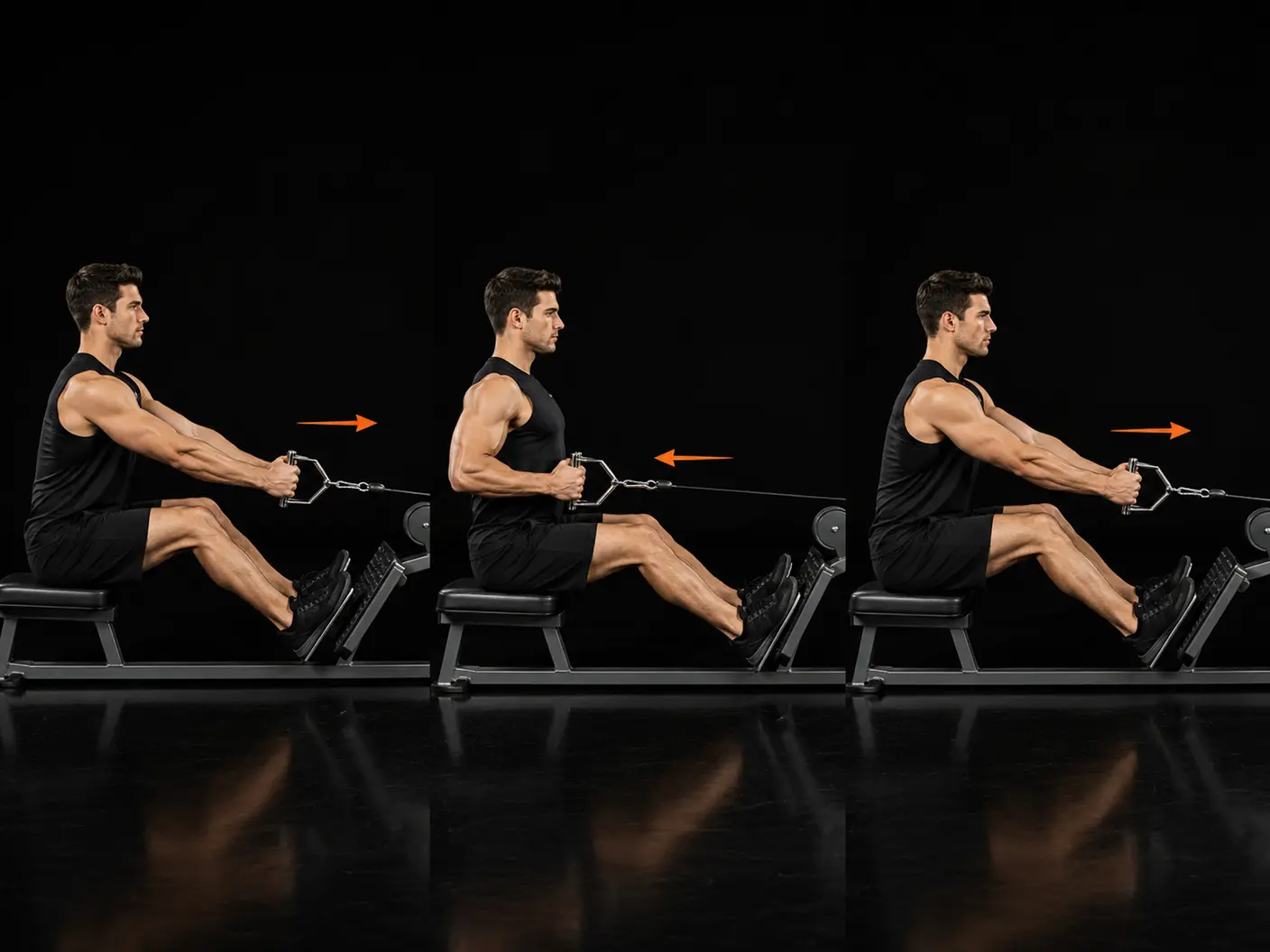
The seated cable row with a close-grip V-handle is a horizontal pulling movement that targets the middle back, training scapular retraction and humeral extension under constant cable tension. The compound nature of the exercise recruits the middle trapezius, rhomboids, and latissimus dorsi as primary movers, with the rear deltoid, biceps, and forearms contributing as secondaries. It suits a wide range of trainees, from those building a general fitness base through to those pursuing structured hypertrophy or strength work.
How to do it
Sit with feet braced, knees slightly bent. Grip the V-handle. Sit tall with a slight forward lean at the start. Pull the handle to the lower ribs by driving the elbows back and squeezing the shoulder blades. Pause at peak contraction. Extend the arms back to a full stretch.
Coaching cues
- Tall chest
- Drive elbows back
- Squeeze blades
- Full stretch at the front
Why train it
- The cable's constant tension keeps the muscles loaded through the full range of motion — including the stretched position at extension — which supports hypertrophy effectively.
- Driving the elbows back and squeecing the shoulder blades reinforces proper scapular retraction mechanics, a pattern that carries over to compound pressing and pulling movements alike.
- The seated, braced position minimises lower-body involvement, allowing targeted effort to be directed at the mid and upper back musculature.
- As a foundational-rated exercise, it is accessible to newer trainees while remaining a productive staple in more advanced programmes when load and volume are progressed appropriately.
Common mistakes
- Using momentum by rocking the torso — initiate every rep from a tall, controlled position and let the arms and back do the work.
- Pulling the handle too high toward the chest — draw it to the lower ribs to keep the elbows travelling back in the correct path and maintain rhomboid and mid-trap emphasis.
- Letting the shoulder blades protract passively on the return — control the eccentric and allow a deliberate full stretch rather than letting the weight drag the shoulders forward abruptly.
- Gripping too hard and letting the biceps dominate — focus on driving the elbows back first, using the hands primarily as hooks to keep tension where it belongs in the back.
Primary: Trapezius, Rhomboids, Latissimus Dorsi.
Secondary: Posterior Deltoid, Biceps Brachii, Forearm Flexors.
Equipment
Good for
Easier variation
Single-arm cable row — addresses asymmetry.
Similar movements
Frequently asked
- What muscles does the seated cable row (close-grip) work?
- The primary muscles are the middle trapezius, rhomboids, and latissimus dorsi. The rear deltoid, biceps, and forearms work as secondary contributors throughout the pull.
- How many sets and reps should I do for muscle growth?
- For hypertrophy, three to four sets of eight to fifteen reps with a load that makes the final two reps genuinely demanding is a well-supported range. Ensure you achieve a full stretch at the front of each rep and a deliberate pause at peak contraction.
- What is the difference between a close-grip and wide-grip cable row?
- The close-grip V-handle draws the elbows closer to the body, placing greater emphasis on the lower fibres of the trapezius and the lats. A wider grip tends to shift more load toward the rear deltoids and upper trapezius, though both remain effective horizontal pulling movements.
- Can beginners use this exercise?
- Yes — it is rated as a foundational movement, meaning the mechanics are learnable early in a training career. Start with a moderate load that allows you to maintain a tall chest and controlled tempo before progressing weight.
- What are good alternatives if I do not have access to a cable machine?
- Dumbbell rows and barbell bent-over rows train the same horizontal pull pattern and primary muscles. A resistance band anchored at a low point can also approximate the movement if cable equipment is unavailable.
Want this movement in a plan built for you?
Adaptiv programmes the right exercises for your goal, equipment and experience — then adapts them as you train.
Build my programme