Chest-Supported Dumbbell Row
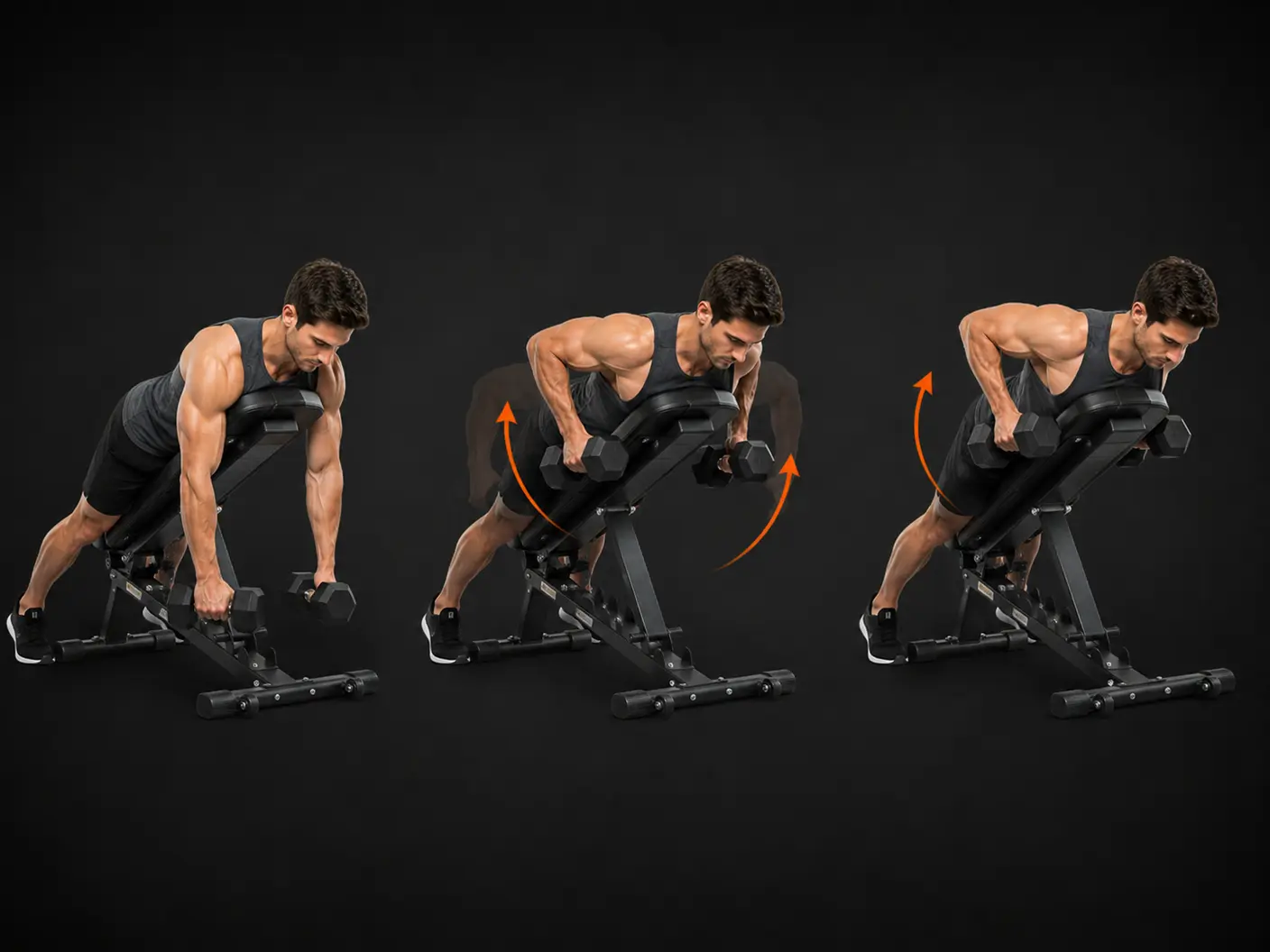
The chest-supported dumbbell row is a horizontal pulling exercise performed face-down on a 30–45° incline bench, which eliminates the lower-back loading associated with bent-over row variations. By pinning the torso to the bench, it isolates the upper-back musculature — primarily the middle trapezius, rhomboids, and latissimus dorsi — without demanding lumbar stability as a limiting factor. It suits intermediate lifters looking to build back thickness with clean mechanics and consistent tension throughout the rep.
How to do it
Set a bench to 30–45° incline. Lie face-down on the bench, chest supported. Hold dumbbells below with arms straight. Row both dumbbells to the sides of the ribs; drive elbows back. Pause briefly. Lower under control.
Coaching cues
- Chest pinned to the bench
- Row to the ribs
- Pause and squeeze
- Slow eccentric
Why train it
- The chest-supported position removes momentum from the movement, forcing the upper-back muscles to produce the pull without compensatory hip or torso drive.
- Targeting the middle trapezius and rhomboids directly supports postural balance, particularly useful for those who spend significant time in a seated or forward-flexed position.
- The dumbbell loading allows each arm to travel its natural arc, reducing asymmetrical compensation between sides and making it a reliable choice for correcting left-to-right strength imbalances.
- A controlled eccentric on every rep — lowering the dumbbells under tension — produces a high degree of mechanical stress in the lats and rhomboids, which is well suited to hypertrophy programming.
Common mistakes
- Lifting the chest off the bench to generate momentum — keep the torso pinned throughout the entire rep so the upper back performs the work, not the lower back and hips.
- Rowing the dumbbells towards the shoulders rather than the ribs — drive the elbows back and aim to bring the dumbbells level with the sides of the torso to correctly recruit the rhomboids and mid-traps.
- Rushing the lowering phase — control the eccentric over two to three seconds rather than letting the dumbbells drop, as the downward portion is where much of the hypertrophic stimulus occurs.
- Excessive internal rotation of the shoulder — keep the wrists neutral and the elbows tracking behind the body rather than flaring wide, which places unnecessary load on the shoulder joint and reduces mid-trap engagement.
Primary: Trapezius, Rhomboids, Latissimus Dorsi.
Secondary: Posterior Deltoid, Biceps Brachii.
Equipment
Good for
Easier variation
Seal row or T-bar row — similar supported rowing pattern.
Similar movements
Frequently asked
- What muscles does the chest-supported dumbbell row work?
- The primary muscles are the middle trapezius, rhomboids, and latissimus dorsi. The rear deltoid and biceps contribute as secondary movers during the pull.
- How many sets and reps should I do for muscle growth?
- For hypertrophy, three to four sets of 10–15 reps with a controlled tempo works well. Prioritise a slow eccentric and a brief pause at the top rather than simply accumulating reps with poor form.
- What is the advantage of the chest-supported version over a bent-over row?
- Supporting the chest on the bench removes the need for sustained lumbar and core bracing, which means fatigue in those areas will not cut the set short before the upper back is adequately worked. It is particularly useful when lower-back fatigue is already a limiting factor in a session.
- What are good alternatives if I do not have an incline bench?
- A seated cable row with a neutral grip or a single-arm dumbbell row braced against a flat bench both train a similar horizontal pull pattern. Neither fully replicates the bilateral chest-supported setup, but both reduce lower-back demand compared with a free-standing bent-over row.
- Is the chest-supported dumbbell row suitable for beginners?
- It is classed as an intermediate movement, mainly because setting up correctly on the incline bench and maintaining scapular control throughout the pull requires some prior familiarity with upper-back training. Beginners would benefit from building comfort with a seated cable row or single-arm supported row before progressing to this variation.
Want this movement in a plan built for you?
Adaptiv programmes the right exercises for your goal, equipment and experience — then adapts them as you train.
Build my programme