Dumbbell Bent-Over Row
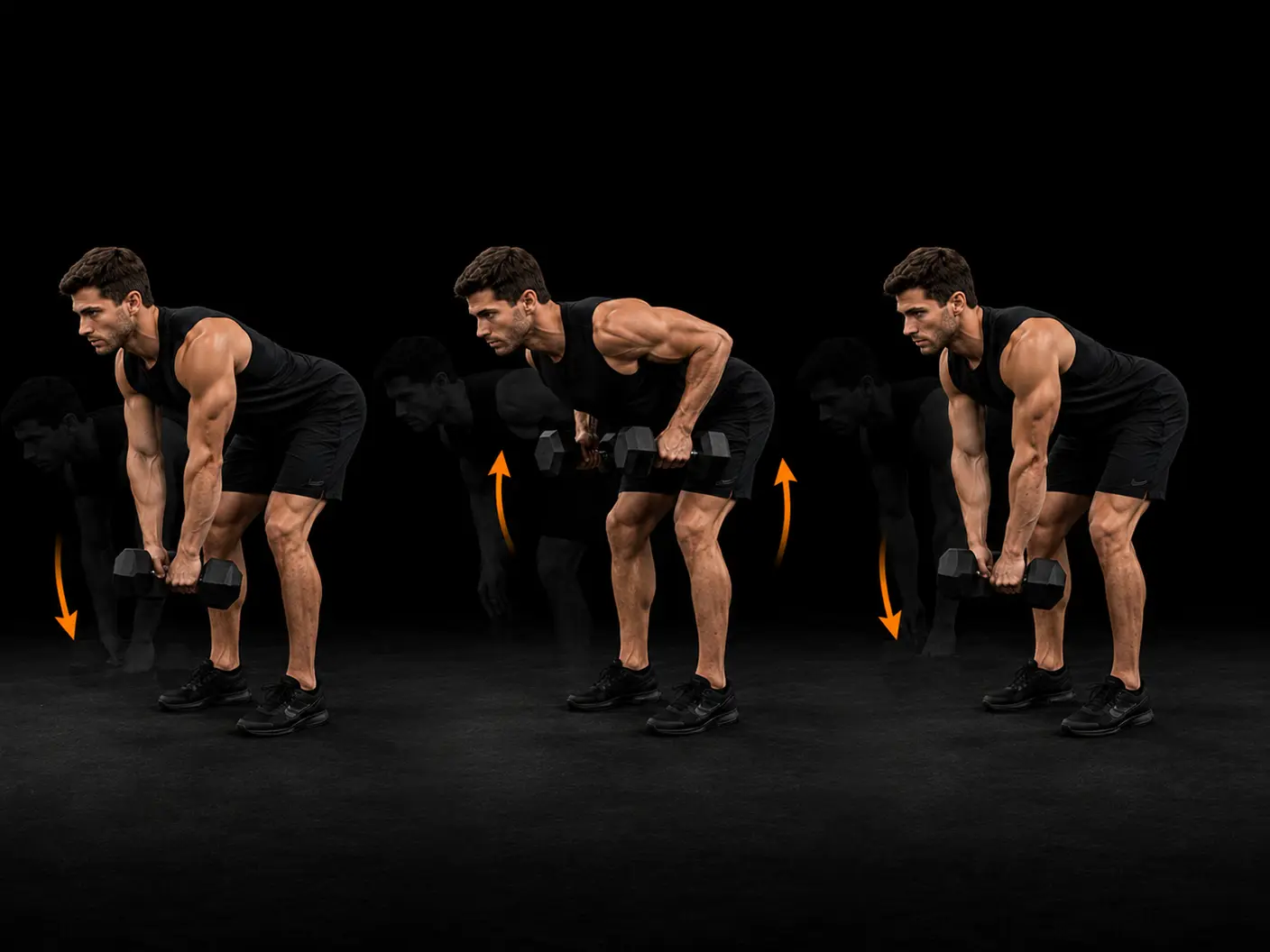
The dumbbell bent-over row is a compound horizontal pulling exercise performed with the torso hinged forward between 45 and 90 degrees, drawing both dumbbells toward the lower ribcage simultaneously. It develops strength and thickness across the upper and mid-back by training the latissimus dorsi, rhomboids, and middle trapezius through a full range of motion. The movement suits intermediate lifters who have established a reliable hip hinge and are looking to build posterior chain pulling strength alongside pressing work.
How to do it
Hold dumbbells with a neutral or overhand grip. Hinge at the hips until the torso is 45–90° to the floor. Brace the core. Pull both dumbbells toward the lower ribcage simultaneously, driving the elbows back and squeezing the shoulder blades together at the top. Lower the dumbbells fully under control.
Coaching cues
- Hips back
- Elbows drive back
- Squeeze the shoulder blades
- Chest up throughout
Why train it
- Training both sides simultaneously with dumbbells removes the opportunity for a stronger side to compensate, helping to address left-to-right strength imbalances over time.
- The full lowering phase places the back musculature under meaningful eccentric load, which is a reliable stimulus for hypertrophy in the lats, rhomboids, and middle trapezius.
- Maintaining a hinged torso throughout the set requires sustained co-contraction of the erector spinae and core, making it an effective accessory for lower back and trunk resilience.
- The movement transfers directly to pulling and lifting tasks that demand horizontal force production, supporting general strength development across a range of training goals.
Common mistakes
- Jerking the dumbbells up with momentum — initiate each rep by retracting the shoulder blades first, then drive the elbows back in a controlled, deliberate pull.
- Letting the torso rise as the weight gets heavier — keep the chest up and hips back throughout the set so the back musculature, not the legs, does the work.
- Flaring the elbows out wide — keep the elbows tracking close to the body and driving rearward so the rhomboids and lats are the primary movers rather than the rear deltoids alone.
- Cutting the range of motion short at the top — pull until the dumbbells reach the lower ribcage and the shoulder blades are fully retracted before beginning the controlled descent.
Primary: Latissimus Dorsi, Rhomboids, Trapezius.
Secondary: Biceps Brachii, Posterior Deltoid, Erector Spinae, Rectus Abdominis.
Equipment
Good for
Easier variation
Single-arm dumbbell row (bench-supported) — removes the bilateral balance demand and reduces lower back loading.
Similar movements
Frequently asked
- What muscles does the dumbbell bent-over row work?
- The primary muscles trained are the latissimus dorsi, rhomboids, and middle trapezius. The biceps, rear deltoids, erector spinae, and core contribute as secondary movers throughout the lift.
- How many sets and reps should I do for the dumbbell bent-over row?
- For hypertrophy, three to four sets of eight to twelve reps with a controlled tempo works well. If strength is the priority, four to five sets of four to six reps at a heavier load is more appropriate, provided form remains consistent throughout.
- What is the difference between a neutral grip and an overhand grip on this exercise?
- A neutral grip, with palms facing each other, tends to feel more comfortable on the wrists and allows a slightly longer range of motion for many lifters. An overhand grip places greater demand on the rhomboids and middle trapezius and more closely mimics a barbell row position. Either is valid; choose based on comfort and the specific training emphasis you want.
- Can I do the dumbbell bent-over row if I have lower back discomfort?
- Maintaining a hinged position under load does place sustained demand on the erector spinae, so anyone with existing lower back concerns should consult a qualified professional before programming this movement.
- What are good alternatives to the dumbbell bent-over row?
- The single-arm dumbbell row is a useful alternative that allows greater torso support and load per side. The seated cable row trains a similar horizontal pulling pattern with less demand on the hip hinge, making it a practical option when back fatigue or positioning is a limiting factor.
Want this movement in a plan built for you?
Adaptiv programmes the right exercises for your goal, equipment and experience — then adapts them as you train.
Build my programme