Scapular Pull-Up
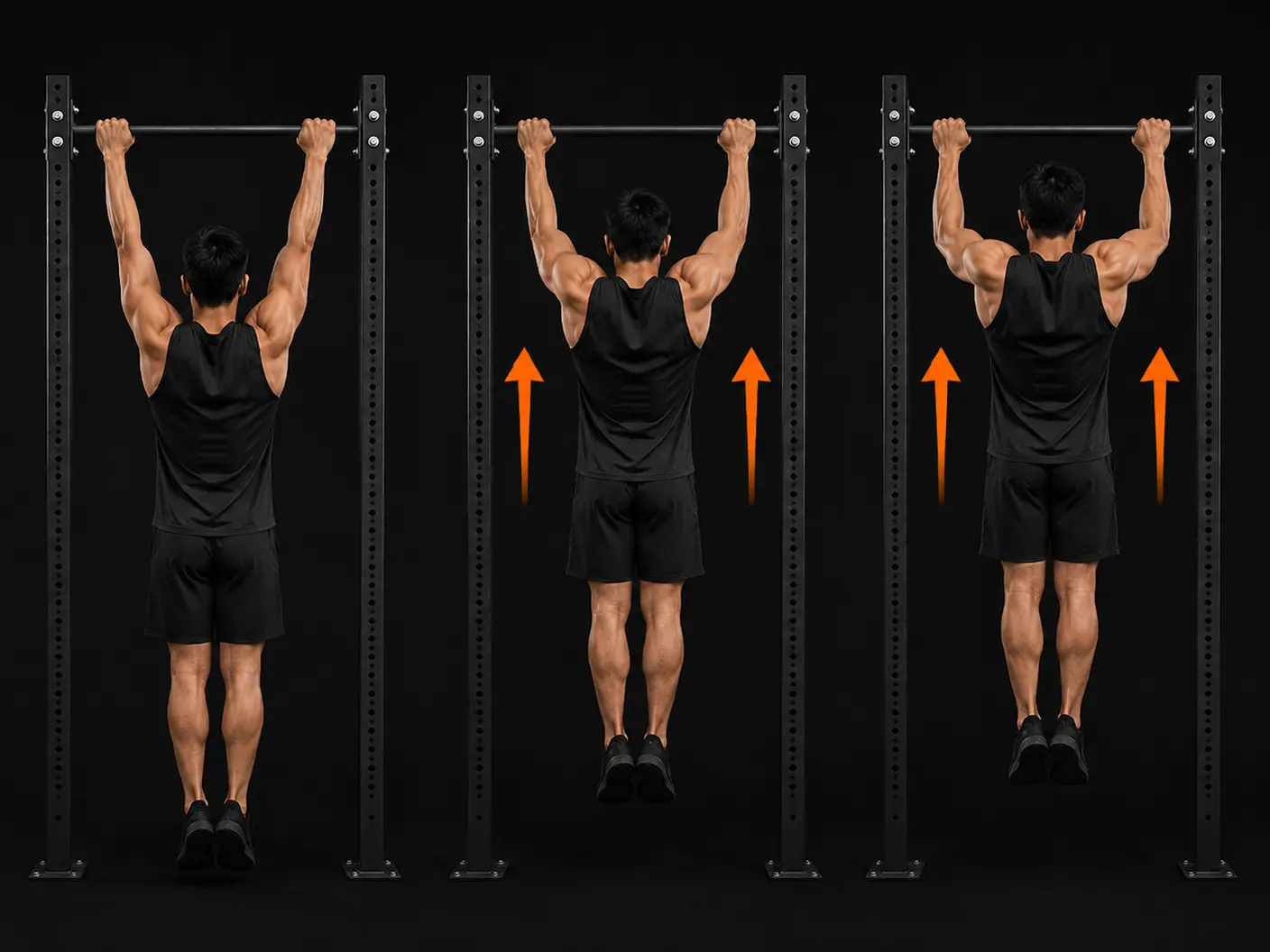
The scapular pull-up is a foundational mobility drill performed from a dead hang on a pull-up bar, in which the shoulder blades are depressed and retracted while the arms remain completely straight. It trains the often-neglected scapular setting pattern — the movement that should initiate every full pull-up — by isolating the lower trapezius, rhomboids, and latissimus dorsi before elbow flexion enters the picture. It suits beginners building the prerequisite shoulder control for pull-up progressions, as well as more experienced lifters addressing weaknesses in their overhead pulling mechanics.
How to do it
Hang from a pull-up bar, arms straight, shoulders passive (shrugged up). Pull the shoulder blades down and back without bending the elbows — the body rises slightly. Pause; reverse slowly. Repeat.
Coaching cues
- Arms stay straight
- Depress the blades
- Lift with the shoulders
- Control the lower
Why train it
- Develops active scapular depression and retraction, establishing the shoulder mechanics that underpin safe and efficient overhead pulling.
- Strengthens the lower trapezius and rhomboids through a controlled range, improving the structural balance between the muscles that elevate and those that stabilise the shoulder girdle.
- Builds grip endurance through sustained hanging, which has direct carry-over to bar-based pulling movements and general athletic performance.
- Serves as an effective warm-up drill before pull-up or lat pulldown work, priming the scapulae to move correctly before load is added.
Common mistakes
- Bending the elbows — keep both arms fully extended throughout; if the elbows flex, the exercise becomes a partial pull-up rather than a scapular drill.
- Allowing the shoulders to stay passively shrugged — begin each rep from a truly passive hang, then initiate the movement by actively pulling the blades down and back.
- Rushing the descent — reverse the motion slowly and with control so the lower trapezius and rhomboids work eccentrically rather than simply dropping back to the start position.
- Moving only through shrug and not through retraction — focus on drawing the blades together and down simultaneously, not merely elevating and depressing them in the same plane.
Primary: Trapezius, Rhomboids, Latissimus Dorsi.
Secondary: Forearm Flexors.
Equipment
Good for
Easier variation
Scapular pull-up in a ring row position — feet on the floor.
Similar movements
Frequently asked
- What muscles does the scapular pull-up work?
- The primary muscles trained are the lower trapezius, rhomboids, and latissimus dorsi, which drive scapular depression and retraction. The muscles of the hand and forearm that constitute grip are also engaged throughout the hang.
- How many sets and reps should I do?
- For most purposes, two to three sets of eight to twelve controlled repetitions works well, either as part of a warm-up before pulling sessions or within a dedicated mobility block. Prioritise a deliberate pause at the top of each rep over accumulating volume quickly.
- Can I do this if I cannot yet do a full pull-up?
- Yes — the scapular pull-up is specifically useful for those who cannot yet perform a full pull-up, as it develops the shoulder control and lat engagement required for the full movement without demanding elbow flexion strength.
- What is the difference between a scapular pull-up and a regular pull-up?
- In a regular pull-up the elbows bend to draw the chin above the bar, whereas in a scapular pull-up the elbows remain straight throughout and only the shoulder blades move. The scapular version isolates the initiation phase of the pull pattern rather than training the full movement.
- Are there alternatives if I cannot hang from a bar?
- If a full dead hang is not yet accessible, scapular depression can be practised on parallel dip bars or the edge of a sturdy bench, using the same principle of depressing the shoulder blades without bending the elbows. If you have any existing shoulder concerns, consult a qualified professional before selecting an alternative.
Want this movement in a plan built for you?
Adaptiv programmes the right exercises for your goal, equipment and experience — then adapts them as you train.
Build my programme