Sandbag Clean
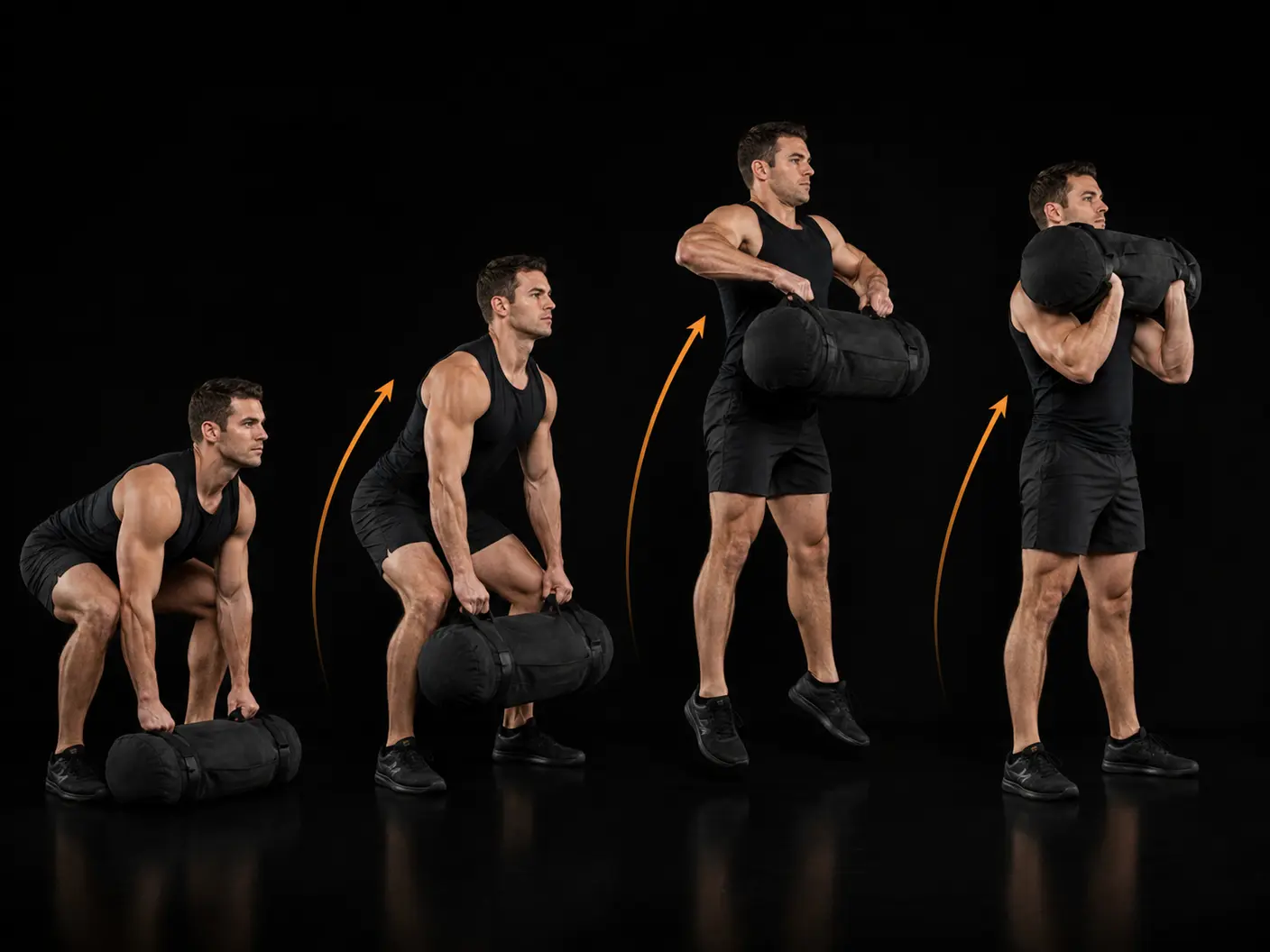
The sandbag clean is a compound power movement that trains the full-body pulling and catching pattern using an unstable, shifting load. It develops explosive hip extension through triple extension — ankle, knee, and hip — before transitioning into a controlled bear-hug catch at the chest. The irregular shape and shifting contents of the sandbag make it a practical choice for athletes and general trainees looking to build power that transfers beyond the barbell.
How to do it
Set a sandbag on the floor between the feet. Hinge and grip the bag. Pull the bag to the chest in one motion — triple extension, shrug, pull under. Catch in a front-rack bear-hug position. Drop the bag and reset.
Coaching cues
- Explosive pull
- Bar to the chest
- Bear hug catch
- Drop and reset
Why train it
- The shifting load of a sandbag demands continuous grip and core adjustment throughout the pull, developing forearm and trunk stability that fixed implements do not replicate.
- Triple extension recruits the glutes, hamstrings, and quads simultaneously in a ballistic pattern, making this an efficient stimulus for lower-body power development.
- The high metabolic demand of repeated explosive pulls and controlled catches makes the sandbag clean an effective tool within fat-loss conditioning programmes.
- Because the movement requires co-ordination, timing, and rate of force development, it transfers well to athletic contexts where explosive, unpredictable effort is required.
Common mistakes
- Pulling with the arms first — initiate the movement by driving through the floor with the legs and extending the hips before the arms contribute to the lift.
- Letting the bag drift away from the body — keep the sandbag close to the torso throughout the pull to maintain leverage and reduce load on the lower back.
- Catching without a secure bear-hug position — wrap the arms firmly around the bag at chest height before absorbing the load, rather than receiving it with loose or extended arms.
- Failing to reset between reps — drop the bag, return to the hinge position, and re-establish your grip and stance before each pull to preserve consistent mechanics.
Primary: Gluteus Maximus, Hamstrings, Quadriceps, Trapezius.
Secondary: Erector Spinae, Latissimus Dorsi, Forearm Flexors, Rectus Abdominis.
Equipment
Good for
Easier variation
Sandbag deadlift to shoulder — slower, strength variant.
Similar movements
Frequently asked
- What muscles does the sandbag clean work?
- The primary muscles are the glutes, hamstrings, quads, and traps. The erectors, lats, forearms, and core contribute as secondary stabilisers throughout the pull and catch.
- How many sets and reps should I do for the sandbag clean?
- For power development, three to five sets of three to six reps with full recovery between sets is a practical starting point. For conditioning or fat-loss circuits, lower weights and higher-effort sets of six to ten reps are commonly programmed, though rest periods should remain sufficient to preserve movement quality.
- Is the sandbag clean suitable for beginners?
- The movement is rated intermediate, so a degree of familiarity with hip-hinge mechanics and basic Olympic-style pulling patterns is advisable before loading this exercise. Beginners would benefit from establishing the deadlift and dumbbell hang clean first.
- What are good alternatives to the sandbag clean?
- The barbell power clean trains the same explosive pattern with a more stable implement, making it a useful progression or regression depending on your background. The kettlebell swing targets similar posterior-chain power demands if the full clean pattern is not yet accessible.
- Can the sandbag clean help with athletic performance?
- Yes — the movement is listed with athletic performance as a primary goal because it develops explosive hip extension, co-ordination under an unpredictable load, and whole-body rate of force development, all of which are relevant qualities for field and court sports.
Want this movement in a plan built for you?
Adaptiv programmes the right exercises for your goal, equipment and experience — then adapts them as you train.
Build my programme