Rowing Machine (Concept 2)
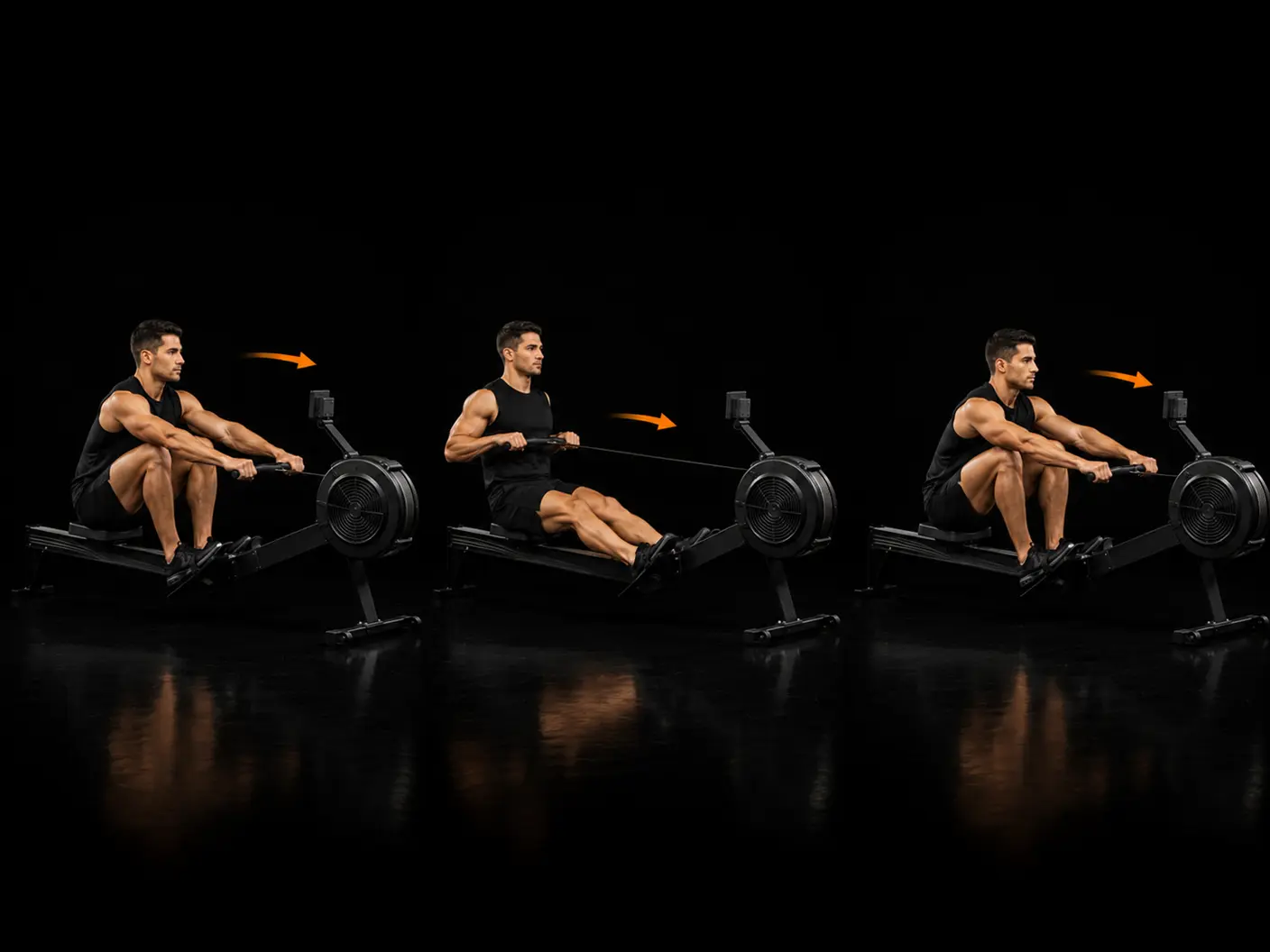
The Concept 2 rowing machine is a full-body conditioning tool that trains the push-pull sequence of legs, torso, and arms in a single, continuous stroke. It develops cardiovascular fitness and muscular endurance simultaneously, making it one of the more complete single-piece conditioning equipment available. It suits a wide range of trainees, from those building a general aerobic base to athletes developing sport-specific work capacity.
How to do it
Sit on the rower, strap the feet in. Catch position: knees bent, arms extended, body forward. Drive: legs first, then open the torso, then pull the handle to the lower ribs. Recovery: arms extend, then torso hinges forward, then knees bend. Repeat.
Coaching cues
- Legs first
- Arms last
- Smooth return
- Long strokes
Why train it
- Rowing engages the legs, back, arms, and core within every stroke, distributing the workload across the whole body rather than concentrating stress on a single area.
- Because it is low-impact, it places minimal compressive force through the joints compared with running, making it a practical conditioning option for those managing lower-body load.
- The programmable monitor on the Concept 2 allows precise tracking of split times, stroke rate, and distance, which supports structured progression over a training cycle.
- It trains both aerobic and anaerobic energy systems depending on intensity and duration, giving coaches flexibility to use it for steady-state work, intervals, or test pieces.
Common mistakes
- Pulling with the arms before the legs have driven — maintain leg drive first and keep the arms straight until the legs are nearly flat, then open the torso and draw the handle in.
- Hunching through the back at the catch — arrive at the catch position with a neutral spine and a forward hinge from the hips, not a rounding of the lumbar.
- Taking short, hurried strokes — focus on long, deliberate strokes with a controlled recovery that allows the body to reset properly before the next drive.
- Rushing the recovery by bending the knees before the arms have cleared — extend the arms fully, then hinge the torso forward, then allow the knees to bend in that sequence.
Primary: Latissimus Dorsi, Rectus Abdominis.
Secondary: Cardiovascular System.
Equipment
Good for
Easier variation
Shorter distances or slower pace.
Similar movements
Frequently asked
- What muscles does the rowing machine work?
- The primary muscles worked are the legs, back, arms, and core, all of which contribute to the drive and recovery phases of each stroke. The cardiovascular system is also significantly challenged, particularly at higher intensities or over longer durations.
- What sets and reps should I use on the rowing machine?
- Rowing is typically programmed by time or distance rather than sets and reps. A common starting point for general fitness is 3–5 rounds of 500 m with 90 seconds rest, or a continuous 20-minute steady-state piece at a conversational pace. Athletes targeting work capacity might use shorter intervals such as 6–8 rounds of 250 m with a 1:2 work-to-rest ratio.
- Is the rowing machine suitable for fat loss?
- Yes — its whole-body demand means a relatively high caloric expenditure compared with single-limb machines, and it can be used for both steady-state and interval protocols that support fat loss goals within an appropriate overall programme.
- What is the correct stroke sequence on a Concept 2?
- The drive follows a strict sequence: legs push first, the torso then opens by hinging back, and the arms finally draw the handle to the lower ribs. The recovery reverses this order — arms extend, torso hinges forward, knees bend. Maintaining this sequence is the most important technical discipline on the machine.
- Are there alternatives to the rowing machine for similar conditioning?
- Ski erg, cycling, and assault bike training share some characteristics with rowing in that they challenge the cardiovascular system with low joint impact, though none replicate the exact push-pull, full-body sequencing of the rowing stroke. If access to a Concept 2 is limited, these are reasonable substitutes within a conditioning programme.
Want this movement in a plan built for you?
Adaptiv programmes the right exercises for your goal, equipment and experience — then adapts them as you train.
Build my programme