Reverse Barbell Curl
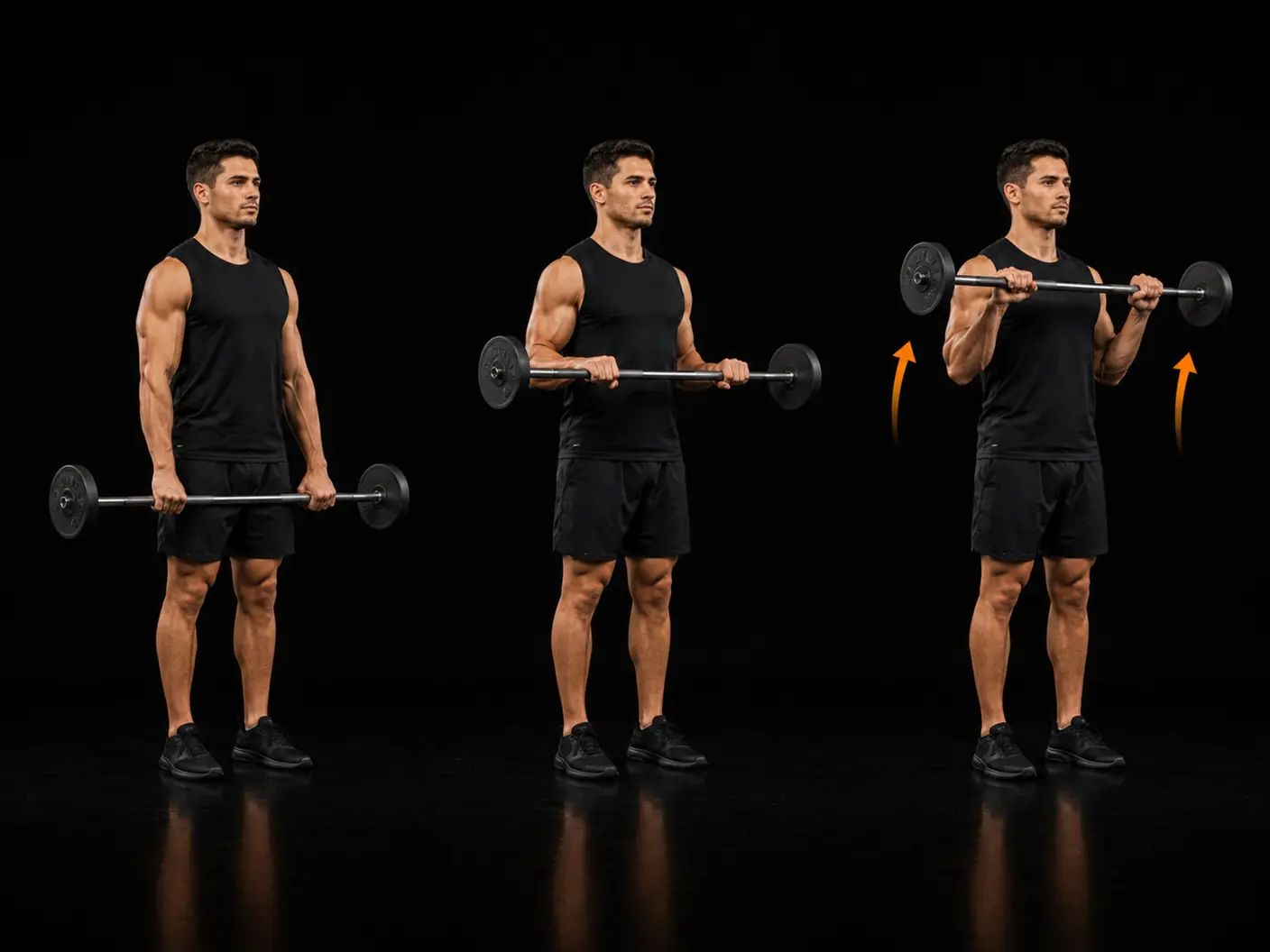
The reverse barbell curl is an isolation exercise performed with a pronated (palms-down) grip, training the elbow flexion pattern with an emphasis on the brachioradialis and forearm extensors rather than the biceps brachii. This grip orientation shifts demand away from the more commonly trained supinated curl position, making it a useful complement to standard biceps work. It suits lifters at any experience level who want to develop the forearms and address muscular balance across the elbow joint.
How to do it
Grip a barbell pronated (palms down), shoulder-width. Elbows tucked. Curl the bar up by flexing the elbows; wrists stay firm. Pause at peak. Lower under control.
Coaching cues
- Pronated grip
- Wrists firm
- Elbows tucked
- Slow eccentric
Why train it
- The pronated grip places the brachioradialis under significant load, promoting hypertrophy in a muscle that standard curls tend to underutilise.
- Training the forearm extensors through this movement supports balanced development across the forearm, which can improve the appearance and functional strength of the lower arm.
- The barbell allows both hands to be loaded simultaneously, making progressive overload straightforward to track and apply over time.
- The slow eccentric cue inherent to this movement increases time under tension, a well-established driver of muscle hypertrophy.
Common mistakes
- Allowing the wrists to flex under load — keep them firm and neutral throughout the curl so the forearm musculature, not passive joint structures, controls the bar.
- Letting the elbows flare outward — tuck them close to the sides throughout the movement to maintain consistent tension on the target muscles.
- Using momentum to swing the bar upward — initiate each rep with deliberate elbow flexion and reduce the load if the torso is rocking.
- Rushing the lowering phase — lower the bar under control on every repetition, as the eccentric portion contributes meaningfully to the stimulus.
Primary: Brachioradialis, Forearm Extensors.
Secondary: Brachialis, Biceps Brachii.
Equipment
Good for
Easier variation
EZ-bar reverse curl — easier on the wrists.
Similar movements
Frequently asked
- What muscles does the reverse barbell curl work?
- The primary muscles trained are the brachioradialis and forearm extensors, which are placed under greater demand by the pronated grip. The brachialis and biceps brachii contribute as secondary movers during elbow flexion.
- How many sets and reps should I do for the reverse barbell curl?
- For hypertrophy, three to four sets of eight to fifteen repetitions with a controlled tempo works well. For general fitness, two to three sets of ten to twelve reps at a moderate load is a practical starting point.
- What is the difference between a reverse curl and a standard biceps curl?
- The key difference is grip orientation: a standard curl uses a supinated (palms-up) grip that maximises biceps brachii involvement, whereas the reverse curl uses a pronated (palms-down) grip that shifts emphasis onto the brachioradialis and forearm extensors.
- Can beginners do the reverse barbell curl?
- Yes — it is classified as a foundational movement, so beginners can include it in their programme. Start with a light load to establish wrist control and elbow position before adding weight.
- What are good alternatives to the reverse barbell curl?
- Dumbbell reverse curls or a cable bar with a pronated grip train a similar pattern and may suit those who find the barbell uncomfortable at the wrist. The underlying mechanics remain the same across these variations.
Want this movement in a plan built for you?
Adaptiv programmes the right exercises for your goal, equipment and experience — then adapts them as you train.
Build my programme