Rack Pull
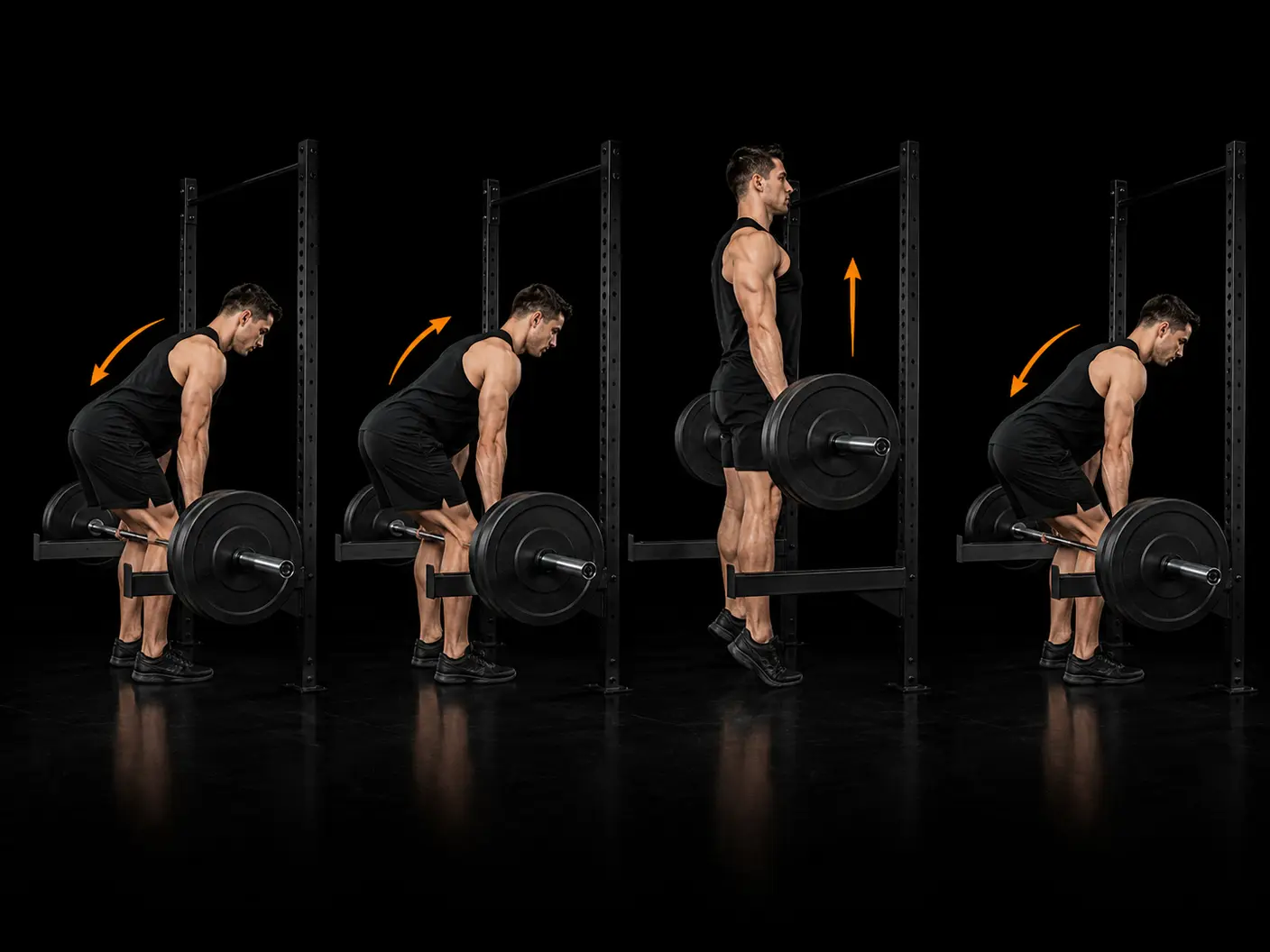
The rack pull is a partial-range deadlift performed from a barbell set on safety arms at or just below knee height, training the hip hinge pattern through its most mechanically demanding upper portion. By eliminating the floor-to-knee pull, it allows heavier loading of the upper back, traps, and erectors than a conventional deadlift whilst reducing overall range of motion. It suits intermediate to advanced lifters looking to develop posterior chain strength, address a deadlift lockout weakness, or accumulate upper back and trap hypertrophy under significant load.
How to do it
Set the bar on the rack's safety arms at knee height or just below. Set up as a deadlift from this position. Pack the lats. Drive through the floor; pull the bar up to a tall lockout — no lean back. Lower under control back to the rack.
Coaching cues
- Set the lats
- Push the floor
- Tall lockout
- Bar against legs
Why train it
- The shortened range of motion permits supramaximal or near-maximal loading, creating high mechanical tension through the upper back, traps, and erectors that is difficult to replicate with full pulls.
- By isolating the lockout portion of the hinge, the rack pull directly targets a common sticking point in the conventional deadlift, allowing specific adaptation to the movement's most demanding phase.
- The sustained isometric and dynamic demand placed on the forearms and grip under heavy loads makes the rack pull an effective accessory for developing grip strength without a dedicated session.
- The movement trains the glutes and hamstrings through the hip extension phase, contributing to posterior chain hypertrophy and strength as part of a well-structured programme.
Common mistakes
- Leaning back at lockout rather than standing tall — think of finishing with a vertical torso directly over the bar, driving the hips through without hyperextending the lumbar spine.
- Allowing the lats to go slack at the start of the pull — actively pack the shoulder blades down and in before initiating the drive, keeping the lats engaged throughout.
- Letting the bar drift away from the body — keep the bar in contact with the legs from the start of the pull to lockout, which reduces the moment arm and keeps loading efficient.
- Losing control on the descent — lower the bar deliberately back to the safety arms rather than dropping it, as the eccentric phase contributes meaningfully to muscular adaptation.
Primary: Rhomboids, Trapezius, Erector Spinae.
Secondary: Gluteus Maximus, Hamstrings, Forearm Flexors.
Equipment
Good for
Easier variation
Block pull — same principle, stands alone without a rack.
Similar movements
Frequently asked
- What muscles does the rack pull work?
- The rack pull primarily trains the upper back, traps, and spinal erectors, which are loaded heavily through the lockout portion of the hinge. The glutes and hamstrings contribute through hip extension, and the forearms work hard to maintain grip under the elevated loads this movement typically involves.
- How should I programme rack pulls for strength?
- For strength development, work in the 3–6 rep range across 3–5 sets, using loads that allow a controlled, technically sound lockout on every repetition. Programme them as a primary or secondary movement on a deadlift or posterior chain day, allowing adequate recovery before any conventional deadlift session that week.
- How should I programme rack pulls for hypertrophy?
- For hypertrophy, a rep range of 5–10 works well, with 3–4 sets at a load that produces genuine muscular effort by the final repetitions. Prioritise controlled eccentrics and consistent lat engagement to maximise time under tension in the upper back and traps.
- What is the difference between a rack pull and a conventional deadlift?
- The rack pull begins with the bar elevated on safety arms at or just below knee height, removing the floor-to-knee portion of the pull that a conventional deadlift requires. This reduces overall range of motion, shifts emphasis to the upper back and lockout mechanics, and typically allows heavier absolute loading than a full deadlift.
- Are rack pulls suitable for lifters with limited hip mobility?
- Because the elevated bar height reduces the range of motion required, some lifters find the set-up more accessible than pulling from the floor. However, if you have specific concerns about how a movement fits your individual mechanics, consult a qualified coach or movement professional before loading the pattern.
Want this movement in a plan built for you?
Adaptiv programmes the right exercises for your goal, equipment and experience — then adapts them as you train.
Build my programme