Plate Pinch
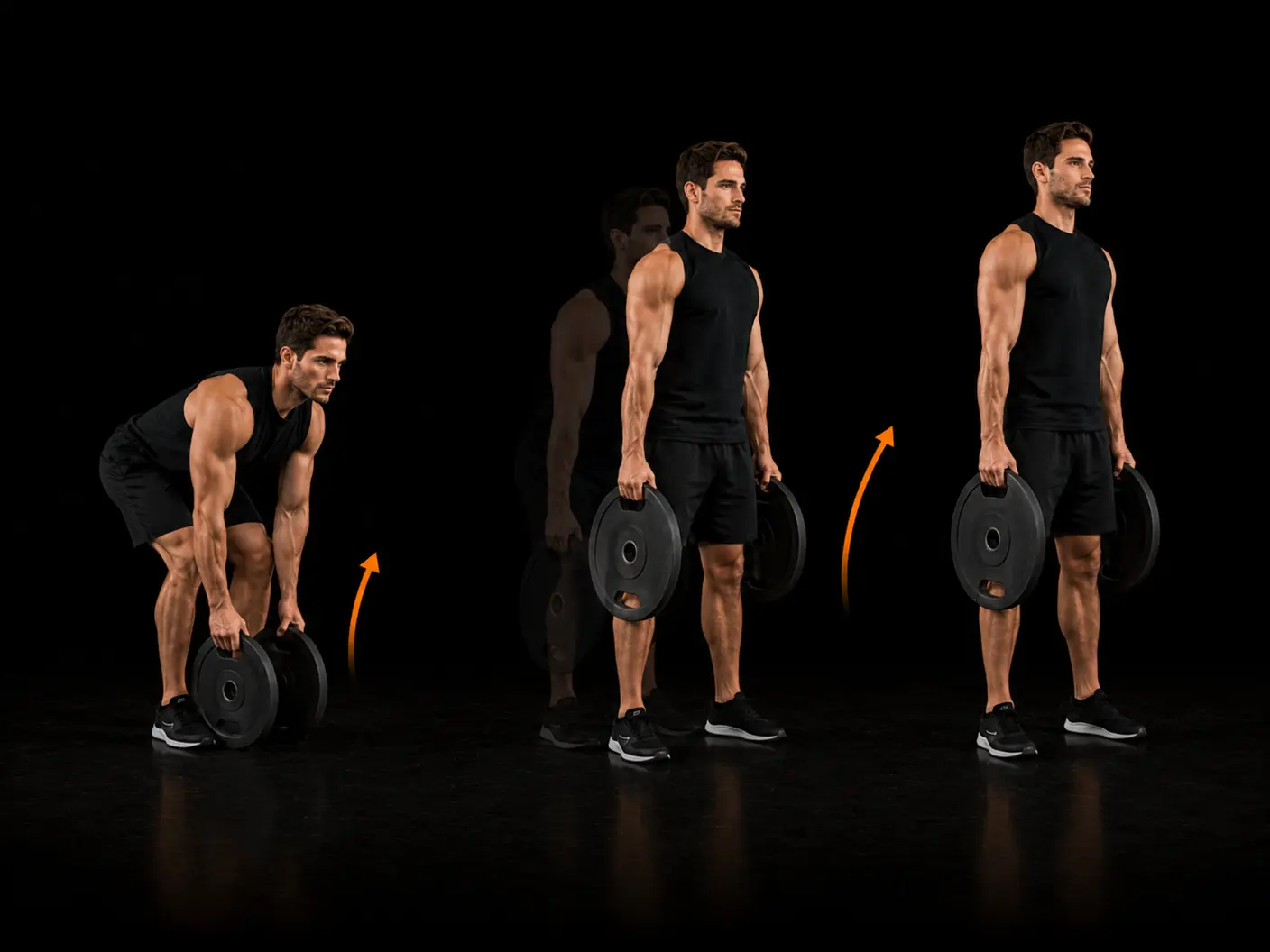
The plate pinch is a loaded isometric carry variation that trains grip strength by requiring the thumb and fingers to pinch two smooth-sided weight plates together for time or distance. It isolates the thumb flexors and forearm flexors in a way that conventional pulling movements rarely replicate, making it a precise tool for developing pinch grip capacity. It suits intermediate trainees looking to address grip as a limiting factor in their athletic or general fitness training.
How to do it
Hold two smooth-sided weight plates together by pinching with the thumb on one side and fingers on the other. Stand tall and hold for time, or walk for distance.
Coaching cues
- Pinch with the thumb
- Tall posture
- Crush through the fingers
- Steady breathing
Why train it
- Directly develops pinch grip strength through the thumb flexors, a quality that transfers to sports, climbing, and any pulling movement where grip is the weak link.
- The isometric hold format allows for easy load and duration progression without complex technique demands, making it straightforward to periodise within a programme.
- Carrying or holding the plates demands tall, stable posture throughout, providing a secondary stimulus for postural endurance alongside the grip work.
- Because it requires only standard weight plates, it is a low-equipment option that can be added to any session without specialist kit.
Common mistakes
- Gripping with the fingers alone rather than the thumb — consciously pinch the plate between the pad of the thumb and the fingers to load the intended muscles correctly.
- Letting the shoulders round or the torso lean — maintain tall posture throughout the hold or walk, keeping the chest open and the spine neutral.
- Holding the breath during the hold — breathe steadily and rhythmically rather than bracing and locking the airway, which limits duration unnecessarily.
- Using textured or knurled plates — smooth-sided plates are essential to the movement; textured surfaces reduce the grip challenge and shift the stimulus away from the thumb flexors.
Primary: Forearm Flexors.
Equipment
Good for
Easier variation
Single-plate pinch — lighter weight.
Similar movements
Frequently asked
- What muscles does the plate pinch work?
- The primary muscles trained are the thumb flexors, which generate the pinching force against the plate. The forearm flexors act as secondary movers, supporting grip endurance throughout the hold.
- How many sets and reps should I do for the plate pinch?
- Because this is a timed isometric, programme it in sets of holds rather than reps — three to four sets of fifteen to forty-five seconds is a practical starting range. Rest fully between sets so grip quality does not deteriorate, and progress by adding load or extending hold duration rather than reducing rest.
- What are good alternatives to the plate pinch?
- If plates are unavailable or you want to vary the stimulus, thick-handle dumbbell holds and farmer's carry variations train overlapping forearm and grip qualities. For a closer match to pinch grip specifically, hub lifts using a single plate turned face-down challenge a very similar thumb-dominant pattern.
- Will the plate pinch improve my deadlift or pulling performance?
- It can contribute to overall grip development, which is a common limiting factor in heavy pulling. However, pinch grip and crushing grip are distinct qualities, so the plate pinch works best as a supplementary exercise alongside pulling movements rather than as a direct substitute for grip work in that context.
- How do I progress the plate pinch over time?
- The most straightforward progressions are to increase the total weight of the plates being pinched, extend the hold duration, or add a walking component to move from a static hold to a loaded carry. Track both load and time so you have clear markers to build from session to session.
Want this movement in a plan built for you?
Adaptiv programmes the right exercises for your goal, equipment and experience — then adapts them as you train.
Build my programme