Pike Push-Up
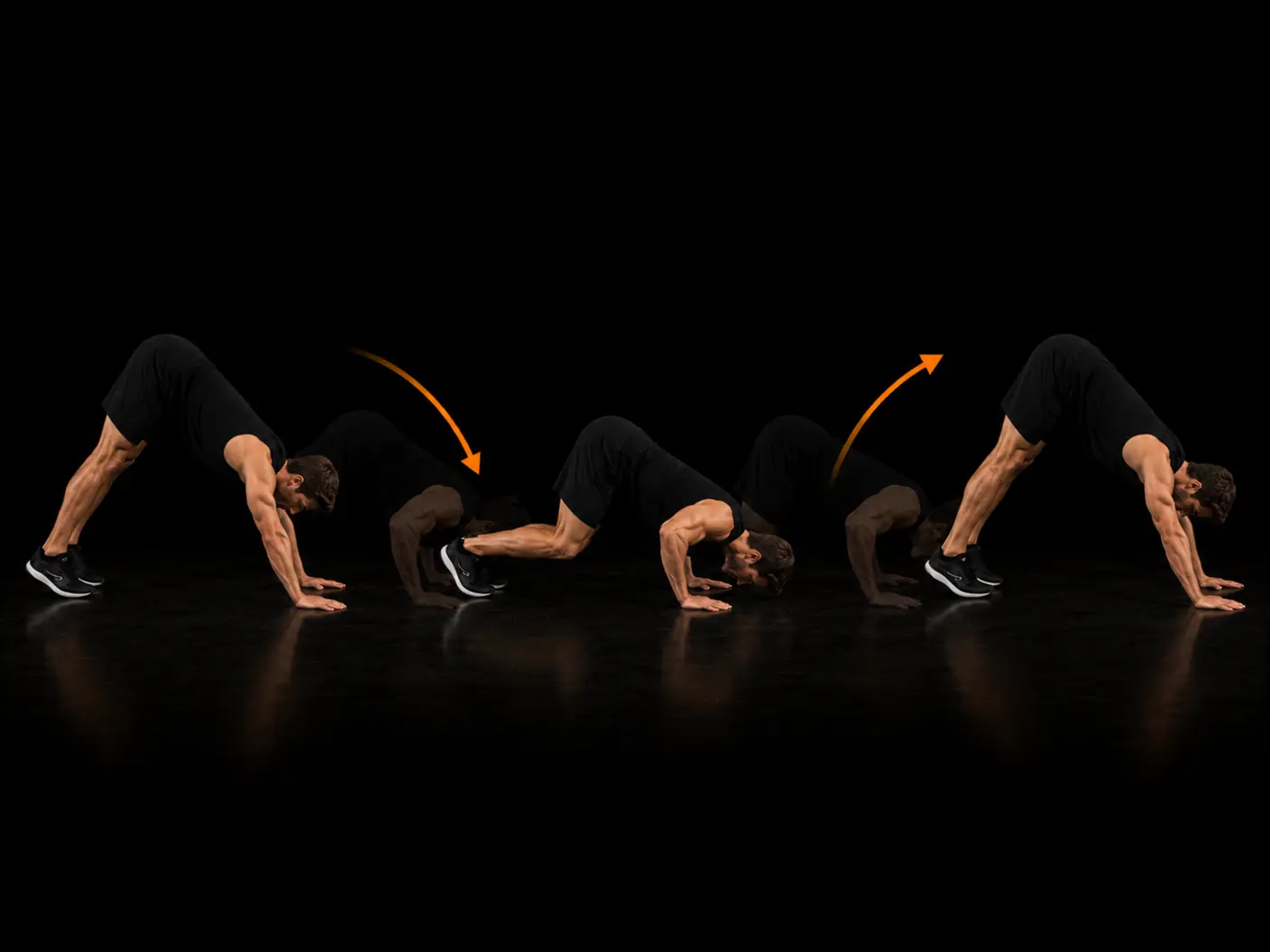
The pike push-up is a bodyweight vertical pushing exercise performed from an inverted-V position, with the hips elevated and the torso angled to shift load onto the shoulders rather than the chest. It trains the same overhead pressing pattern as a shoulder press, making it a practical bridge between standard push-ups and more demanding movements such as the handstand push-up. It suits intermediate trainees who want to develop anterior deltoid and upper pec strength without loading a barbell or dumbbell.
How to do it
Start in a downward-dog position — hips high, hands and feet on the floor forming an inverted V. Hands shoulder-width. Lower the head toward the floor between the hands by bending the elbows. Press back up to start.
Coaching cues
- Hips high
- Head between hands
- Elbows forward
- Press to extension
Why train it
- It develops anterior deltoid and upper pec strength using only bodyweight, making it accessible wherever you train.
- The inverted-V position naturally emphasises the vertical push pattern, reinforcing the mechanics needed for overhead pressing under load.
- It doubles as a serratus anterior and triceps accessory movement, supporting shoulder stability and elbow extension across a range of compound lifts.
- For those progressing toward handstand push-ups, the pike push-up is a direct and logical stepping stone in that skill progression.
Common mistakes
- Hips dropping too low — keep them elevated throughout so the torso stays angled and the load remains on the shoulders rather than shifting to the chest.
- Flaring the elbows wide — keep the elbows tracking forward as you descend to maintain a mechanically sound overhead pressing position.
- The head touching the floor without control — lower under tension to the floor and press back with intent; the floor is a reference point, not a resting place.
- Feet too close to the hands — if the range of motion feels restricted or the lower back rounds, walk the feet back slightly to allow a more effective inverted-V angle.
Primary: Anterior Deltoid, Pectoralis Major.
Secondary: Triceps Brachii, Serratus Anterior.
Equipment
Good for
Easier variation
Elevated pike push-up (feet on a bench) — steeper angle; easier to balance.
Similar movements
Frequently asked
- What muscles does the pike push-up work?
- The primary muscles are the anterior deltoid and upper pec, with meaningful secondary contribution from the triceps and serratus anterior. The elevated hip position angles the torso to prioritise the shoulder over the chest compared with a standard push-up.
- How many sets and reps should I do?
- For hypertrophy, three to four sets of eight to fifteen reps with controlled tempo works well. For general fitness, three sets of ten to twelve reps is a reliable starting point; adjust volume based on how well you can maintain the elevated hip position and full range of motion throughout each set.
- Is the pike push-up suitable for shoulder hypertrophy?
- Yes — it is a practical option for building anterior deltoid volume when equipment is limited or as an accessory within a broader programme. Load progression is achieved by elevating the feet, which increases the angle and the proportion of bodyweight the shoulders must press.
- What is a good alternative to the pike push-up?
- The dumbbell shoulder press and the barbell overhead press train the same vertical push pattern with more precise load control. If you are progressing toward the handstand push-up, the elevated pike push-up — feet on a box — is the most direct variation to move to next.
- How is the pike push-up different from a regular push-up?
- A standard push-up is a horizontal push movement that primarily targets the chest. The pike push-up shifts the torso toward vertical by raising the hips, redirecting the majority of the load onto the shoulders and placing it in the vertical push category.
Want this movement in a plan built for you?
Adaptiv programmes the right exercises for your goal, equipment and experience — then adapts them as you train.
Build my programme