Handstand Push-Up
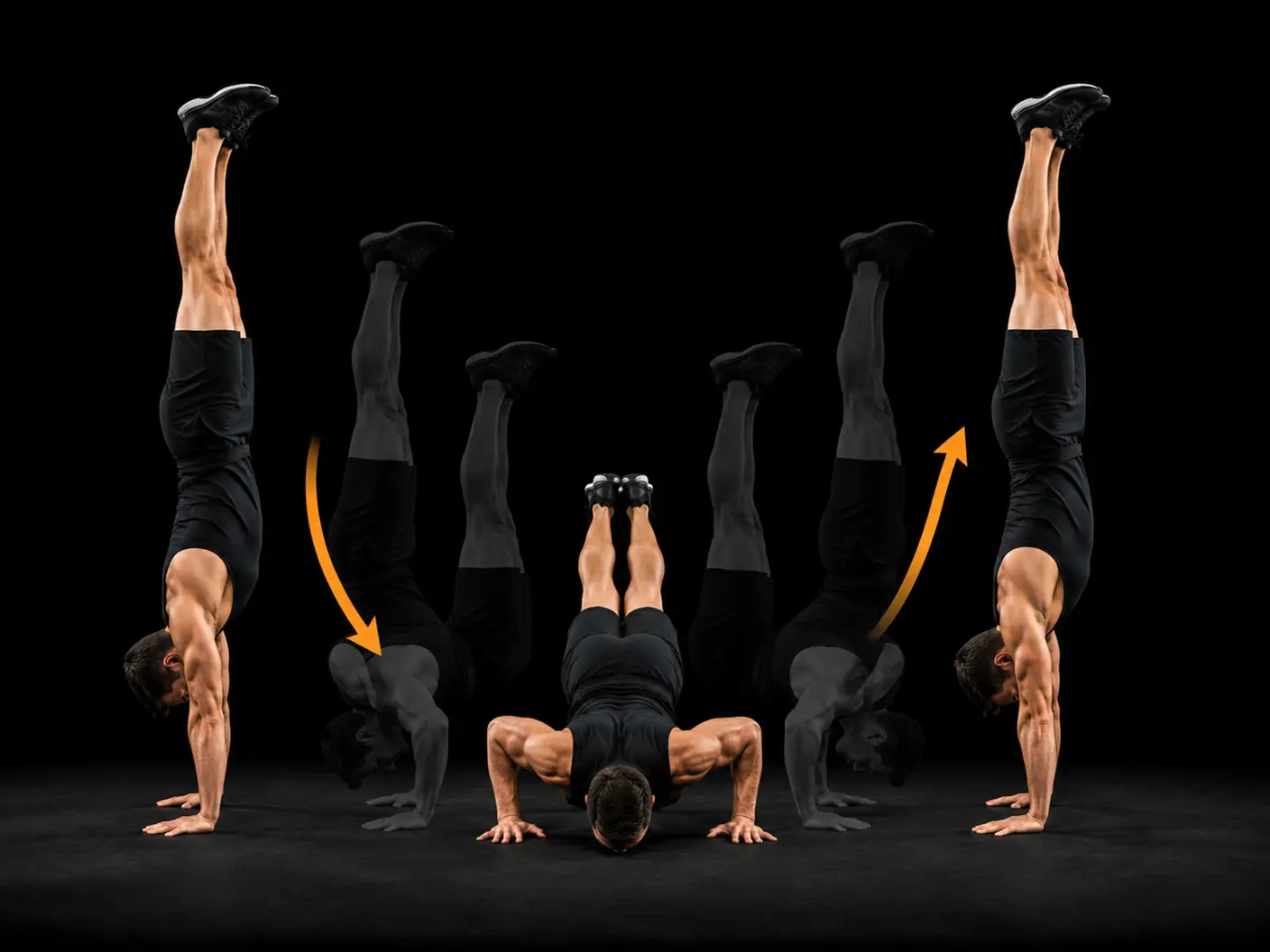
The handstand push-up is a bodyweight vertical pressing movement performed inverted against a wall, demanding both strength and positional control across the shoulder girdle, triceps, and core. It trains the same mechanical pattern as an overhead press but adds the complexity of managing full bodyweight through an inverted position. It suits experienced athletes who have already developed solid pressing foundations and reliable bodyweight control.
How to do it
Kick up to a handstand with heels against a wall. Hands shoulder-width, arms fully extended, body in a tight line. Lower the head toward the floor by bending the elbows. Press back up to full extension.
Coaching cues
- Tight line head to heels
- Elbows forward
- Head to floor
- Press strong
Why train it
- It builds substantial strength and hypertrophy in the anterior and medial deltoids, upper pec, and triceps without the need for loaded barbells or dumbbells.
- Training in the inverted position demands continuous core bracing to maintain a rigid head-to-heel line, developing functional trunk stability alongside pressing strength.
- The movement carries direct transfer to athletic and gymnastic contexts where overhead force production and body control are required simultaneously.
- Because the only equipment needed is a wall, it offers a high-stimulus pressing option in minimal-kit environments.
Common mistakes
- Allowing the hips to pike upward — brace the core and maintain a tight, straight line from head to heels throughout the full range of motion.
- Flaring the elbows wide rather than keeping them angled forward — position the elbows forward to protect the shoulder joint and direct force efficiently through the press.
- Failing to achieve a full range of motion by stopping short of the floor — lower the head until it makes contact with the floor to train the complete pressing range.
- Kicking up without establishing hand position first — set the hands shoulder-width from the wall before kicking up so that the base is stable and consistent every rep.
Primary: Anterior Deltoid, Lateral Deltoid, Triceps Brachii.
Secondary: Rectus Abdominis, Pectoralis Major, Trapezius.
Equipment
Good for
Easier variation
Pike push-up — easier progression with feet on the floor.
Similar movements
Frequently asked
- What muscles do handstand push-ups work?
- The primary muscles loaded are the anterior deltoid, medial deltoid, and triceps. The upper pec, traps, and core work as secondary contributors to stabilise the position and maintain body alignment throughout the movement.
- How many sets and reps should I do for handstand push-ups?
- For strength, three to five sets of three to six reps works well given the high demand of the movement. For hypertrophy, aim for three to four sets in the six to ten rep range, resting fully between sets to maintain quality.
- What are good progressions or alternatives if I cannot yet do a handstand push-up?
- Pike push-ups and elevated pike push-ups are the most direct progressions, reducing the load while training the same vertical pressing pattern. Barbell or dumbbell overhead pressing can also build the requisite shoulder and triceps strength before attempting the inverted variation.
- Is the handstand push-up suitable for building shoulder size?
- Yes — the anterior and medial deltoids are the primary drivers of the movement and are taken through a demanding range of motion under full bodyweight load, which is sufficient stimulus for hypertrophy when volume and progression are managed appropriately.
- Do I need a spotter or any particular setup to do handstand push-ups safely?
- Performing the movement against a solid wall provides the necessary support; ensure the surface is clear above and around you and that the floor provides adequate grip for your hands. If you are new to the inverted position, practise kicking up and holding the handstand before adding the pressing component.
Want this movement in a plan built for you?
Adaptiv programmes the right exercises for your goal, equipment and experience — then adapts them as you train.
Build my programme